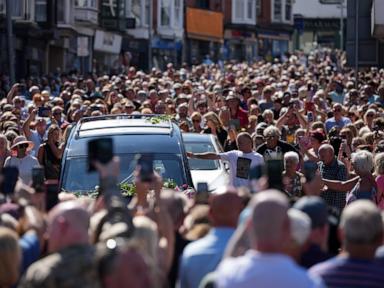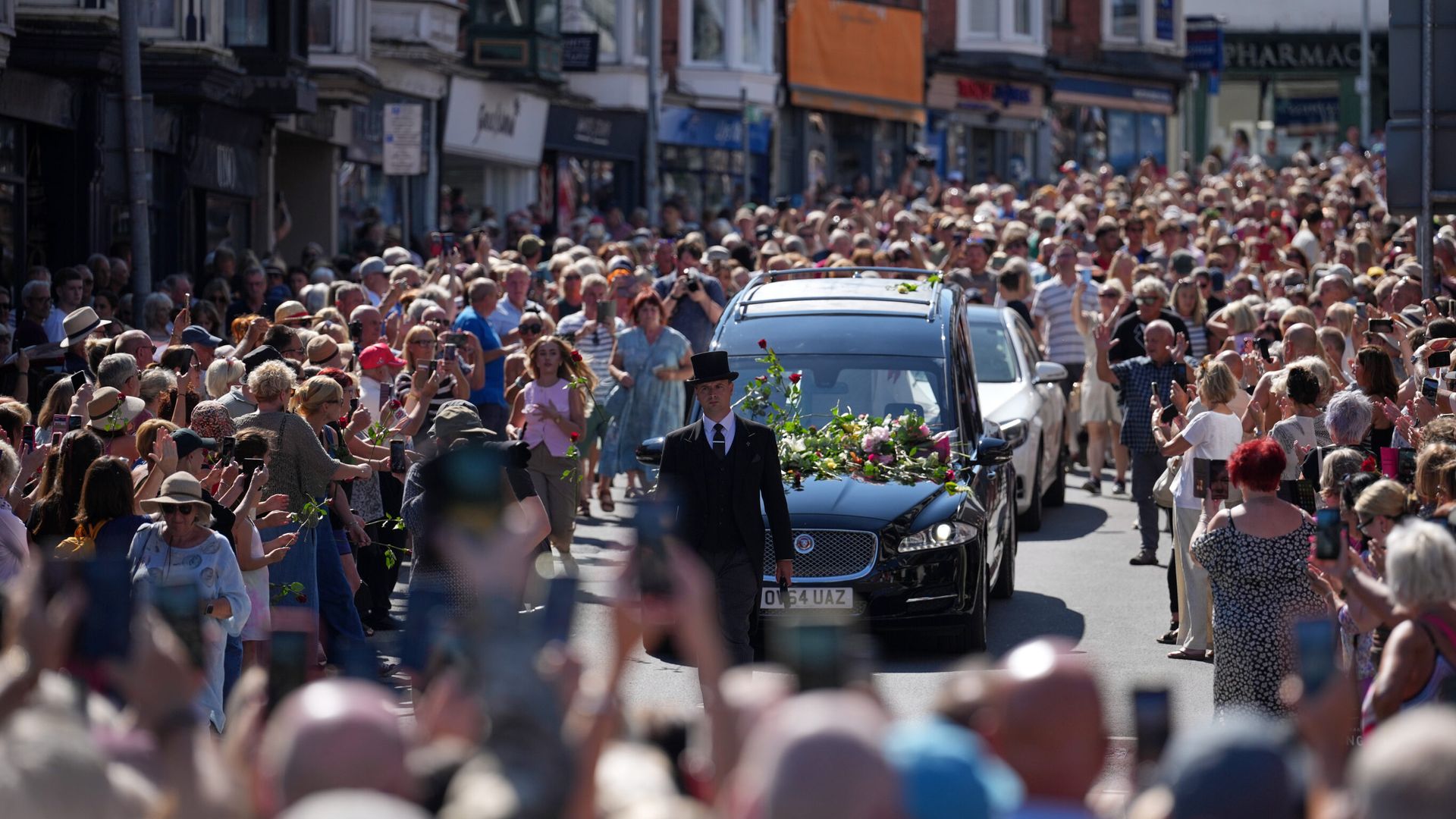
The spatial distribution of public grief following the death of a prominent cultural figure reveals distinct patterns of geographic loyalty and parasocial attachment. When singer Gaynor Sullivan, professionally known as Bonnie Tyler, passed away at the age of seventy-five in Portugal, her subsequent repatriation to South Wales triggered a hyper-localized mass assembly. Analyzing the funeral procession through Mumbles and Skewen provides a quantitative framework for understanding how legacy artists sustain civic engagement across generations.
Public mourning events of this scale operate on three primary structural pillars: geographic proximity to formative roots, commercial longevity measured in streaming metrics, and community-level identity synchronization. Examining how these variables interact clarifies why thousands of individuals lined Newton Road to witness a hearse transit that lasted less than sixty seconds.
The Three Pillars of Public Grief Architecture
The Mechanics of Belonging
Cultural icons who maintain physical residences in their home regions long after achieving international renown create a dual-identity architecture. Tyler split her operational life between the Algarve and a Victorian residence in Blackpill overlooking Swansea Bay. This dual-location strategy prevented the complete alienation that often occurs when artists transition from regional working-class origins—such as a council house in Skewen—to global pop prominence. By maintaining daily visibility in local establishments, the subject converted abstract celebrity status into tangible community participation.
When a public figure embeds themselves within a localized ecosystem, the community views their passing not merely as an international media event, but as a direct structural loss to the local economy of mutual recognition. The turnout density on Newton Road directly correlates with the frequency of unmediated, non-transactional local interactions over preceding decades.
Streaming Re-engagement and Catalog Reactivation
Commercial legacy is sustained through passive consumption loops rather than active promotional cycles. Catalog assets such as Total Eclipse of the Heart and Holding Out for a Hero function as permanent fixtures in global media rotation, augmented by external calendar catalysts like solar eclipses. These periodic spikes in listener acquisition inject fresh demographic cohorts into the artist's audience funnel.
Younger demographics discovering the catalog via algorithmic recommendations or sync licensing in film and television form parasocial bonds that translate into physical participation during monumental events. The presence of eighteen-year-old mourners at the Welsh procession demonstrates that the catalog's half-life exceeds standard pop music lifecycles, driven by the unique vocal timbre and high-drama composition style characteristic of 1980s power ballads.
Ritual Synchronization and Spontaneous Choir Mechanics
Public processions act as synchronization mechanisms for dispersed fan networks. In the absence of official corporate orchestration, crowds self-organize into structured participatory units. Spontaneous vocal outbreaks—such as singing catalog refrains and depositing floral tributes onto the vehicle bonnet—serve as decentralized validation rituals.
This behavioral response mitigates the friction of grief through collective effervescence. The procession route functions as a physical pipeline where individual sorrow is converted into a unified civic demonstration, effectively anchoring the artist's permanent historical footprint within the municipality's geographic grid.
Operationalizing Legacy Maintenance
To evaluate the long-term retention of an artist's cultural equity after death, analysts must isolate the friction points between digital footprint preservation and physical memorialization.
Digital memorial infrastructure, including online condolence books hosted by municipal authorities and globally accessible streaming platforms, decouples mourning from physical geography. However, the physical procession in Wales illustrates that digital reach cannot substitute for localized territorial homage. The cost function of losing a local icon involves a measurable drop in regional civic visibility offset temporarily by spikes in tourism and media coverage centered on the municipality.
The transition from active recording artist to historical institution requires careful management by estate executors and municipal governments. Balancing public access at events like the celebration of life at Swansea Minster with private family committals prevents narrative fragmentation while satisfying community closure demands.
Implement regional memorial route mapping for significant cultural figures by integrating municipal traffic management plans with spontaneous public assembly zones to optimize crowd safety without suppressing organic civic expression.