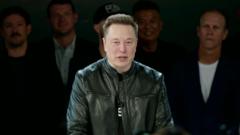
Elon Musk crossed the trillion-dollar threshold on June 12, 2026, when Space Exploration Technologies commenced trading on the Nasdaq under the ticker SPCX. The history-making public offering raised eighty-five billion dollars, cementing a market capitalization that quickly surged past two trillion dollars and leaving the second-richest person on Earth nearly a trillion dollars behind. It is a concentration of wealth unseen since John D. Rockefeller controlled Standard Oil. Yet, while the public celebrates a milestone of human engineering and commercial ingenuity, a deep forensic examination of the corporate balance sheets reveals an uncomfortable reality. This historic milestone is not built on cash flow or sustainable corporate earnings, but rather on an aggressive combination of speculative retail frenzy, state-subsidized infrastructure, and an unprecedented loop of untaxed financial engineering.
To understand how a company losing billions of dollars can manufacture a trillionaire, one must look closely at the underlying mechanics of the public listing.
The Mechanics of an Unprecedented Influx
Wall Street had never seen an offering of this scale. The initial allocation priced at 135 dollars per share, immediately valuing the enterprise at 1.77 trillion dollars before early trading pushed the stock to 165 dollars. Institutional money-managers and retirement index funds flooded the order books, desperate for exposure to the only viable commercial space infrastructure on earth.
The financial reality of the company presents a stark contrast to its public valuation. In the fiscal year 2025, the corporation pulled in 18.7 billion dollars in total revenue. However, it closed the same year with a massive net operating loss of 6.3 billion dollars. The business burned through an additional 2.5 billion dollars in cash during the first three months of 2026 alone.
Traditional valuation metrics have been discarded entirely. The stock trades at a multiple of more than one hundred times its annual sales, a ratio that dwarf even the loftiest heights of the semiconductor and artificial intelligence booms. For comparison, the most valuable technology giants on Wall Street trade between twenty and thirty times their revenue while generating tens of billions in pure profit. The current capital structure of this space enterprise implies that investors are not buying a traditional business. They are buying an exclusive monopoly over a critical infrastructure that the modern economy cannot function without.
Inside the Space Exploration Asset Bubble
The entire valuation rests on a single, high-stakes division within the company. While heavy heavy-lift rockets grab the headlines, the constellation of low-Earth orbit satellites known as Starlink handles the financial heavy lifting.
Data from the 2025 financial disclosures shows that the satellite connectivity division accounted for 11.4 billion dollars of total revenue. That represents roughly sixty-one percent of all money coming into the firm. More importantly, it generated 4.4 billion dollars in operating income, making it the only profitable segment of the entire corporate umbrella. The rocket manufacturing division, the interplanetary exploration goals, and the deep-space military contracts operate at a severe structural deficit.
Investors are making a massive bet that satellite internet will capture a significant portion of global telecommunications traffic. This assumption ignores the reality of capital expenditure. To maintain the satellite fleet, thousands of spacecraft must be replaced every five years as their orbits decay. The capital expenditures for 2025 reached 20.7 billion dollars, outstripping total inflows. The public market has essentially agreed to fund a permanent, multi-billion-dollar construction project in orbit that may never achieve positive free cash flow.
How Public Markets Subsidize Private Orbiters
The financial trajectory that enabled this wealth accumulation was built directly on the back of the American taxpayer. Over the past fifteen years, the federal government has acted as both the primary venture capitalist and the foundational customer for these aerospace operations.
Contracts from NASA and the Department of Defense provided the steady, non-dilutive capital needed to develop the core rocket systems. When the commercial market for satellite launches dried up during global economic slowdowns, state agencies stepped in with multi-billion-dollar cargo and crew transport agreements. This setup allowed the private enterprise to take immense technical risks without facing the threat of bankruptcy. The gains from these taxpayer-funded breakthroughs have been strictly privatized, while the long-term operational risks remain socialized.
This state support extends directly to consumer markets. Rural broadband subsidies regularly distribute millions of dollars to expand satellite receiver installations across North America. By funding the consumer hardware, the state artificially inflates the subscription base of the network. Public money creates the demand, public money funds the development, and the resulting equity value accumulates directly in the personal portfolio of a single majority shareholder.
The Untaxed Leverage Machine
The true genius of this wealth creation lies not in operations, but in the tax code. A net worth of 1.2 trillion dollars suggests a tax liability that could fund entire federal agencies. The actual tax collected tells a completely different story.
Under current statutory frameworks, equity gains are completely invisible to the internal revenue authorities until a sale takes place. Because the founder retains roughly forty-one percent of the space corporation and twenty percent of his electric vehicle enterprise, his wealth expands entirely in the form of unrealized equity. To fund a lavish lifestyle and acquire separate media platforms, he relies on asset-backed lending lines. Financial institutions issue multi-billion-dollar personal loans using these highly valued shares as collateral.
The benefits of this borrowing strategy are immense.
- The loan proceeds are legally classified as debt rather than income, making them entirely exempt from federal income tax.
- The interest rates on ultra-high-net-worth credit lines are significantly lower than standard commercial paper.
- The loans can be rolled over indefinitely into new credit facilities as the underlying stock value appreciates.
By utilizing this loop, the world's richest individual can deploy billions of dollars in liquidity while maintaining a statutory income that qualifies for minimal tax rates. Analysis of corporate filings indicates that between 2014 and 2018, while the founder's fortune grew by nearly fourteen billion dollars, his actual federal tax rate hovered near three percent. The corporate entities follow a similar playbook. The electric vehicle division reported 4.8 billion dollars in domestic income for 2025 but paid zero dollars in federal income tax, utilizing complex investment credits and cross-border accounting adjustments.
What Happens When a Paper Fortune Meets Reality
The concentration of three percent of the United States Gross Domestic Product into the hands of one person introduces structural instability into the broader financial system. When a single individual's net worth fluctuates by more than one hundred billion dollars in a single week based on algorithmic market swings, the stability of the institutions holding that equity as collateral becomes vulnerable.
A sharp correction in the valuation of the space entity would trigger massive margin calls across the global banking sector. To cover those loans, millions of shares would have to be liquidated on the open market, creating a cascading sell-off that could destabilize retirement funds and index trackers held by ordinary citizens. The fortune sitting at the top of the global rankings is deeply intertwined with the savings accounts of over one hundred and fifty million Americans who hold these stocks through mutual funds and 401k plans. The public market has built a pillar too big to fail, anchored by an unprofitable company operating in an unproven market environment. The global financial system has tied its prospects to a speculative rocket ship, and everyone is riding along whether they chose to or not.