Dirt.
That is what strikes you first when you stand on the edge of the excavation pit in Anyang, Henan Province. Not gold, not jade, not the imposing marble columns we associate with fallen empires—just thousands of tons of yellow, tightly packed earth, deliberately tamped down by human hands over three millennia ago.
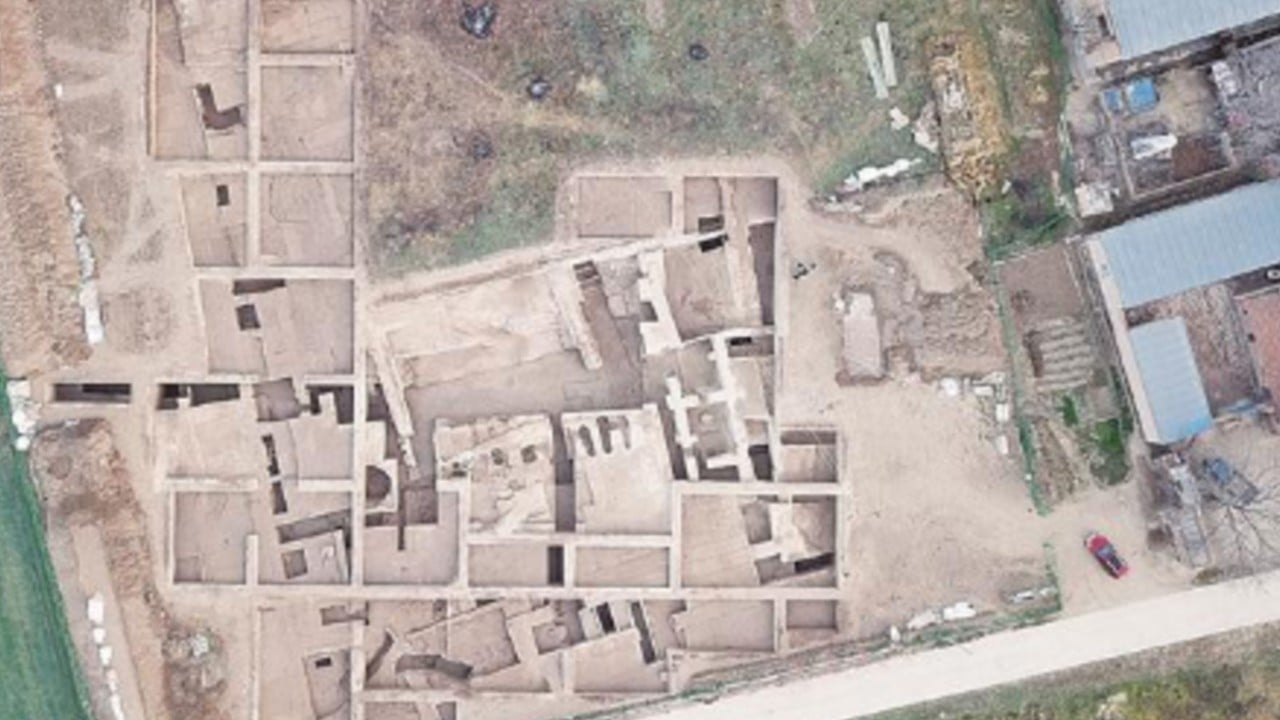
I stood at the rim of the Huanbei Shang City site during a biting November wind, watching an archaeologist use a bamboo pick to shave away a millimeter of compacted soil. Beneath his knees lay the remains of a massive, palatial complex from the middle Shang Dynasty, dating back to roughly 1300 BCE. It was an architectural marvel of its era, featuring sprawling rammed-earth foundations, wooden pillars that once supported heavy tiled roofs, and courtyards designed to awe subjects and intimidate rivals.
Yet, when archaeologists finally peeled back the earth, they found no signs of a catastrophic fire. There were no shattered arrowheads embedded in the walls, no scattered skeletons of defenders cut down in a sudden invasion, and no ash layers indicating a conquering army had put the capital to the torch.
Instead, they found something far more unsettling. The people who built this magnificent palace had carefully dismantled its wooden superstructure, stripped its valuable materials, and systematically buried the entire complex beneath a thick, protective blanket of dirt before walking away.
Why would a thriving civilization expend staggering amounts of human labor to erase the very seat of its own power?
The Weight of a Moving Capital
To understand what happened in Anyang, we have to let go of our modern obsession with permanence. Today, we measure a city’s greatness by how long its skyscrapers stand and how stubbornly its borders resist change. When a modern capital moves, it is usually because of war, economic collapse, or a massive natural disaster.
In ancient China, the rules of survival were written in water and soil.
Consider a hypothetical scenario to picture the daily reality of a Shang Dynasty bureaucrat—let us call him Wei. Wei is a mid-level administrator responsible for grain storage and bronze production in Huanbei, the precursor to the famous Yinxu ruins. For thirty years, Wei has watched the palace walls rise above the plains along the Huan River. To him, the palace is the axis of the universe, the physical anchor connecting the Shang kings to their royal ancestors and the supreme deity, Di.
Then, the river begins to turn.
The Yellow River and its tributaries, including the Huan, are notoriously restless. Over decades, silt builds up in the riverbed, elevating the water level above the surrounding floodplains. Wei would have watched the water table rise in the city’s wells, turning clean drinking water brackish. He would have seen seasonal floods creep closer to the palace foundations each summer, saturating the rammed-earth walls until they began to sag and crack like wet cardboard.
At the same time, the surrounding forests—cut down relentlessly to fire the bronze foundries and heat the royal kilns—were disappearing. Without tree roots to hold the loess soil, dust storms choked the spring air, and summer rains washed away the topsoil needed to feed a growing population.
The Shang rulers faced a terrifying realization. Staying meant slow suffocation by mud, floodwater, and depleted resources. Moving across the river to a new site—what we now know as Yinxu—was not an act of defeat. It was an act of radical, calculated preservation.
The Architecture of Intentional Abandonment
When we move houses today, we pack our boxes, lock the front door, and leave the empty shell for the next tenant or the wrecking ball. To the Shang people, a royal palace was not mere real estate. It was a living ritual vessel.
You do not simply leave a sacred vessel lying in the dirt for scavengers, squatters, or rival clans to desecrate.
Archaeological excavations at Huanbei, particularly around Palace Foundation No. 1 and No. 2, reveal an astonishing level of discipline during the abandonment process. Think of it like shutting down a nuclear reactor rather than abandoning a campfire. Every step had to be controlled to prevent spiritual and political contamination.
First, the builders removed the heavy timber columns and roof beams. Wood was precious, especially straight, towering trunks harvested from distant mountains, and moving those timbers across the Huan River to construct the new capital saved years of grueling logging.
Next came the ritual purification. Excavators uncovered sacrificial pits filled with cattle, sheep, pigs, and, tragically, human victims placed deliberately along the foundations. To our modern sensibilities, this is horrifying, an unbridgeable gulf between their world and ours. Yet, within the logic of the Shang worldview, these offerings were an essential spiritual seal. They were paying a final, monumental tribute to the ancestors who had blessed the palace, formally asking permission to close the temple doors and relocate the royal lineage.
Finally, thousands of laborers hauled basket after basket of clean yellow earth, dumping it over the stripped foundations and pounding it flat with wooden pestles. They essentially entombed their own city.
Why Burying the Past Secured the Future
It is easy to look at the ruins of Anyang and see only a puzzle for historians, a dry sequence of pottery shards and radiocarbon dates. I admit, the first time I read the archaeological reports on Huanbei, my eyes glazed over at the measurements of postholes and stratigraphic layers. It felt distant, academic, and utterly disconnected from the anxieties of modern life.
Then I thought about the sheer audacity of the decision.
Imagine convincing an entire city of tens of thousands of people to tear down their homes, abandon their ancestral graves, bury their grandest monuments, and rebuild everything from scratch two miles away. There were no bulldozers, no cranes, no spreadsheets to calculate the return on investment. There was only human muscle, woven baskets, and an unshakeable collective will.
Why did they bury the palace instead of just letting nature reclaim it?
- Preventing Usurpation: An intact palace is an invitation. If a rival tribe or a rebellious noble moved into the abandoned halls of Huanbei, they could claim the symbolic authority of the Shang kings. By erasing the physical structure, the rulers ensured that legitimacy moved exclusively with them across the river.
- Protecting Sacred Ground: Leaving the ancestral altars exposed to the elements—to be rained on, overgrown with weeds, and trampled by wild animals—was an unthinkable insult to the spirits whose favor kept the dynasty alive. A clean burial preserved the dignity of the site.
- Psychological Closure: You cannot build a new capital if half your population is constantly looking backward, hoping to return to the old one. Burying the palace burned the ships. It forced every craftsman, farmer, and noble to accept that the future lay on the other side of the river.
History loves a dramatic collapse. We tell endless stories about the fall of Rome, the burning of Troy, and the sudden vanishing of the Maya. There is a strange comfort in catastrophe; it suggests that great civilizations only end when something massive and unstoppable hits them from the outside.
The buried palace of Anyang tells a much harder truth. Sometimes, survival requires you to voluntarily destroy the very thing you spent generations building.
The Ghosts Under the Yellow Earth
Standing near the Huan River today, the landscape looks deceptively peaceful. Cornfields stretch toward the horizon, broken up by clusters of brick farmhouses and the occasional plume of smoke from a distant factory. Beneath those cornfields, however, lies a massive, subterranean blueprint of human resilience.
The move from Huanbei to Yinxu worked. In their new capital across the river, the Shang Dynasty entered its golden age. They perfected the art of bronze casting, producing intricate ritual vessels that still defy modern metallurgical replication. They developed the earliest known system of Chinese writing, carving questions to their ancestors onto turtle shells and ox scapulas—the famous oracle bones that gave birth to three thousand years of continuous written history.
None of that would have happened if they had clung stubbornly to their old palace.
We spend so much of our lives trying to protect our sunken costs. We stay in failing jobs because we spent ten years climbing the ladder; we hold onto outdated business models because we built the infrastructure; we refuse to let go of old identities even when the river is actively flooding our foundations. We treat abandonment as a synonym for failure.
The ancient inhabitants of Anyang knew better. They understood that a city is not its walls, and a culture is not its buildings. A civilization is the people carrying the memory forward.
When the last basket of yellow earth was tamped down over the palace of Huanbei, the wind blew across a flat, empty plain where a glorious capital had stood just months before. To a stranger passing by, it would have looked like nothing had ever existed there at all. Yet, just across the water, the sound of thousands of wooden pestles pounding new foundations into the earth had already begun.