The air in George Town does not circulate; it hangs. It is a thick, humid soup seasoned with the scent of charred flatbread, frying curry leaves, and gasoline from passing motorbikes. For centuries, this corner of Penang has existed in its own rhythm, indifferent to the rushing pace of the modern world. Here, history is not kept in museums. It is lived in the crumbling plaster of pre-war shophouses, the faded blue wash of the Cheong Fatt Tze mansion, and the slow, deliberate lives of its residents.
Then came the Hollywood caravan. For a different look, read: this related article.
In July of 2026, the quiet alleys of Penang were suddenly occupied by massive diesel generators, towering lighting rigs, and a small army of crew members holding clipboards. Netflix had arrived to film parts of its upcoming crime thriller, The Big Fix, directed by Baltasar Kormákur. The movie—which stars Mark Wahlberg as a former Interpol officer digging into a global FIFA match-fixing conspiracy—is mostly being shot in the sleek, metallic expanse of Sydney. But for a story about global corruption and hidden transactions, the production needed something old, layered, and deeply atmospheric. They needed Penang.
To the locals, the sudden appearance of movie trailers and road closure signs on Lebuh Melayu and Lorong Kulit was an intrusion, albeit an exciting one. Yet, what happened over those two weeks was not the standard story of a high-and-mighty film crew taking over a historical town. Instead, it became a quiet, viral lesson in human connection. Similar coverage on the subject has been published by Deadline.
The Machine in the Old City
To understand the sheer contrast of this moment, we must first look at the sheer scale of the apparatus that follows a star of Wahlberg’s magnitude.
A Hollywood film set is an exercise in absolute control. Every second is budgeted; every movement is calculated. The star is usually kept inside a climate-controlled trailer, shielded from the tropical heat and the prying eyes of the public by a phalanx of security guards. In places like Penang, where the streets are narrow and the houses are packed tight, this bubble is incredibly difficult to maintain.
Let us look at a hypothetical local onlooker—we will call him Uncle Chen, a composite of the many elderly shopkeepers who watched the drama unfold from their doorways. Uncle Chen has run a small sundry shop on Lebuh Melayu for forty years. He has seen politicians, tourists, and storms pass through. To him, the film crew looked like an occupying force. They brought massive crane arms that blocked the sky and lights so bright they made midnight look like noon.
But then, the car doors opened.
Out stepped Mark Wahlberg, wearing a simple, dark green long-sleeved shirt and jeans. No sunglasses. No visible security detail pushing people out of the way. Just a man walking into the humid Malaysian afternoon, ready to work.
The crowd that had gathered behind the plastic barricades held its breath. They expected the distant, plastic wave of a visiting dignitary. What they got instead was something entirely different.
The Comedy of the Perodua Kelisa
The first crack in the traditional barrier between Hollywood and George Town appeared in the form of a silver Perodua Kelisa.
For those unfamiliar with Malaysian automotive history, the Kelisa is a tiny, quirky hatchback. It is a car built for tight parking spots and budget-conscious students. It is loud, it is cramped, and it is universally beloved by Malaysians as a symbol of no-frills, practical transportation. It is the absolute antithesis of a Hollywood action hero's ride.
Yet, as the cameras began to roll, onlookers watched in utter amusement as the 55-year-old actor, famed for his roles in high-octane blockbusters like Transformers and The Departed, repeatedly got in and out of this miniature silver car.
The image was delightfully absurd. Social media in Malaysia erupted. Within hours, videos of the action star operating the tiny hatchback went viral. Memes flooded the internet, joking that the humble Kelisa would now become a highly sought-after collector’s item.
But the real magic happened when the director called "cut."
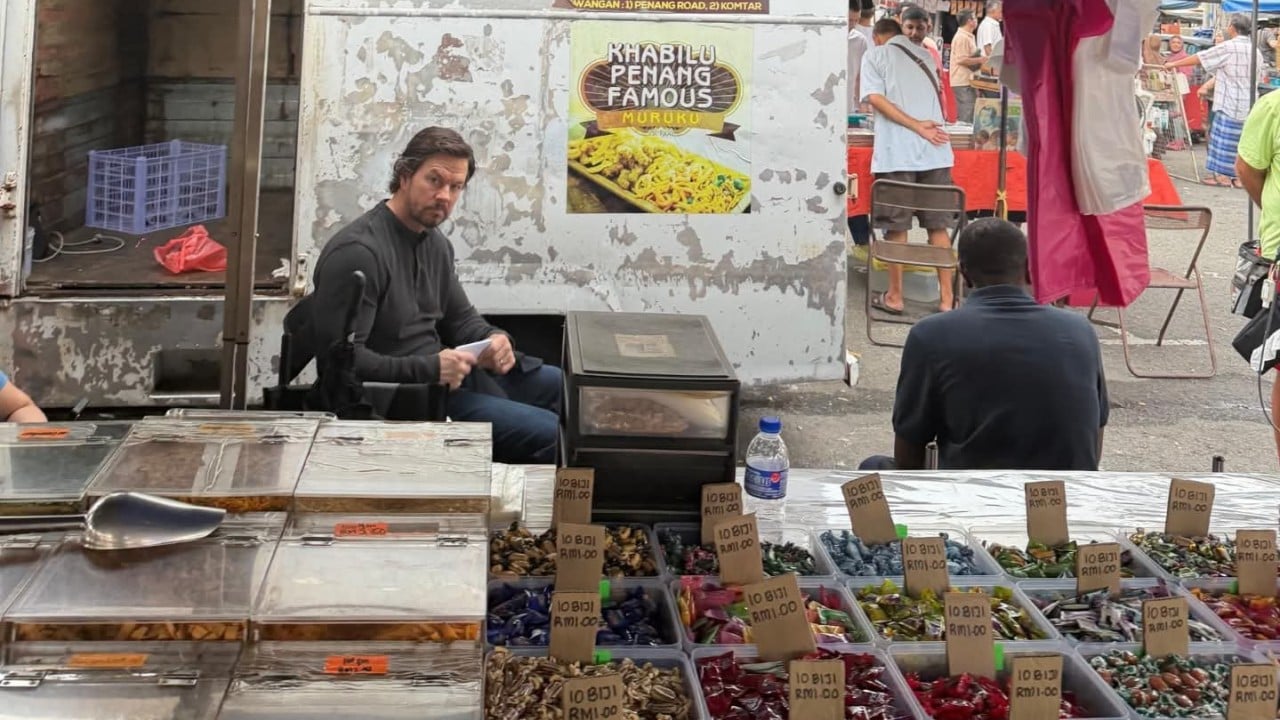
Instead of retreating to an air-conditioned tent to escape the punishing 33-degree heat, Wahlberg wandered over to a roadside muruku stall. Muruku is a crunchy, savory Indian snack, fried to perfection on the roadside and sold for pocket change. The stall owner, startled to find one of the most recognizable faces on the planet standing under his modest tarp, offered him a seat on a cheap plastic stool.
Wahlberg sat. He chatted. He ate.
There were no handlers frantically pulling him away, warning him about street food or hygiene. The stall operator later took to social media, posting a simple, heartfelt message: "Mark Wahlberg also came to hang out at our muruku stall, when will you come again?"
It was a tiny moment, but it went viral because of what it lacked. It lacked pretense. It lacked the curated, sterile public relations polish that usually accompanies celebrity visits to developing nations. It was just a tired actor sitting on a red plastic chair, sharing a moment of quiet with a man selling snacks.
A Quiet Sunday in Sungai Ara
The true measure of a person is often found in what they do when the cameras are not rolling and there are no directors to yell "action."
Wahlberg is a devout Roman Catholic. On Sunday, with a rare break in the demanding shooting schedule, he did not head to a luxury resort or a private beach. Instead, he made his way to the Church of Divine Mercy in Sungai Ara, a quiet suburb of Penang.
He didn't slip in through a back door. He didn't ask for a private pew. He joined the local parish for Mass, sitting among ordinary Malaysian families who had come for Sunday worship.
After the service, he met with the parish priest, Father Michael Raymond. A short video clip posted to Instagram captured the interaction. In it, Wahlberg stands next to the priest, smiling warmly, looking genuinely at peace.
"Happy Sunday, brother. God bless you. Stay prayed up, from Malaysia," Wahlberg said to his followers, his arm slung comfortably over the priest's shoulder.
This was not a publicity stunt organized by Netflix to promote The Big Fix. There were no movie posters in the background, no corporate logos. It was a deeply personal act of faith carried out in a community thousands of miles from his home.
To the parishioners, this was the ultimate sign of humility. In a culture where status is often flaunted and hierarchy is strictly observed, seeing a global superstar quietly submit to the same Sunday routine as everyone else was a profound revelation. It humanized him in a way that no cinematic role ever could.
The Power of Dropping the Shield
We live in an era of deep skepticism. We are accustomed to seeing celebrities through the heavily filtered lens of social media, where every act of charity is calculated for engagement and every public appearance is managed by a team of publicists. We expect walls because walls are safe.
But when those walls are voluntarily dropped, the effect is electric.
By simply sitting on a plastic stool, by riding in a cramped local car, and by praying in a neighborhood church, Wahlberg did more for the local community than any high-budget tourism campaign ever could. He validated their daily lives. He showed that their space, their food, and their faith were worthy of respect.
The production of The Big Fix will eventually pack up its trucks and fly back to Australia. The streets of George Town will return to their quiet, humid routine. Uncle Chen will go back to selling his sundries, and the muruku seller will continue to fry his snacks under the tropical sun.
But for a brief moment in the summer of 2026, the distance between the glittering heights of Hollywood and the ancient streets of Penang vanished. It didn't take a multi-million-dollar budget to bridge the gap. It only took a little bit of heat, a tiny silver car, and the willingness to sit down and listen.