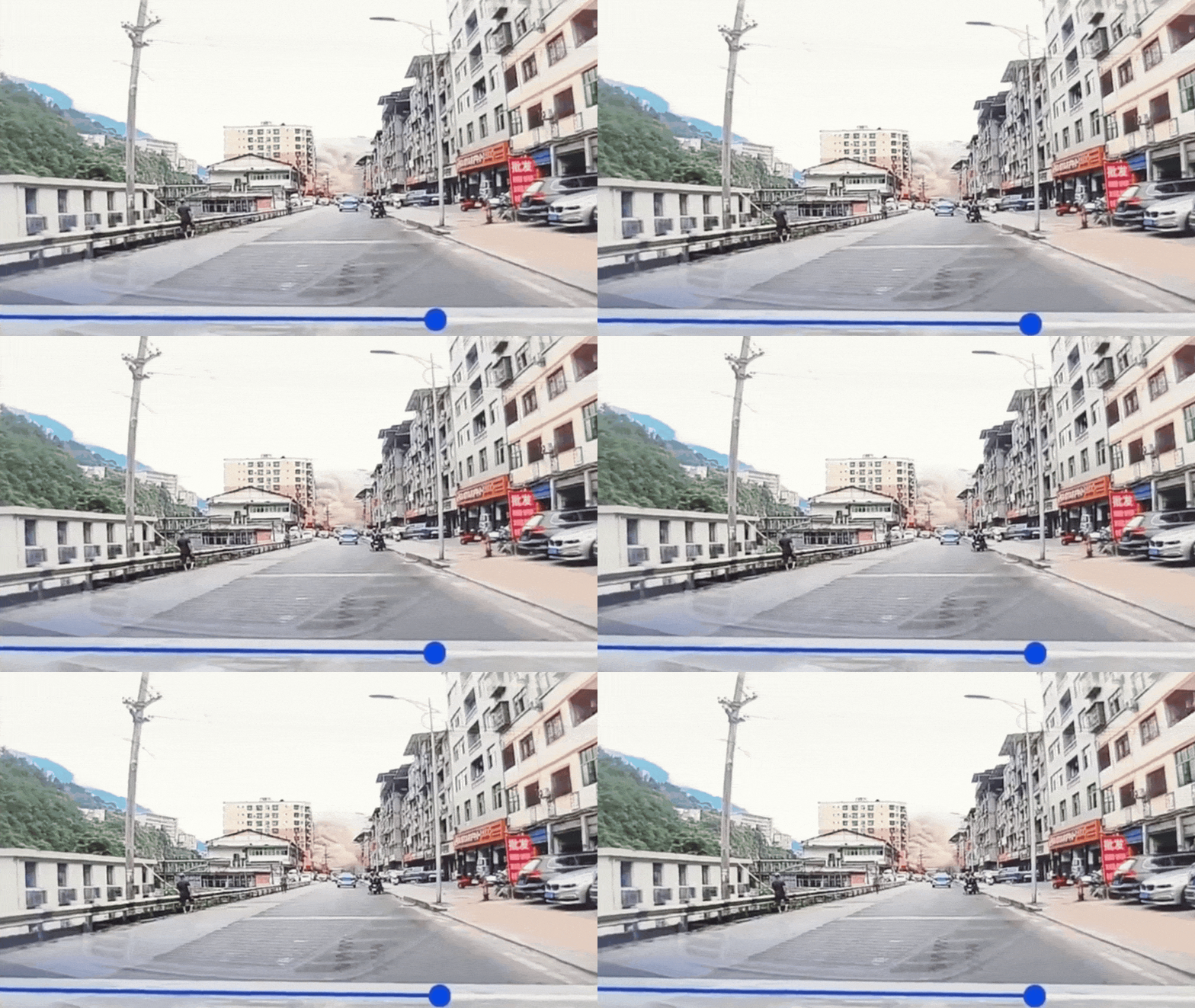
Heavy rain hits a steep mountain slope. The soil gets soaked. Within seconds, millions of tons of earth obliterate a village below. This isn't a freak accident. It's a recurring nightmare in the mountainous regions of southwestern China, where geological instability meets dense rural settlements. When news breaks of another deadly landslide striking these regions, leaving dozens missing under fractured rock and mud, the media focuses heavily on the immediate rescue drama.
We see the footage of excavators digging through gray debris. We watch emergency crews working through sub-zero temperatures or torrential downpours. But the real story is what happens before the mountain falls.
The immediate focus always centers on the frantic race against the clock. Rescue workers scramble over unstable terrain, using sniffer dogs and life-detectors to find survivors. Yet, the harsh truth is that survival rates drop drastically within the first few hours of a massive slope failure. To understand why these disasters remain so lethal despite advanced satellite monitoring and massive infrastructure spending, we have to look at the intersection of treacherous terrain, intense weather shifts, and the sheer physics of moving earth.
The Brutal Physics Behind Mountain Slope Failures
Landslides don't happen at random. They follow strict mechanical rules. In places like Yunnan, Sichuan, and Guizhou provinces, the topography is stacked against the people living there. Steep slopes exceeding thirty degrees are common. Entire villages sit perched on narrow valleys right beneath unstable cliffs.
When heavy rainfall or sudden snowmelts hit these areas, water seeps deep into the bedrock. This creates immense pore water pressure. Think of it as a hidden hydraulic jack lifting the mountain from the inside. The water reduces the friction between soil layers and solid rock. Once that friction drops below a critical threshold, gravity wins.
What makes these specific events terrifying is their speed. A deep-seated rockslide can transition into a high-velocity debris flow in seconds. It travels at speeds exceeding fifty miles per hour. People sleeping in their homes don't get a warning siren. They get a low rumble, and then the house is gone.
Geologists point out that many of these vulnerable zones feature weak rock compositions, such as weathered shale or fractured limestone. These materials degrade fast when exposed to alternating cycles of drought and intense rain. Over years, tiny fissures grow into massive cleavage planes. You can't always see this damage from a satellite image or a drone flyover. It happens deep underground, completely hidden until the final collapse.
Why Early Warning Systems Still Fail Local Communities
Governments invest heavily in disaster prevention networks. China has deployed thousands of tilt meters, rain gauges, and GPS displacement sensors across its southwestern mountain ranges. Yet, disasters still slip through the cracks.
The problem lies in scale and local complexity. You can monitor a known, active landslide site with high precision. But southwestern China contains millions of distinct slopes. Monitoring every single hillside where a family might build a home is logistically impossible.
Local weather patterns complicate things further. Microclimates in deep river valleys can produce extreme, isolated downpours that regional weather stations completely miss. A rain gauge five miles away might report a light drizzle while a specific ridge gets pounded by a cloudburst. By the time the local soil saturates, the window for evacuation has closed.
Human behavior plays a massive role too. False alarms breed apathy. If a sensor triggers an evacuation alert three times and nothing happens, residents stop taking the sirens seriously. They look outside, see a familiar rainstorm, and decide to stay in bed. In rural areas, older populations often hesitate to leave their homes, possessions, and livestock behind, unaware that this specific storm is the one that will destabilize the entire ridge above them.
The Logistical Nightmare of High Altitude Rescues
When a mountain collapses, the immediate aftermath is pure chaos. The landslide usually wipes out the only road leading into the valley. Bridges snap like toothpicks. Communication lines go completely dark.
First responders can't just drive a fleet of heavy excavators to the scene. They often have to hike in on foot, carrying basic tools, thermal cameras, and medical supplies on their backs. The terrain remains highly dangerous even after the main event. Secondary landslides are a constant threat. As rescue teams dig through the toe of the slide, they risk destabilizing the upper scar, which can send fresh waves of debris down on top of them.
Weather rarely cooperates during these emergencies. The same rain or snow that triggered the slide usually continues to fall, turning the debris field into a treacherous soup of quicksand and boulders. Heavy machinery sinks into the mud. Helicopters face thick fog and turbulent mountain winds, making aerial extraction impossible.
Every minute matters because of asphyxiation and hypothermia. Debris from a rockslide doesn't leave clean air pockets like a collapsed concrete building does. The fine silt and mud fill up every void, suffocating victims quickly. If someone survives the initial impact, they face the brutal cold of high-altitude nights.
Moving Beyond Reactive Crisis Management
We need to change how we talk about these disasters. Reporting on the bravery of rescue crews is important, but it shouldn't overshadow the systemic vulnerabilities that let these tragedies happen in the first place. Relying on post-disaster response is a losing strategy when dealing with the raw power of moving mountains.
True safety requires aggressive, long-term preventative engineering and strict land-use zoning.
First, engineering solutions must target high-risk zones directly. This means constructing heavy debris-flow retention basins, installing deep rock bolts to pin unstable strata together, and creating flexible steel ring nets capable of catching boulders before they hit roads or homes. These projects are expensive, but they cost far less than rebuilding an entire village and clearing millions of tons of mud.
Second, rural planning departments must enforce strict no-build zones along known geological fault lines and ancient landslide deposits. Many modern tragedies occur on slopes that moved centuries ago; the ground remains fundamentally loose and unstable, waiting for the right trigger to slide again.
Finally, communities need practical, low-tech evacuation drills that don't rely entirely on cellular networks or power grids. Hand-cranked sirens, clear physical escape routes marked on high ground, and designated local spotters who watch the upper ridges for falling pebbles or widening cracks can save more lives than a million-dollar sensor that loses power during a storm.
Instead of waiting for the next emergency broadcast, local authorities must prioritize aggressive geological mapping and proactive relocation programs for families living under the shadow of unstable peaks. Safety isn't found in the speed of the rescue crew. It's found in making sure nobody is standing in the path of the mountain when it finally lets go.