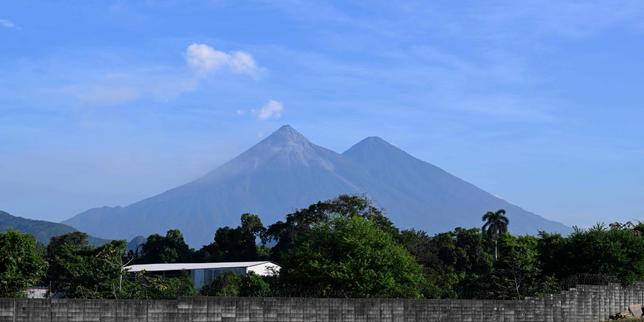
The headlines rolled in with a sigh of relief. The eruption of Guatemala’s Volcán de Fuego had ended. The tourism boards exhaled. The travel blogs updated their itineraries. The lazy consensus settled over the international press corps like a comfortable blanket.
Except it is a complete fiction.
If you spend your time tracking vulcanology reports rather than reading copy-pasted wire service dispatches, you know that Fuego never truly stops. It breathes, it pauses, it recharges. Declaring an eruption "over" at one of the most violently active stratovolcanoes on the planet is like saying a sleeping predator in your living room has decided to become a house pet. It misunderstands the mechanics of the Central American volcanic arc, it misleads travelers, and it treats a dynamic geological engine as if it were a faulty kitchen appliance that someone finally turned off.
Let's look at what actually happens when the media reports an end to a Fuego eruptive phase. The surface activity drops. The continuous tremor signals on the INSIVUMEH seismographs subside. The ash plumes stop punching holes into the stratosphere every twenty minutes. Bureaucrats tick a box. Tour operators dust off their hiking boots and start marketing sunset treks up Acatenango—the prime vantage point staring directly into Fuego’s throat.
That is where the danger begins.
The Fallacy of the Volcanic Intermission
I have stood on the ridge of Acatenango at midnight, watching incandescent bombs arc through the blackness and listening to shockwaves rattle the fillings in my teeth. When you talk to the local guides who actually live beneath the shadow of the mountain—not the desk-bound analysts in Guatemala City or the foreign journalists regurgitating press releases—you get a entirely different reality.
They do not talk about eruptions ending. They talk about cycles.
Volcanism at Fuego is driven by a high-viscosity basaltic-andesite magma system. Gas builds beneath a hardened plug. Pressure mounts. The system vents explosively, clears the throat, and then enters a phase of depressurization. During this phase, surface activity appears to cease. The casual observer thinks the show is over.
Meanwhile, the magma chamber below is already refilling from deeper crustal reservoirs.
To call this an end is a semantic trap. It encourages complacency. When tourists hear an eruption is finished, they lower their guard. They book cheap packages, ignore local warnings, and venture closer to active ravines, forgetting that pyroclastic flows do not check the official status report before they obliterate a drainage basin.
Why the Travel Industry Loves a Clean Narrative
The travel media suffers from a terminal addiction to closure. Readers want neat boxes. They want to know: Is it safe to go, or is it not?
Reality refuses to cooperate. Nature does not operate on a binary switch. Fuego exists in a permanent state of restlessness. It is one of the most active volcanoes in the world, averaging major eruptive pulses every few years and minor explosions every single hour.
When a publication writes that the eruption has "ended," they are selling emotional reassurance, not geological fact. They want to revive the local economy—which is understandable, given how heavily communities around Alotenango and Yepocapa depend on tourism revenue. But reviving an economy by misrepresenting natural hazards is a cynical gamble with human lives.
I have seen operators lead groups into restricted zones simply because an official bulletin used the word "ended," ignoring the fresh sulfur dioxide spikes and the ominous rumblings vibrating through the earth beneath their boots.
The Real Risk Assessment
If you are planning to visit Guatemala and witness Fuego, you need to abandon the mainstream framing entirely. Stop asking whether the eruption is over. That question is irrelevant.
Instead, ask yourself these three operational questions:
- What is the current gas emission rate and seismic tremor amplitude?
- Are the local authorities maintaining exclusion zones around the main drainage chutes like Las Lajas, Seca, and Mineral?
- Do you have an independent, real-time communication channel to local seismic updates, or are you relying on a three-day-old travel blog?
The moment you treat Fuego like a dormant tourist attraction, you become a statistic. The 2018 tragedy—where hundreds died because warnings were too slow and complacency was too high—was not a freak accident. It was the predictable outcome of people misinterpreting volcanic behavior as a temporary inconvenience rather than a permanent environmental reality.
How to Experience Fuego Without Being Reckless
Does this mean you should stay away from Guatemala? Absolutely not. Avoiding the country entirely is an overreaction that punishes communities who rely on responsible tourism.
The secret is respecting the mountain on its own terms.
Hire local guides who grew up on the slopes, not twenty-year-old backpackers turned Instagram expedition leaders. Pay attention to the weather, because heavy rainy seasons turn old ash deposits into deadly lahars—fast-moving mudflows that can sweep away bridges and vehicles in seconds, long after the lava stops flowing.
Never camp in the active ravines. Always maintain a line of sight to an evacuation route. And above all, treat every single day on that ridge as if the mountain is waking up, because statistically speaking, it is.
The next time a headline tells you Fuego has gone to sleep, smile, check the seismograph, and remember that the monster is only blinking.