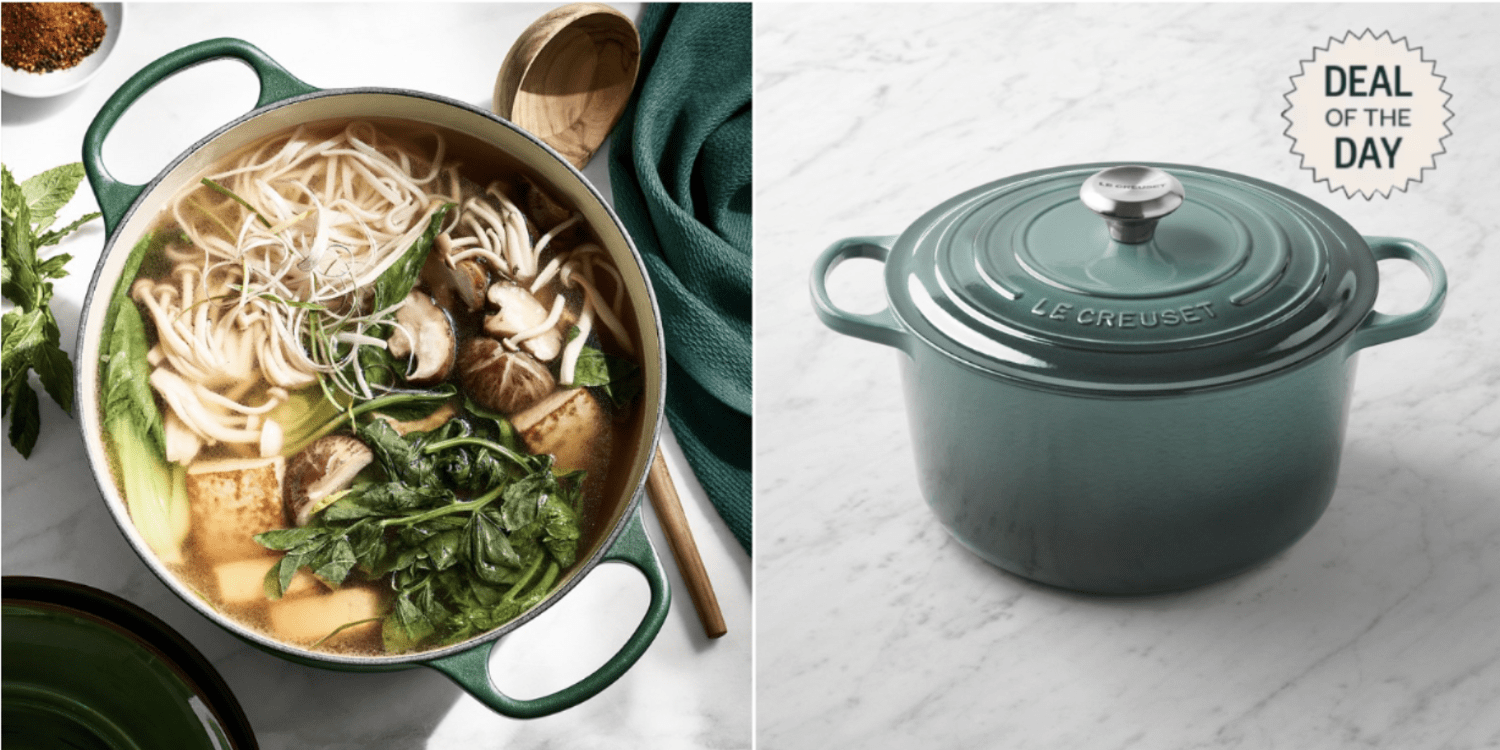
A steep discount on a flagship piece of cookware—specifically a deep Dutch oven marked down by nearly forty percent—looks like a windfall for anyone who cooks. In practice, a markdown of that magnitude on a category icon tells you less about sudden generosity and more about inventory velocity, channel friction, and how prestige brands protect their headline price without letting stock rot in warehouses. If you are shopping for a deep Dutch oven right now, the real question is not whether forty percent off is mathematically good. It is whether the specific piece on sale fits how you actually cook, which retail tier it came from, and what trade-offs sit behind the tag.
Deal roundups treat a forty percent cut on a signature pot as pure luck, a brief breach in a fortress of full-price retail. Anyone who has watched consumer goods pricing for twenty years knows fortresses rarely crack by accident. When an iconic enameled cast iron vessel drops by roughly two-fifths, someone along the chain is managing a mismatch between projected demand and shelf reality, or testing an aggressive promotional window while keeping core colors and flagship SKUs insulated elsewhere.
Why Deep Dutch Ovens Trigger Steep Markdowns
Start with geometry. A standard round Dutch oven has become the default centerpiece of serious home kitchens, the pot people register for at weddings and pull out for Sunday roasts. A deep Dutch oven stretches the wall height relative to the footprint, trading some surface area for extra vertical capacity. That extra wall height sounds practical on paper—more room for stock, less splatter when boiling pasta or frying—until you realize how it changes behavior on a burner.
Taller walls trap steam differently and slow evaporation when you are trying to reduce a braise. They also make reaching into the bottom awkward with tongs or a wide spoon, and they eat up vertical clearance in standard ovens or dishwashers if you ever put non-enameled lids or racks nearby. Because shoppers hesitate once they picture lifting a heavy, tall pot out of a lower cabinet, deep silhouettes often sit longer than standard rounds when forecasts assume identical sell-through.
Retailers hate slow-moving heavy iron. Cast iron is dense, expensive to ship, and terrible to store in dead stock. A forty percent discount clears pallets fast without forcing a permanent reset of the brand's core catalog. Notice how often deep or specialty shapes take the sharpest haircuts while standard five-and-a-half-quart rounds hold firmer. That is not random. It is SKU-level triage.
What Forty Percent Off Actually Signals About Pricing Power
Prestige cookware relies on a simple psychological contract: you pay a steep upfront sum because the object is built to last decades, resists obsolescence, and carries unmistakable visual status on a stove. Once a brand trains buyers to expect regular thirty to forty percent cuts across the board, the contract erodes. Shoppers stop paying full price and wait for the next event.
To avoid training the market to wait, makers split their assortment and their channels. Seasonal colors, discontinued shades, overruns on specific capacities like a deep profile, and third-party marketplace allocations absorb the heavy discounting. Meanwhile, core heritage colors in standard sizes stay anchored near list price in flagship boutiques and direct channels.
When you see a deep Dutch oven nearly forty percent off, check the details that deal alerts gloss over. Is it a discontinued pigment? Is it a specific quart size that missed sales targets? Is it sold by an authorized partner clearing seasonal allocation, or a third-party seller moving gray-market stock? None of those automatically make the pot defective. Enameled cast iron from a disciplined foundry is still cast iron coated in glass enamel. Yet knowing why the discount exists keeps you from mistaking a targeted clearance for a universal storewide collapse.
The Physics of Enamel and Cast Iron Under Real Heat
Strip away the marketing and a Dutch oven is a two-material composite: a sand-cast iron core and a fused vitreous enamel shell. Cast iron brings thermal mass—it stores a large amount of heat and releases it steadily—alongside high heat capacity and poor thermal conductivity compared with copper or aluminum. Left bare, cast iron rusts and reacts with acidic foods. Enamel seals the surface, eliminates seasoning, and lets you simmer tomatoes or wine without metallic taste or patina upkeep.
That marriage comes with constraints that no discount can repeal. Enamel is glass. Glass handles compressive loads well and tensile shock poorly. Drop a deep Dutch oven onto a tile floor and the enamel can chip or craze. Slam a cold lid onto a scorching rim, or plunge a hot pot into cold sink water, and thermal shock can spiderweb the interior glaze.
Deep walls amplify one subtle quirk of cast iron cooking: uneven heat distribution across vertical surfaces. Flame or induction coils deliver energy primarily to the base. Heat climbs the walls slowly through conduction, which is why braises work so well once the whole vessel reaches equilibrium. In a deeper pot, the upper third of the wall runs cooler than the base unless the pot has sat on low-to-medium heat long enough to soak. If you sear meat at high heat in a tall pot, the bottom can scorch while the upper walls stay cool, causing sauces or fond to catch unevenly.
Capacity Illusion Versus Usable Cooking Volume
Numbers on a box mislead people constantly. A deep Dutch oven rated at, say, seven or eight quarts holds that volume up to the brim. Real cooking happens below the rim. You leave headspace for bubbling stock, rolling boils, and stirring without sloshing liquid onto the burner.
Hypothetical example: imagine a home cook comparing a standard six-quart wide round pot with a seven-quart deep Dutch oven. On paper, the deep pot offers an extra quart. In practice, when making a batch of chili or broth, both pots need two to three inches of headspace below the rim, leaving roughly the same working volume—while the wider round gives more surface area for browning meat in batches without crowding the pan.
Where a deep Dutch oven genuinely earns its keep is narrow-footprint high-volume tasks. Boiling a large batch of pasta with less splash, rendering or deep-frying where tall sides contain spatter, or holding a big volume of soup on a single burner where counter or stovetop real estate is tight. If your stove has crowded grates and you regularly cook big batches of liquid-heavy food, extra height helps. If your bottleneck is browning proteins or reducing sauces quickly, wider beats deeper every time.
Weight, Ergonomics, and the Reality of Daily Use
Cookware reviews love praising durability and rarely dwell on wrist strain. A large deep Dutch oven empty already weighs enough to make you think twice before lifting it one-handed. Fill it with stock, root vegetables, and bone-in cuts, and you are hoisting fifteen to twenty pounds out of an oven with oven mitts that reduce grip friction.
Look at the handles before clicking buy on a deep model. Short stubby loop handles force your fingers to pinch tight against hot iron. Wider, better-proportioned handles distribute load across more of your hand, though even the best handle cannot repeal gravity. Consider where the pot will live between uses. If it has to come off a high shelf or out of a deep lower drawer, a tall heavy pot becomes an occasion rather than a Tuesday habit.
The best cookware is the piece you reach for without negotiating with yourself. A discounted deep Dutch oven sitting untouched in a cabinet delivers zero return on investment, no matter how steep the percentage off looked at checkout.
How to Audit a Deep Dutch Oven Deal Before Buying
Before treating a forty percent markdown as an automatic win, run through a quick practical check:
- Confirm exact dimensions and quart rating. Check interior diameter and wall height, not just nominal quarts, and measure your oven rack spacing and cabinet clearance.
- Verify seller and warranty terms. Buy from the brand or an authorized retailer so warranty coverage and authentic stock are unambiguous.
- Inspect color and finish notes. Confirm whether the shade is a seasonal or discontinued colorway, and check return policies in case the weight or height feels wrong in hand.
- Match the shape to your stove. Gas burners, electric coils, and induction zones transfer heat differently; check base flatness and diameter compatibility with your largest element.
- Calculate true cost against alternatives. Compare the discounted price against standard-depth Dutch ovens and heavy stainless steel stockpots that might cover the same tasks more lightly.
When to Walk Away From the Markdown
Even a sharp discount is a bad deal if the pot duplicates gear you already own and love. If you already have a versatile five-to-seven-quart round Dutch oven that handles braises, soups, and bread baking, adding a tall twin mostly crowds your storage. Likewise, if you cook mostly quick weeknight meals under thirty minutes, cast iron's slow warm-up and heavy cleanup work against your schedule.
On the other hand, if you have been waiting for an entry point into heavy enameled cast iron, routinely cook large soups, stews, or batches of stock, and have the storage and arm strength to handle the mass, a steep discount removes the biggest barrier to entry. Just buy the pot for the physics and kitchen habits it supports, not for the thrill of beating a price tag.