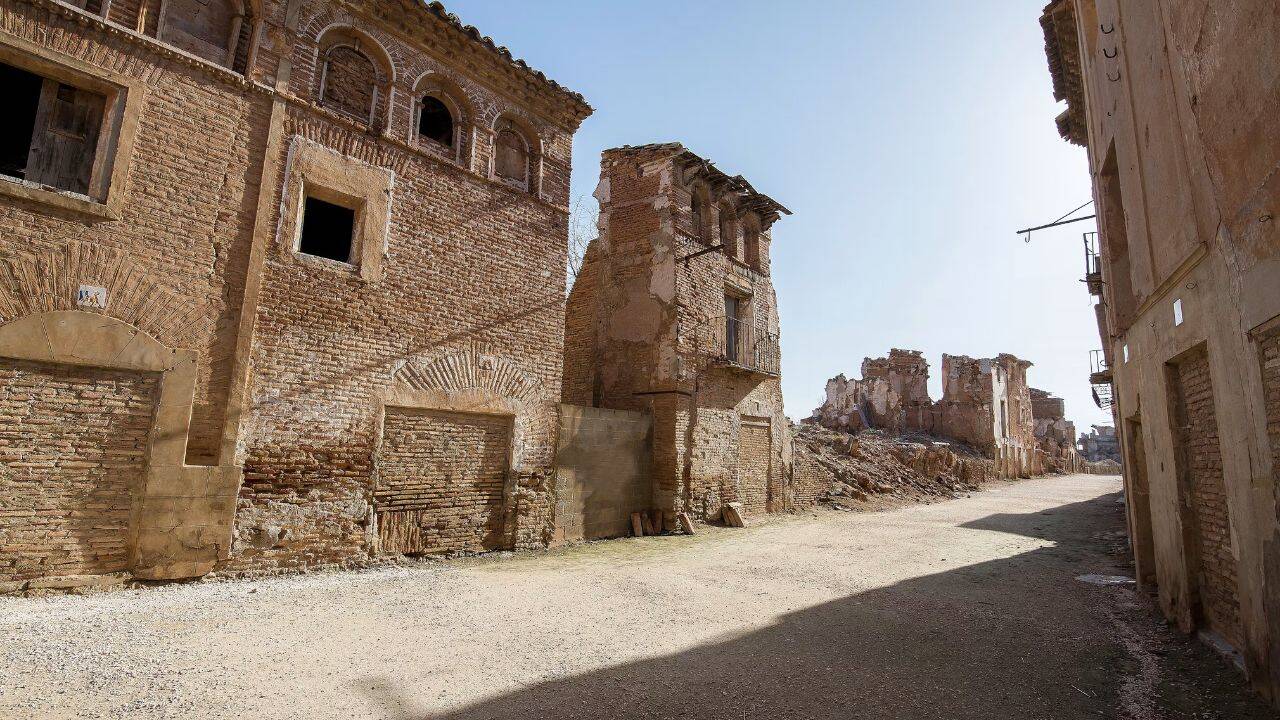
We love a good ruin. We package misery, slap a ticket booth next to it, and call it heritage preservation. The lazy consensus surrounding the 1937 bombing of Guernica is that every unearthing of twisted shrapnel or shattered masonry brings us closer to historical truth, serving as a solemn warning against the horrors of total war. Every time archaeologists pull a fragmented roof tile or a melted toy from the Basque mud, breathless headlines tell us the past is speaking.
It is not speaking. It is being exploited.
I have stood on excavation sites where millions in public grants vanish into the soil, all under the moral shield of remembering the victims of the Condor Legion. We treat these archaeological digs as sacred rituals of atonement. They are actually a comfortable distraction. We obsess over the micro-archaeology of a single Basque market town because confronting the mechanics of modern warfare on a global scale is too terrifying. Digging up a rusted bicycle frame from a cellar lets us mourn a tragedy with a neat beginning, middle, and end, while ignoring the automated slaughter happening right now with our explicit economic consent.
Guernica has been picked clean by academic tourism and political posturing. The town became a symbol before the smoke even cleared, famously immortalized by Pablo Picasso into a flat, monochromatic icon of fascist brutality. But icons freeze reality. They turn a messy, geopolitical proxy laboratory of the Spanish Civil War into a bedtime story about pure evil versus pure innocence. When we keep digging up the same bombed-out basements, we are not discovering new history. We are performing an annual re-enactment of our own historical piety.
The Myth of the Pristine Archive in the Mud
Let us talk about what these excavations actually achieve. Mainstream historical commentary tells us that material culture from 1937 offers an unfiltered window into the civilian experience. Shrapnel density maps, burnt timber beams, and shattered ceramic pots are heralded as silent witnesses.
This is romantic nonsense. Soil is not a pristine vault. It is a blender.
When a town is bombed into dust by incendiary and high-explosive ordnance, followed immediately by frantic rescue efforts, military occupation, decades of Francoist whitewashing, modern urban rebuilding, and municipal pipe-laying, the stratigraphy is a disaster. What archaeologists pull out of Guernica today is filtered through nearly a century of human interference, political curation, and natural decay.
When you prioritize the fetishization of physical debris over institutional and economic analysis, you miss the actual mechanics of how total war functions. The Condor Legion did not bomb Guernica just to test brute force. They bombed it as an industrial logistics experiment. They wanted to measure how civilian morale fractured under coordinated aerial bombardment, paving the doctrine for London, Dresden, and Tokyo.
Focusing on a broken teacup found in a ruin lets us personalize the horror, which is emotionally comforting. But it blinds us to the cold, bureaucratic rationalization that made the bombing possible in the first place. War is not an accident of bad men with bad ideas; it is a feature of state-industrial competition. You cannot excavate that out of a cellar floor.
The Economics of Historical Perpetuation
Follow the money behind these perpetual digs. Heritage preservation sounds noble until you look at municipal balance sheets and regional tourism boards. A permanent state of historical excavation ensures a steady drip of cultural subsidies, EU grants, and curious travelers looking for a heavy afternoon of emotional tourism.
Guernica is marketed as an eternal shrine to peace, yet its modern economy relies heavily on the very tragedy that flattened it. This is the paradox of dark tourism. We claim we want to remember so we never repeat, but our method of remembering turns human catastrophe into a regional brand.
Imagine a scenario where a town council decides to stop spending millions on unearthing rusted bicycle parts and instead funnels that exact capital into contemporary geopolitical conflict resolution or digital infrastructure for refugees. The outcry would be deafening. Why? Because society prefers its martyrs silent, bronze, and buried underground. Living refugees require policy, funding, and uncomfortable compromises. Rusted shrapnel just sits in a glass case and looks profound.
The historical consensus also relies on a convenient geographical parochialism. Guernica gets the spotlight because of Picasso, the Basque nationalist narrative, and the dramatic foreign press corps present in 1937. Meanwhile, dozens of other Spanish towns suffered equal or worse destruction during the civil war and received zero cinematic or archaeological immortality. Their ruins were cleared away so people could get back to farming and living. Were their dead any less dead? Was their suffering any less instructive?
History is shaped by narrative convenience, not historical equity. By treating Guernica as the unique epicenter of 20th-century civilian suffering, we implicitly suggest that other forgotten atrocities matter less because they lacked a master painter to brand them.
Dismantling the Classroom Narrative
Let us address the standard questions people ask when confronting the Spanish Civil War.
Did the bombing of Guernica invent modern strategic bombing?
No. That is a comforting myth used to isolate the event as a singular turning point. Aerial bombardment of civilians was already tested by the British in Iraq, the Spanish in the Rif War, and the Italians in Ethiopia throughout the 1920s and early 1930s. Guernica was not the birth of a dark new age; it was a continuation of colonial policing tactics brought home to the European continent. Pretending it was an unprecedented invention lets Western powers frame state-sanctioned violence as an aberration rather than standard operating procedure.
Is preserving these sites enough to prevent future conflicts?
Look around. We have built museums on top of battlefields across the globe, digitized every casualty list, and mandated school trips to historical ruins for generations. It has stopped precisely zero wars. Material preservation creates the illusion of moral progress. We tell ourselves that because we built a gleaming peace museum and preserved a charred timber beam, we are somehow more enlightened than the generations who lit the matches. It is a coping mechanism.
The Uncomfortable Truth About Memory
We do not study the ruins of 1937 to learn from the past. We study them because looking backward is safe.
Real historical engagement requires looking at the present supply chains, the corporate defense lobbies, and the geopolitical compromises that our current governments make every single day. Those systems do not leave behind clean artifacts you can mount in a regional museum. They leave behind spreadsheets, trade agreements, and diplomatic immunity.
Stop treating history as a collection of haunted relics waiting for an archaeologist to rescue them. The past is not hidden in the mud of Guernica. It is operating in broad daylight, and no amount of digging in a Basque cellar is going to change that.
Drop the shovel. Look up.


