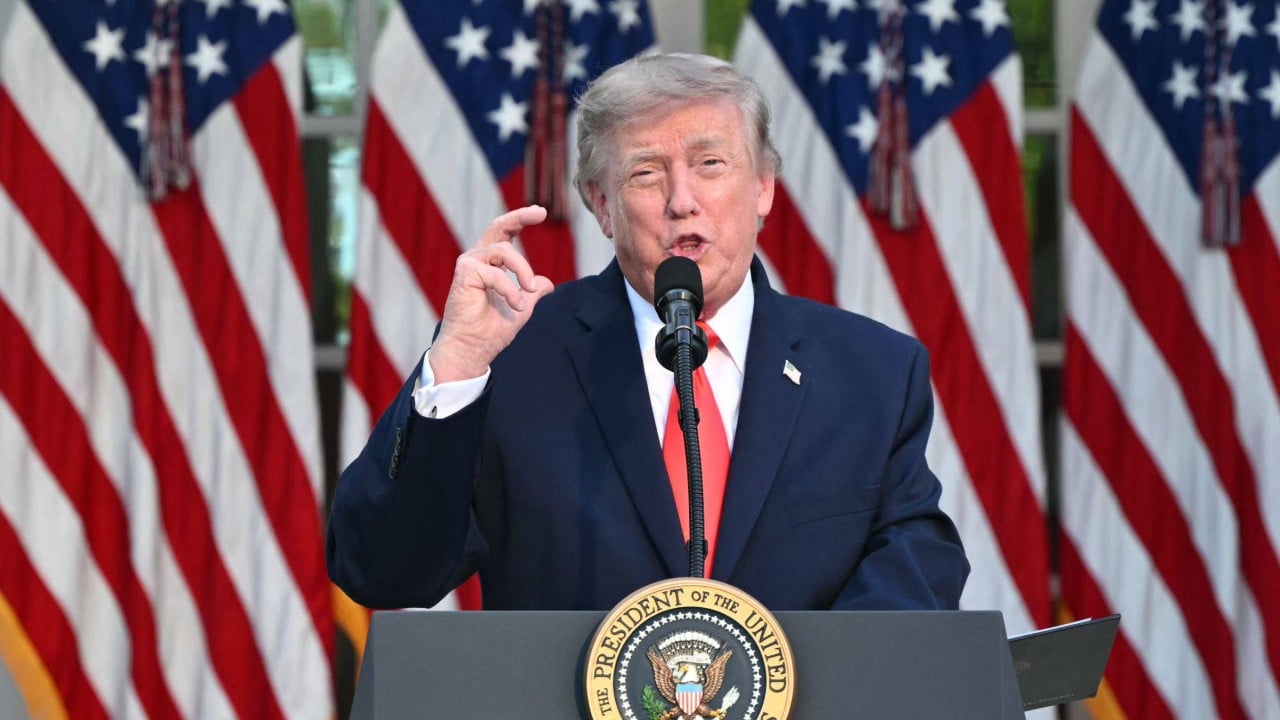
The media is collectively hyperventilating over Donald Trump’s threat to slap 100% tariffs on nations implementing a Digital Services Tax (DST). The standard economic consensus has already written the script: it is a reckless trade war, a tax on consumers, and an isolationist tantrum that will break the global internet.
They are entirely wrong. Not because Trump is an economic savant, but because the mainstream analysis completely misunderstands what a Digital Services Tax actually is.
A DST is not a progressive mechanism to make Silicon Valley "pay its fair share." It is a targeted, protectionist shakedown designed by European bureaucrats to subsidize their own technological failure. By treating a 100% tariff threat as an insane overreaction, analysts miss the broader reality: asymmetric digital protectionism requires an asymmetric response. Retaliatory tariffs are the only language the European Union actually respects.
The Lazy Consensus on Digital Services Taxes
The prevailing narrative treats DSTs—pioneered by France and copied across the globe—as a logical update to the tax code for the modern era. The argument goes like this: American tech giants extract massive revenues from European users, utilize local infrastructure, yet funnel their profits through low-tax havens like Ireland or Bermuda. Therefore, a tax on local digital revenues is just equity.
This sounds reasonable if you do not understand corporate finance.
A DST bypasses profit entirely and taxes gross revenue. Think about the mechanics of that. If a European manufacturing company builds a factory, sells cars at a temporary loss to gain market share, it pays zero corporate income tax. But if an American software platform invests billions in localized R&D, launches a digital marketplace in Spain, and operates at a loss while scaling, Spain taxes the gross revenue anyway.
It is a tax structure engineered specifically to target companies that have high gross margins but massive upfront capital expenditures—a profile that just happens to match every major American tech firm and exactly zero European ones.
French Finance Minister Bruno Le Maire famously defended the tax by naming it the "GAFA tax" (Google, Apple, Facebook, Amazon). They did not even bother to hide the target. It is a nationality-based revenue grab wrapped in the flag of fiscal fairness.
Why the "Tariffs Hurt Consumers" Argument is Lazy
The immediate pushback from the economic establishment is the predictable refrain: Tariffs are paid by the domestic importer, and corporations will just pass the cost down to everyday citizens.
Let’s look at how this plays out in the real world, rather than a theoretical economics textbook. When France implemented its 3% DST in 2019, Google, Apple, and Amazon did not swallow the cost to be polite neighbors. They instantly adjusted their fee structures. Amazon France raised its referral fees for domestic marketplace sellers by exactly 3%. Google increased its advertising rates for French clients.
The European consumer already pays the DST. The tax is passed down immediately because these platforms hold massive market power.
Now look at the flip side: a retaliatory 100% tariff on French luxury goods, wine, or automotive parts. The luxury market behaves differently than the digital utility market. If LVMH has to face a 100% tariff on a handbag entering the United States, they cannot simply double the price without destroying demand in their most lucrative market. The margins on luxury goods are obscene—often exceeding 70%—precisely so they can absorb market shocks. A massive US tariff forces European conglomerates to swallow the margin contraction or lose the American consumer entirely.
The threat of a 100% tariff shifts the pain from the tech sector back onto the domestic political base of the politicians who enacted the DST in the first place. French winemakers and Italian fashion houses have far better lobbying leverage in Paris and Rome than Google does. Trump’s threat targets the exact economic pain points required to force a legislative retreat.
Dismantling the PAA: "Don't We Need Global Tax Coherence?"
If you look at the standard "People Also Ask" queries around this topic, the core assumption is always that the OECD (Organization for Economic Co-operation and Development) is working on a beautiful, harmonized global tax solution called "Pillar One." This framework is supposed to redistribute taxing rights to where consumers are located.
The premise is fundamentally flawed.
I have watched companies waste millions trying to comply with evolving international tax frameworks, and the truth is brutal: global tax harmony is a myth sold by international institutions to justify their own existence. Pillar One has been stuck in a bureaucratic purgatory for years because European nations do not want a fair system; they want a system where they get to tax American IP without creating any of their own.
Imagine a scenario where the United States decided that because American citizens buy millions of German luxury vehicles, the US has a right to tax a percentage of Volkswagen’s global revenue, regardless of where the cars are engineered or manufactured. Germany would call it economic warfare. Yet, when the reverse is applied to data and software code, the media treats it as a progressive triumph.
The DST framework is built on the lie that "user data" is the primary driver of value. It isn't. The value lies in the algorithms, the server architecture, the capital allocation, and the engineering talent concentrated in Silicon Valley. A user typing a search query into a browser does not create value any more than a driver turning a steering wheel creates the value of a car. By taxing the digital interface, foreign governments are effectively stealing American intellectual property rights through the back door of revenue taxation.
The Trade-Off: The Danger of the Nuclear Option
To be clear, using a 100% tariff as a blunt instrument carries immense risk. If a trade war escalates to its logical conclusion, we enter an era of balkanized digital ecosystems.
If the United States executes these tariffs, the EU will retaliate with antitrust fines, data localization mandates, and stricter enforcement of the Digital Markets Act (DMA). We could see an environment where American tech companies simply pull specific services out of high-regulation, low-growth European markets altogether.
We have already seen previews of this. When Canada passed its Online News Act, forcing tech platforms to pay local publishers for links, Meta simply blocked news sharing across its platforms in Canada. The publishers lost traffic, the users lost access, and the government's cash-grab backfired.
If Europe forces the issue, American platforms will scale back features. Apple has already delayed launching specific AI features in the European Union, citing regulatory uncertainties caused by the DMA. The downside of a aggressive US trade stance isn't that American companies will go bankrupt; it is that the internet will fragment into regional silos, hurting global commerce.
But compliance is far worse than fragmentation.
If the US government allows foreign nations to unilaterally tax the gross revenue of its most successful industry without consequence, it sets a precedent that invites every developing economy to create its own bespoke "digital levy." It turns the international trade system into an algorithmic shakedown.
Stop Asking How to Avoid a Trade War
The tech sector and the media are asking the wrong question. They want to know how the US can negotiate its way out of this conflict without disrupting the global order.
That is the wrong approach because the global order is already broken. The WTO is effectively brain-dead, and traditional trade diplomacy has failed to stop digital protectionism.
For the past decade, Washington took a polite, defensive posture. The Obama and Biden administrations filed formal complaints, expressed deep concern at the OECD, and initiated Section 301 investigations. The result? More countries rolled out DSTs. The UK, Italy, Spain, India, and Kenya all moved forward because they knew the American response would be buried in bureaucratic paperwork.
A 100% tariff threat changes the math instantly. It strips away the polite fiction of international tax diplomacy and exposes the conflict for what it is: a raw exercise of economic leverage.
The conventional wisdom says that tariffs are an archaic tool from the industrial age that cannot fix a digital problem. The reality is that money is fungible. If Europe wants to tax American bits, the US must tax European atoms. It is the only way to re-establish deterrence.
Stop looking at the tariff threat as a wild break from rational policy. It is the only rational policy left on the board.