The smell of a high school locker room never truly leaves your skin. It lives in the porous seams of old leather, clings to the wool of letterman jackets folded in cedar chests, and lingers in the sharp, chemical sting of floor wax applied at midnight by men who speak in low murmurs. It is an aroma composed entirely of sweat, liniment, youthful ambition, and the faint, copper tang of iron.
For decades at Chaminade, that smell was home.
Walk the perimeter of the campus on any given Tuesday afternoon, and you hear the percussion of progress. It is the rhythmic thud of a soccer ball striking a worn leather cleat, the rhythmic breathing of a sprinter fighting for hundredths of a second against a stopwatch, and the hollow echo of a basketball bouncing across a polished hardwood floor that has seen generations of adolescents transform into men. But underneath the familiar soundtrack of adolescent athletics, something heavier was missing. A quiet frustration hung in the air.
Ask any coach who spent twenty autumns squinting through a freezing rain, watching a practice get called because the field turned into a swamp of red clay, and they will tell you about the invisible tax. It is not paid in dollars. It is paid in lost reps, in sidelined ankles twisting on uneven sod, and in the quiet, creeping realization that the environment you are offering does not match the magnitude of the young hearts beating inside it.
Athletics at an institution like Chaminade have never been just about keeping score. They are an incubator for grit. They are where a boy learns how to fail publicly, pick himself up, and try again before the bell rings for first period. When the facilities surrounding those boys lag behind their ambition, a subtle message gets transmitted. It says: We want your best, but we are only willing to invest so much in your safety and your growth.
That conversation is over.
Construction fences are going up. Heavy machinery is waking up the quiet morning air. The ground is turning over, and with it, an entire community is shifting its weight.
Consider what happens when a school decides to rebuild its physical foundation. To the casual observer scanning a routine planning document, it looks like concrete pours, structural steel, architectural renderings, and line items in a budget. It looks clinical. Sterile. Cold.
They are missing the human story.
Imagine a hypothetical seventeen-year-old midfielder named Marcus. He is six-foot-one of elbows and fast-twitch muscle fiber, standing on the edge of a muddy pitch that hasn't seen proper drainage since the Reagan administration. His cleats are caked in mud. His hamstrings are tight from the cold. He is staring out at a goalpost that leans two degrees to the left because a striker hit it too hard three years ago and nobody ever quite straightened it out. Marcus is dreaming of playing at the collegiate level, of scoring under stadium lights, of wearing a jersey that means something to thousands of people. But tonight, he is just trying not to roll his ankle in a divot while his mother watches from an aluminum bleacher that rattles every time a truck rumbles down the boulevard.
Now, shift the lens to the new reality taking shape right now.
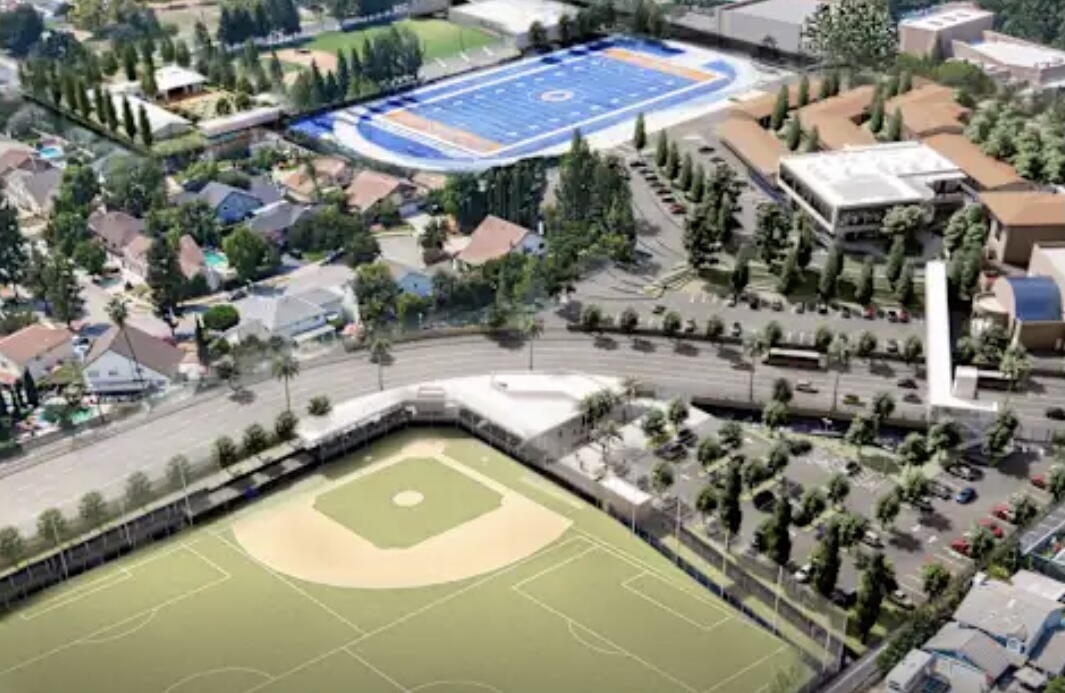
The upcoming athletic facilities at Chaminade are not merely an upgrade in square footage. They are an architectural argument that preparation matters, that safety is a prerequisite for excellence, and that the daily grind of a student-athlete deserves a stage worthy of his sacrifice. We are talking about state-of-the-art synthetic turf fields that laugh at rainstorms, allowing practice to happen when the elements try to dictate terms. We are talking about modern training spaces where injury prevention is treated with the same scientific rigor as offensive strategy.
To understand why this matters, you have to understand the psychology of the adolescent locker room.
When you give teenagers a space that looks professional, clean, and intentional, their posture changes. They walk differently. They drop their shoulders, lift their chins, and hold themselves accountable to a higher standard of care. It is a psychological mirror. If you practice in a dungeon, you play like you are hiding. If you practice in an environment designed for peak human performance, you begin to demand peak human performance from yourself.
The scope of this project goes beyond a single field or a modernized weight room. It is a fundamental realignment of how a historic institution honors its own lineage. For years, the trophies resting in the glass display cases were earned in spite of the infrastructure, not because of it. Alumni who bled for those jerseys thirty years ago did so on patchy grass and in cramped, outdated quarters. They carved out greatness with blunt instruments.
The boys walking the halls today will have scalpel-sharp tools.
There is always a risk, of course, when institutions pour millions into brick, mortar, and turf. The risk is that the soul gets lost in the architecture. You see it all the time in modern prep schools and collegiate complexes—palatial monoliths that feel more like corporate headquarters than places of character formation, where luxury replaces hunger.
That is the tightrope Chaminade has to walk. The dirt must remain in the program. The calluses on the hands cannot be replaced by touchscreens.
If you talk to the men heading the project, the ones wearing the hard hats and unrolling blueprints on the hoods of dusty pickup trucks, they understand this tension intimately. They are not building a country club. They are building a crucible.
The steel beams going into the ground are heavy, but they are nothing compared to the weight of expectation they are meant to support. Every bolt tightened in the coming months represents a promise made to a boy who hasn't even enrolled yet—a boy who will step onto these grounds five years from now, look up at the lights, and never have to wonder if his school believed in his ceiling.
Progress is loud. It sounds like diesel engines idling in the predawn mist. It looks like orange safety cones cutting through the gray morning fog. It feels like anticipation humming in the chest of a coach who has waited his entire career for a level playing field.
The dirt is flying. The old era is being excavated, hauled away in dump trucks, and laid to rest in memory. And underneath the scaffolding, a new chapter is standing tall, waiting for the first whistle to blow.