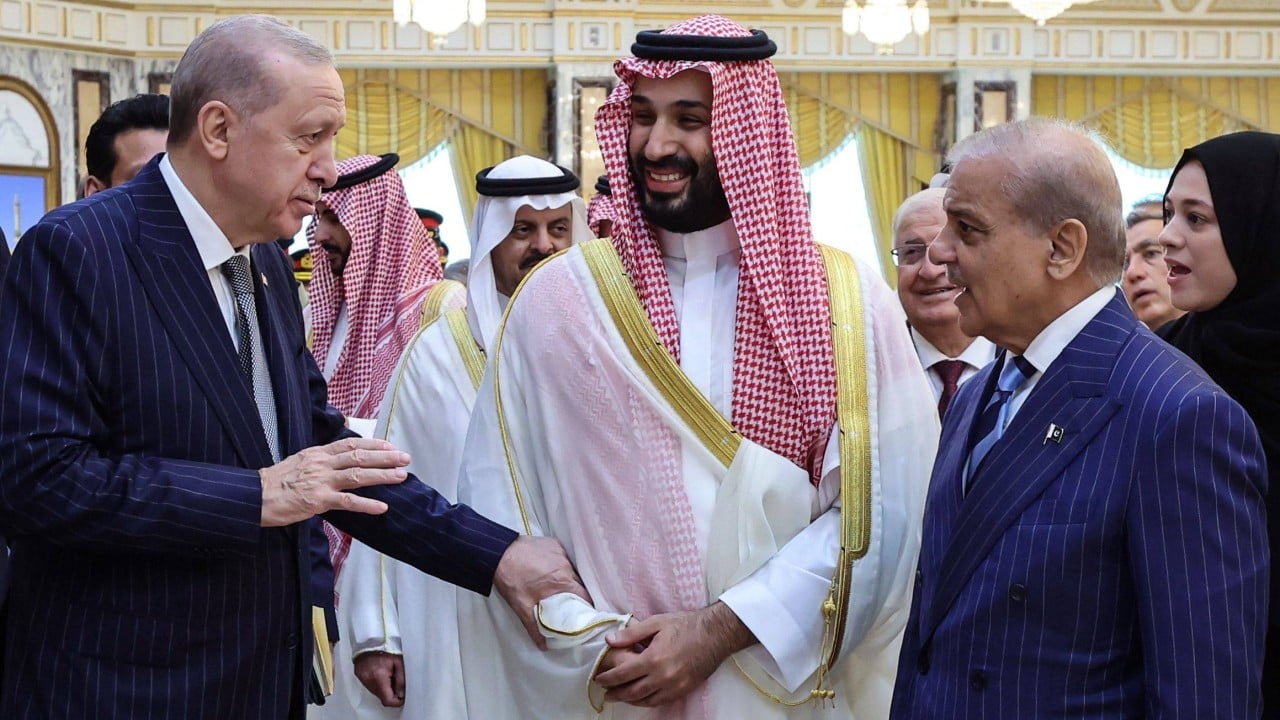
Every desk pundit in London and Washington is currently typing out the exact same comfortable, lazy consensus: the chatter around a trilateral security alignment between Saudi Arabia, Turkey, and Pakistan is just empty noise. They point to doctrinal friction, historical mistrust, and the absence of a formal mutual defense clause resembling Article Five of the North Atlantic Treaty. They call it a photo-op. They call it bureaucratic posturing.
They are dangerously wrong. For another view, read: this related article.
Dismissing this axis because it lacks a shiny bureaucratic charter misses the entire point of how modern power operates in a fractured international order. Treaties are for the twentieth century. Pragmatic, transactional alignment born out of shared desperation is how empires and regional heavyweights actually redraw maps today. I have spent years watching traditional security architecture fracture under the weight of shifting U.S. commitments, and looking at this dynamic through a Cold War lens is professional malpractice.
The Flawed Logic of the NATO Comparison
The mainstream media loves a neat parallel. Analysts look at Riyadh, Ankara, and Islamabad, search for an integrated command structure, fail to find one, and immediately declare the whole enterprise dead on arrival. Further analysis on the subject has been provided by TIME.
This assumes that defensive cooperation requires institutional symmetry. It does not.
Think of it like an asymmetric joint venture in corporate boardrooms. You do not need a merged balance sheet to corner a market; you need overlapping interests, complementary assets, and a shared adversary or existential doubt.
Saudi Arabia brings unmatched financial liquidity and sovereign capital. Turkey brings elite drone technology, heavy industrial defense manufacturing, and combat-tested expeditionary muscle. Pakistan brings the ultimate strategic equalizer: a hardened nuclear deterrent, a massive standing army, and decades of proxy-management expertise honed on volatile borders.
When you combine capital, high-end manufacturing, and nuclear deterrence into a single informal circuit, you do not need a permanent bureaucracy in Brussels. You have a deterrent network.
Dissecting the Structural Friction
Skeptics love to highlight the historical friction points. They remind us that Pakistan historically leaned toward Iran at times, that Turkey and Saudi Arabia fought bitter proxy battles over regional Sunni leadership, and that military doctrines do not align neatly.
This criticism mistakes friction for fragility.
In realpolitik, friction is just heat. Riyadh does not need to love Ankara; they both need independent security insurance because Washington's reliability has cratered. The traditional American security umbrella in the Middle East and South Asia is leaking. When Gulf states realize that security guarantees come with unpredictable political conditions, they diversify their risk.
Turkey needs capital and energy lifelines to stabilize its volatile economy. Pakistan needs structural economic bailouts and modern defense hardware that isn't choked by Western congressional holds. Riyadh needs hard security shields that do not depend on fickle U.S. election cycles.
This is not an ideological romance. It is a marriage of convenience forged in the crucible of mutual abandonment.
The Nuclear Elephant in the Room
Let us address the most uncomfortable truth that mainstream commentary politely avoids: the implicit nuclear dimension.
For decades, strategic analysts whispered about the transactional nature of Pakistani security assistance to the Gulf. When Riyadh helped fund Pakistan's nuclear program decades ago, it wasn't an act of charity. It was a long-term strategic investment.
To pretend that a defense conversation between these three nations excludes this history is naive. Pakistan remains the only Muslim-majority nuclear-armed state. Turkey possesses the second-largest army in NATO and a fiercely independent defense industrial complex that has humiliated traditional Western suppliers in multiple theaters from Nagorno-Karabakh to North Africa. Saudi Arabia is quietly transforming its domestic military ecosystem through aggressive localization.
When you link Saudi financial backing directly to Turkish defense tech production and Pakistani strategic depth, you create a self-sustaining security ecosystem that operates entirely outside Western sanctions and oversight.
What the Pundits Miss About Regional Power
The lazy narrative assumes that if an alliance cannot project power across the globe like the Pentagon, it lacks teeth. That is a relic of unipolar thinking.
Regional security today is about denial, not projection. None of these three states wants to invade Europe or conquer the Americas. They want regional autonomy. They want the ability to crush internal threats, deter predatory neighbors, and conduct foreign policy without waiting for permission from the State Department or the European Union.
An informal, networked defense arrangement achieves this better than a rigid treaty ever could. Rigid treaties invite public friction and political posturing. Flexible, transactional defense pacts allow leaders to cooperate deeply on intelligence sharing, joint manufacturing, and tactical drills while maintaining plausible deniability on the global stage.
The Real Danger of Underestimation
When Western think tanks write off non-Western security alignments as toothless, they blind themselves to reality. This dismissive attitude has failed repeatedly over the past decade.
We saw it when Russia and China deepened their economic ties before the invasion of Ukraine. We saw it when regional actors in the Middle East began normalizing relations directly with each other, bypassing Western mediators.
The Saudi-Turkey-Pakistan axis represents the logical endpoint of a post-American security landscape. It is messy, it is transactional, and it operates in the shadows.
Stop looking for a treaty. Start looking at the supply chains, the joint manufacturing agreements, and the intelligence sharing channels. The architecture is already built. You just refuse to see it because it doesn't look like Washington designed it.