The map of the world is drawn in ink, but it is lived in smoke.
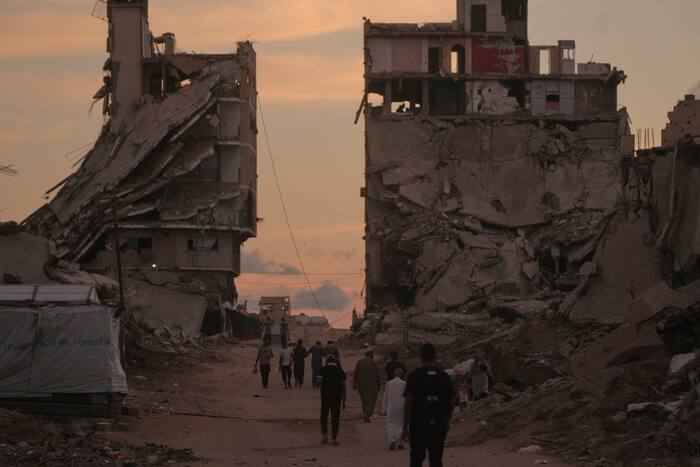
Far away from the quiet rooms where decisions are weighed in milligrams of caution, the morning does not arrive with light. It arrives with a sound. It is a dry, tearing sound that splits the air before the eye can even locate the source. In Sudan, forty lives were folded into the statistics of a single afternoon, swallowed by a drone strike that left behind only fractured masonry and the heavy, metallic scent of unburned propellant.
We talk about conflicts as if they are weather patterns. We use words like developments and escalations, as if human suffering could be plotted on a meteorological chart with neat little arrows and dotted lines. But there is nothing neat about a kitchen table left empty. There is nothing abstract about the way an ordinary Tuesday can suddenly become a permanent before-and-after.
Consider a hypothetical mother named Amina, sitting in a room in Khartoum, listening to the drone overhead. She is not thinking about geopolitics. She is thinking about whether the walls of her house are thick enough, whether her children's breathing is too loud, and how long the water in the cistern will last. When the strike hits three streets away, the glass in her windows doesn't just break; it turns into diamond dust that hangs suspended in the frantic air, catching what little light is left.
That is what a headline about a Middle Eastern development actually looks like when you scrape away the clean, professional veneer of international news. It is noise. It is dust. It is the sudden, terrifying silence that follows when a neighborhood stops breathing together.
And yet, geography is a study in cruel contrasts.
Thousands of miles away from the ash of Khartoum, another kind of silence was breaking, though this one sounded like champagne glasses and collective exhales. For years, the skies above Lebanon had been a forbidden corridor for certain carriers, a locked door in the global architecture of travel. Families had lived in the exhausting limbo of separation, watching weddings on pixelated screens, mourning parents through five-second video clips because direct flights had vanished behind a wall of security prohibitions.
Then, the pen moved. The flight ban lifted.
Imagine walking into Beirut's Rafic Hariri International Airport on the day the first major carrier announced its return. The air here smells of jet fuel, cardamom coffee, and an unbearable, vibrating hope. A grandfather stands near the arrivals gate, his hands trembling slightly as he clutches a bouquet of flowers that are slowly wilting in the indoor heat. He has not seen his daughter in six years. Six years of birthdays missed, six years of growing old in photographs sent via patchy cellular data.
When she finally walks through those sliding glass doors, the noise of the terminal—the shouting taxi drivers, the rolling suitcases, the low hum of announcements—vanishes. There is only the sound of a heavy suitcase hitting the linoleum floor as she drops it, running across the polished tiles straight into arms that thought they might never hold her again.
That is the other side of the ledger. While one part of the region is learning how to count the missing, another is relearning the geometry of reunion.
We struggle to hold these two truths in our heads at the same time because our brains are wired for neat narratives. We want the world to be all good or all bad, all progress or all catastrophe. But history never works that way. It moves like a clumsy tide, washing away a village on one shore while opening a desperately needed harbor on another.
The lifting of the US flight ban on Lebanon is not merely an aviation milestone. It is a recalibration of human distance. For too long, the people of the Levant have lived behind invisible walls, treated as collateral damage in a grander chess game of diplomatic safety. Every canceled flight was a message: You are too dangerous to visit, too complicated to care for. Every closed route whispered that isolation was the default state of the region.
When the ban lifts, the message changes. It says that connection is worth the risk. It says that human movement is a fundamental right, not a bureaucratic privilege granted only when the stars align.
But we must look closer at the machinery of these decisions. Why do skies close so quickly and open so sluggishly?
Airspace restrictions are often treated as objective safety measures, and occasionally, they are. When missiles arc across a horizon, keeping commercial airliners out of the line of fire is simply common sense. Nobody wants a replay of tragedies past, where civilian bodies were traded for political posturing. Safety is a tyrant, demanding absolute obedience, and rightly so.
Yet, safety is also political. The timing of a flight ban lift is rarely accidental. It is a diplomatic signal, a velvet glove extended across a troubled table. It tells allies that confidence is returning, that investments might soon follow, that the bleeding has stopped long enough to check the pulse.
Look at the parallel tracks. In Sudan, the lack of international leverage, the absence of a unified diplomatic brake, leaves the skies open to unmonitored violence. Drones buzz through the blue with impunity because the institutions meant to restrain them are fractured and weak. There is no major carrier lobbying to restore routes there because there is nothing left to service except grief.
Contrast that with Beirut. The aviation market, the diaspora wealth, the strategic economic gravity of Lebanon's capital create a different kind of pressure. The world wants to reconnect with Lebanon, not just out of charity, but because an isolated Beirut is a pressure cooker that threatens to boil over into the wider Mediterranean. Opening the skies is a pressure release valve. It is an acknowledgment that commerce and culture cannot remain in quarantine forever without rotting from the inside out.
We are living through an era where the lines between local tragedy and global consequence have been completely erased. You cannot separate the drone strike in Khartoum from the global supply chains of security, nor can you separate the flight arrivals in Beirut from the intricate dance of Western foreign policy in the Middle East. Everything touches everything.
And yet, sitting here, reading these bulletins, it is easy to become numb. The sheer volume of crisis is designed to dull our nerves. We scroll past forty dead in Sudan the same way we scroll past a weather warning for a town we've never visited. We treat the return of flights to Lebanon as a business brief rather than a miracle of modern endurance.
We forget how to feel the weight of the map.
Let us return to Amina in Khartoum, and let us place her beside the grandfather waiting in Beirut. They are inhabitants of the same turbulent planet, caught in the same grinding gears of history. One is praying for the noise to stop; the other is praying for the noise of a jet engine to finally signal an arrival.
Both are waiting for peace, though they define it differently. To Amina, peace is the absence of terror. To the grandfather, peace is the presence of family.
Neither is asking for much. Both are asking for the impossible.
When we examine these developments, we are not just consuming news; we are bearing witness to the human capacity to endure impossible friction. We see how fragile civilization is—how easily a glass window shatters under the pressure of a distant explosion—and yet how stubbornly human connection persists, demanding new routes, new flights, and new ways to reach across the dark.
The world does not heal all at once. It heals in fragments. A flight path restored here, a life snuffed out there, the constant, grinding friction of hope against history.
Do not look at these events as separate items on a screen. Look at them as two halves of a single, fragile mirror reflecting who we are right now: terrified of the sky above us, yet desperate to use it to find our way back home.