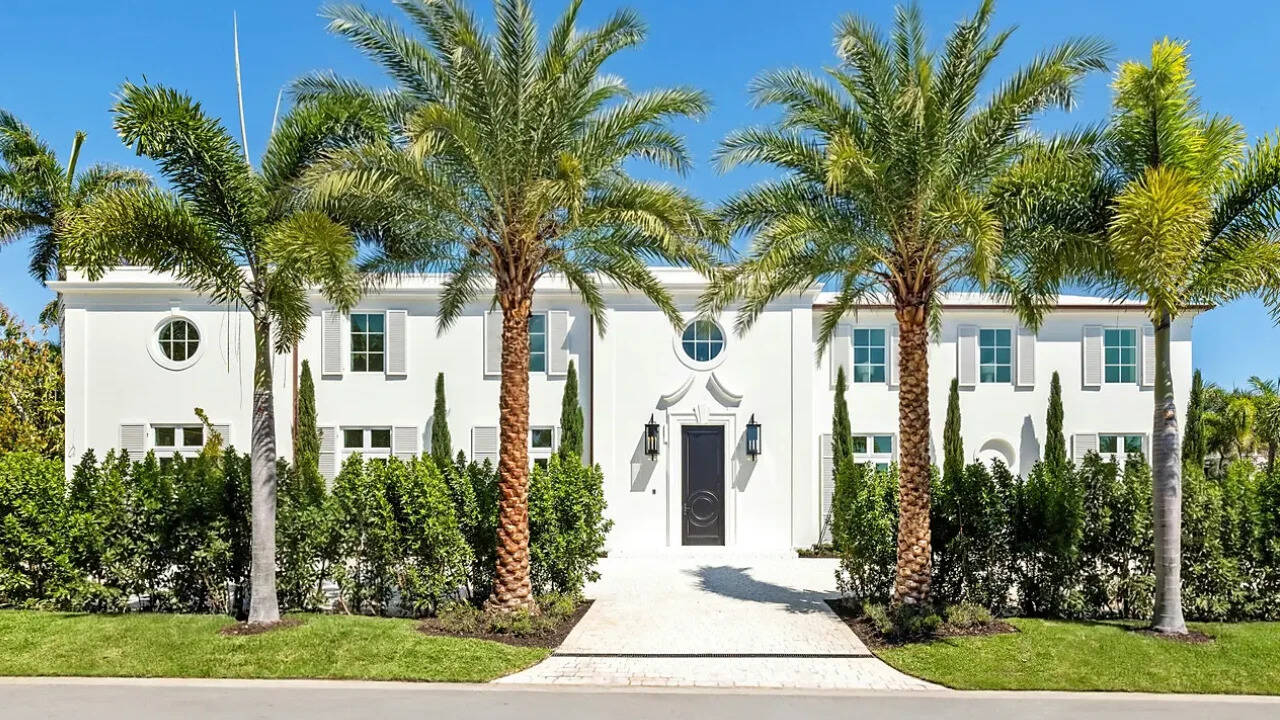
When an ultra-luxury residential asset in Palm Beach enters the open market at a $32 million valuation while simultaneously encumbered by active foreclosure litigation, the transaction ceases to function as a standard real estate sale and becomes an exercise in distressed debt resolution. Surface-level coverage of high-net-worth foreclosures typically frames these events as simple celebrity or tycoon gossip, ignoring the structural financial mechanics governing the asset. In reality, an eight-figure listing price attached to a foreclosed property reflects a calculated equilibrium between total debt service obligations, legal carrying costs, and the illiquidity discount demanded by cash-heavy opportunistic buyers. Understanding how these transactions clear requires stripping away municipal prestige and analyzing the capital stack, statutory timelines, and valuation friction inherent to judicial foreclosure jurisdictions like Florida.
The Capital Stack Architecture of Distressed Trophy Assets
Ultra-luxury real estate rarely fails due to a lack of intrinsic land value; it fails due to a mismatch between illiquid asset duration and short-term debt maturity. In markets like Palm Beach, properties priced above $30 million derive the vast majority of their valuation from land scarcity, zoning restrictions, and waterfront or island-core proximity rather than physical improvements. Yet when a borrower defaults, the listing price is dictated not by comparable price-per-square-foot metrics, but by the baseline recovery threshold required to satisfy the capital stack.
To evaluate why a distressed Palm Beach estate asks $32 million, analysts must deconstruct the three layers of financial encumbrance sitting on the title:
- Senior Secured Debt and Default Interest: Institutional private banks or hard-money bridge lenders typically hold the first-position mortgage. Once a notice of default is filed, the loan shifts from a standard coupon rate to a default interest rate, often jumping by 500 to 1,000 basis points. Over a 12-to-24-month litigation cycle, accrued default interest compounds rapidly, inflating the payoff figure far beyond the original principal balance.
- Mezzanine Financing and Junior Liens: High-net-worth borrowers frequently layer secondary financing, tax liens, contractor mechanics' liens, or litigation judgments behind the primary mortgage. Clearing title for a clean transfer requires either full satisfaction of these junior claims or negotiated short-payoff settlements prior to closing.
- Litigation, Receiver, and Carrying Costs: Florida operates under a judicial foreclosure system, meaning every step requires court oversight. Legal fees for both plaintiff and defense counsel, court-appointed receiver expenses, municipal property taxes—which on a $32 million Palm Beach valuation run into hundreds of thousands of dollars annually—and windstorm insurance premiums are tacked directly onto the lender's recovery ledger.
The $32 million asking price represents a structural ceiling designed to cover this bloated payoff figure while leaving a theoretical margin for brokerage commissions and closing friction. If the property clears near its ask, the borrower preserves residual equity and avoids a deficiency judgment. If the market rejects the price, the listing serves as a price-discovery mechanism to prove to the court and creditors that a short sale or deed-in-lieu of foreclosure is commercially necessary.
Judicial Foreclosure Friction and Timeline Asymmetry
Unlike non-judicial foreclosure states where a lender can liquidate collateral via trustee sale within 90 to 120 days, Florida mandates judicial intervention. This procedural architecture creates a massive timing asymmetry that directly impacts asset pricing and buyer behavior.
The Mechanics of Litigation Delay
A contested foreclosure on a $32 million estate routinely spans 18 to 36 months. Sophisticated borrowers retain defense counsel to file motions to dismiss, challenge standing, dispute accounting ledgers, and demand extensive discovery. Every procedural delay increases the lender's carry cost while freezing the physical asset. During this window, deferred maintenance becomes an acute risk. In South Florida's coastal climate, an unmaintained estate suffers rapid degradation in HVAC systems, roofing integrity, landscaping, and interior millwork.
The Court-Appointed Receiver Dynamic
To prevent asset deterioration during prolonged litigation, senior lenders frequently petition the court to appoint a receiver. A receiver assumes operational control of the property, collecting any rental income, paying essential insurance and tax bills, and authorizing critical repairs. However, receivers operate under strict fiduciary mandates to preserve value rather than maximize aesthetic appeal. They will fix a leaking roof, but they will not stage a $32 million home or execute cosmetic upgrades required to attract retail trophy buyers. This operational paralysis widens the gap between the property's condition and the expectations of turnkey luxury purchasers.
Valuation Friction and the Illiquidity Discount
In the ultra-prime segment, buyers generally fall into two distinct cohorts: end-user trophy buyers seeking turnkey lifestyle assets, and opportunistic capital allocators seeking basis reduction. A foreclosure filing alters the psychological and financial calculus for both groups, introducing severe valuation friction.
- The Stigma and Title Risk Penalty: End-user buyers purchasing at the $30 million threshold exhibit low tolerance for legal complexity. Even when a title company agrees to insure over a pending foreclosure upon payoff at closing, the presence of a lis pendens—a formal notice of pending legal action recorded against the property—signals distress. Buyers interpret this signal as leverage, routinely anchoring their initial bids 20% to 35% below the asking price, regardless of underlying land comps.
- Absence of Standard Seller Representations: In a distressed or receiver-controlled sale, the property is conveyed strictly "as-is, where-is" with zero seller warranties regarding structural defects, permitting compliance, or mechanical systems. Buyers must price the cost of full architectural and engineering due diligence—along with potential post-closing capital expenditures—directly into their acquisition discount.
- Financing Constraints on Distressed Collateral: While the majority of transactions above $30 million in Palm Beach close all-cash, buyers who utilize private bank lines of credit face heightened scrutiny when acquiring collateral out of active litigation. Lenders require clean estoppel certificates, dismissal of all pending dockets, and verified municipal code compliance prior to funding, adding weeks to the closing timeline and further deterring casual bidders.
The Three Pillars of Distressed Luxury Pricing Strategy
When advising stakeholders on an eight-figure asset encumbered by litigation, pricing strategy cannot rely on standard comparative market analysis. Instead, valuation must be anchored to three quantitative pillars that govern whether the asset sells on the open market or proceeds to the courthouse steps.
Pillar One: The Unencumbered Land Replacement Value
In Palm Beach, structure value depreciates while land value compounds. Determining the true floor price requires isolating the lot's square footage, frontage, elevation, and zoning envelope, then comparing it against recent land-only trades in the immediate micro-market. If the $32 million asking price sits within 10% of pure land value, the physical residence is effectively priced at zero, creating a compelling margin of safety for developers or custom builders. Conversely, if the ask assigns a $15 million premium to an aging, unrenovated structure, the market will stall until the price adjusts downward.
Pillar Two: The Auction Reserve Threshold
Every judicial foreclosure culminates in a public foreclosure auction if the property does not sell beforehand. At the auction, the foreclosing lender enters a credit bid up to the total judgment amount—comprising principal, default interest, legal fees, and advanced taxes. If the total judgment is $24 million and the property is listed at $32 million, there is an $8 million equity buffer. Open-market buyers recognize that if no one transacts prior to the auction date, they can bid directly at the courthouse sale without paying traditional 5% to 6% brokerage commissions, though they must wire 100% cash immediately upon winning without standard inspection contingencies.
Pillar Three: The Net Present Value of Time
For the foreclosing creditor, holding a non-performing $24 million loan on the balance sheet incurs a heavy regulatory capital charge and opportunity cost. If a lender can deploy that capital elsewhere at an 8% to 10% yield, every month of litigation delay costs the institution roughly $160,000 to $200,000 in lost opportunity, plus hard legal expenses. Rational lenders will frequently accept a discounted payoff—effectively forcing the borrower to drop the $32 million asking price to $26 million or $27 million—to accelerate liquidity and remove the non-performing asset from their books before quarter-end.
Limitations of Open-Market Distressed Listings
Listing a foreclosed estate on the Multiple Listing Service at an aspirational price is not a guaranteed exit strategy; it carries distinct structural vulnerabilities that can backfire on both borrower and lender.
First, prolonged market exposure erodes perceived value. In a transparent data environment where days-on-market and price reductions are tracked in real time, a $32 million listing that sits untouched for 180 days becomes stale. Subsequent price cuts from $32 million to $28 million and then $24 million broadcast desperation, training prospective buyers to wait for the courthouse auction rather than stepping forward with an early offer.
Second, borrower-controlled listings during active litigation often suffer from agency misalignment. A borrower facing total equity wipeout has nothing to lose by holding out for an unrealistic number, delaying viewings, or refusing reasonable offers. Unless the listing agreement is explicitly governed by a court order or a forbearance agreement granting the lender approval rights over price reductions and contract acceptance, the marketing process can devolve into a stalling tactic that destroys asset value through prolonged neglect.
Tactical Execution for Acquiring Distressed Trophy Assets
For capital allocators and high-net-worth principals evaluating a $32 million foreclosed estate, capturing alpha requires bypassing traditional retail brokerage norms and executing a disciplined, multi-front acquisition strategy.
- Audit the Court Docket Prior to Touring: Before submitting a letter of intent, pull the complete civil litigation file from the Palm Beach County Clerk of the Circuit Court. Verify the exact principal balance, the date of default, the presence of subordinate lienholders, and any upcoming summary judgment hearing dates. Knowing the lender's exact payoff number reveals the true floor price beneath the $32 million ask.
- Structure Dual-Track Negotiations: Do not negotiate exclusively with the listing broker. Simultaneously open direct channels with the senior lender's special assets group or foreclosure counsel. If the borrower is uncooperative, an investor can purchase the non-performing promissory note directly from the bank at a discount to par, stepping into the lender's shoes to control the litigation timeline and force a deed-in-lieu transfer.
- Eliminate Contingencies in Exchange for Basis Reduction: Sellers and receivers prioritize certainty of execution over top-line price. Conduct invasive architectural, structural, and municipal code inspections prior to submitting a formal offer. Present an all-cash contract with zero financing or inspection contingencies, a 10% hard deposit upon execution, and a 15-day closing window in exchange for a 15% to 25% discount off the $32 million asking price.
- Underwrite Post-Closing Carry and Entitlements: Factor 12 to 18 months of municipal architectural review board timelines, carrying taxes, and insurance premiums into the acquisition model. In Palm Beach, exterior modifications and new construction face rigorous regulatory review; underwrite the deal based on holding the asset unlevered through the entitlement phase.
The Strategic Play for Market Participants
The $32 million valuation attached to a foreclosed Palm Beach estate is an opening anchor, not a clearing price. As higher-for-longer debt service costs collide with maturing bridge loans originated during peak liquidity cycles, distressed trophy listings will increasingly test the depth of cash-buyer demand.
Investors should avoid chasing aspirational asking prices on the open market and instead concentrate capital on pre-auction note acquisitions or contingency-free cash offers timed immediately prior to summary judgment hearings. By anchoring bids strictly to unencumbered land replacement value minus the hard cost of litigation delay and deferred maintenance, buyers convert judicial friction into permanent basis advantage.