Cold rain tastes like wet iron in eastern Ukraine when the generator runs out of diesel at three in the morning.
You do not need a diplomatic briefing in Paris or a summit communiqué from Brussels to understand what happens when Western resolve stalls. You only need to watch a mother in Kharkiv tape cardboard over a shattered kitchen window while her seven-year-old son counts the seconds between the flash on the horizon and the rattle of the radiator pipes. Four seconds. Three. Two. Each number is a calculation of distance, and distance is the only currency left when promises from faraway capitals arrive late, hedged in footnotes, or wrapped in conditions that take months to clear committee.
Wait.
Listen to the language coming out of the Élysée Palace again.
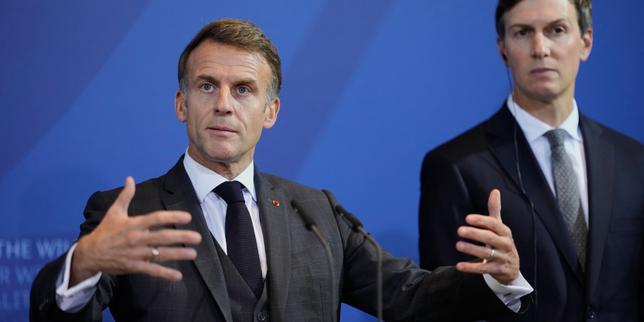
When French President Emmanuel Macron warns of "critical weeks" ahead in the war in Ukraine and calls to reopen the question of Ukrainian accession to NATO, the wire services treat it like another turn of the diplomatic kaleidoscope. Journalists transcribe the quotes. Analysts parse the timing. Television panels debate whether Paris is nudging Washington, testing Berlin, or signaling Moscow. Yet behind the sterile choreography of press conferences lies an uncomfortable truth that Europe has spent more than a decade trying to postpone: ambiguity does not buy peace. Ambiguity merely rents time at an exorbitant interest rate, and Ukrainians are the ones paying the principal in blood.
To grasp why reopening the NATO question matters right now, step away from the podiums and picture a hypothetical border town fifty kilometers west of the front line. Let us call it Krasne, though it could be any of a hundred rail junctions across Donetsk or Zaporizhzhia. In Krasne, there is a retired railway dispatcher named Olena who keeps two suitcases packed beside her front door. One holds winter coats, insulin, and birth certificates. The other holds photo albums from before 2014, back when borders felt permanent and treaties meant what they said. Every evening, Olena listens to the radio on a battery-powered receiver because the grid goes dark after sunset. When she hears leaders in Western Europe speak of "critical weeks," she does not hear a clever rhetorical pivot. She hears an admission that the front line is bending under the weight of artillery shortages, exhausted infantry brigades, and Russian glide bombs that flatten concrete bunkers before air defenses can lock on.
The arithmetic of attrition is brutal and unforgiving.
Since Russia launched its full-scale invasion in February 2022, the conflict has repeatedly swung between moments of electric Ukrainian counteroffensives and grinding seasons of defensive endurance. Whenever Western ammunition deliveries slowed—whether caught in legislative gridlock on Capitol Hill or bottlenecked by European shell production lines that had atrophied since the end of the Cold War—Russian forces pressed forward, trading thousands of casualties for ruined villages and shattered tree lines. Military planners in Kyiv and Paris know that wars of industrial exhaustion are won or lost months before a trench line breaks, in the quiet intervals when factories either scale up or hesitate. Macron's warning about critical weeks is an acknowledgment that Ukraine is entering another narrow window where air defense interceptors, artillery rounds, and political clarity determine whether the line holds through winter or fractures under sustained pressure.
The Architecture of Hesitation
Why has NATO membership remained the third rail of European security policy for nearly twenty years?
Think of NATO's collective defense guarantee—Article 5, the pledge that an attack on one ally is an attack on all—as a heavy oak front door fitted with a deadbolt. In April 2008, at the Bucharest Summit, alliance leaders stood on the porch and announced that Ukraine and Georgia would eventually become members. Then they stopped. They refused to hand over a Membership Action Plan, leaving both nations standing outside in the rain with a promise loud enough to infuriate the Kremlin and vague enough to offer zero protection when Russian tanks rolled into Georgia four months later and into Crimea six years after that.
That half-open door became the single most dangerous piece of architecture in modern geopolitics.
For years, skeptics in Washington and Berlin argued that bringing Ukraine closer to NATO would provoke Moscow into wider escalation. I remember sitting in a cramped press room in Brussels during one of those endless late-night summits, watching spokespeople repeat the exact same carefully neutered phrases about "irreversible paths" and "when conditions allow." Even then, the flaw in the logic felt glaringly obvious to anyone who had spent time talking to Ukrainian soldiers or Baltic diplomats. Restraint only deters an aggressor who shares your fear of escalation. To Vladimir Putin, Western hesitation looked less like prudence and more like an invitation—proof that gray zones existed in Europe where borders could still be redrawn by force without triggering a unified military response.
Consider what happens next when a nuclear-armed autocracy believes its neighbors occupy a permanent buffer zone. Every ceasefire becomes a pause to rearm. Every negotiated settlement lacking hard security guarantees turns into a countdown to the next invasion. Ukraine already lived through that movie twice: first with the 1994 Budapest Memorandum, under which Kyiv surrendered the world's third-largest nuclear arsenal in exchange for paper assurances of territorial integrity from Russia, the United States, and the United Kingdom; and second with the Minsk agreements of 2014 and 2015, which froze the Donbas front line just long enough for Moscow to prepare a full-scale assault eight years later.
Macron's evolution on this point is one of the sharpest reversals in contemporary European statecraft. In 2019, he famously diagnosed NATO as experiencing "brain death." In the early months of 2022, he kept a direct telephone line open to the Kremlin, urging allies not to "humiliate" Russia even as Russian missiles struck Kyiv and Mariupol. Critics across Central and Eastern Europe accused Paris of naivete, of clinging to an outdated Gaullist fantasy that Europe could broker a grand bargain with Moscow over the heads of smaller nations.
Then reality intervened.
Intelligence assessments of Russian hybrid warfare across Europe—sabotage against rail networks, GPS jamming over the Baltic Sea, cyberattacks on hospitals, disinformation campaigns aimed at fracturing European elections—forced a reckoning inside the Élysée. French strategists realized that if Russia succeeded in subjugating Ukraine, the next front would not stop at the Dnieper River. It would press directly against the eastern flank of the European Union, forcing France and its allies to defend Estonia, Latvia, Lithuania, or Poland under far worse strategic conditions. By calling to reopen the debate over Ukraine's NATO accession, Macron is effectively conceding that Eastern Europe was right all along: you cannot stabilize the continent while leaving its largest geographic country suspended in a security vacuum.
What Reopening the Question Actually Means
Mention NATO membership for Ukraine in any crowded room and two immediate fears surface, both reasonable and both deeply misunderstood.
The first fear is automatic world war. People hear "Article 5" and picture American, French, and German divisions marching across the Donbas tomorrow morning, trading artillery fire directly with Russian battalions under the shadow of nuclear escalation. That fear rests on a misreading of how alliance accession works. No serious diplomat in Paris, Kyiv, or Washington is proposing to extend Article 5 coverage over active combat zones while Russian troops occupy Ukrainian territory. Doing so would indeed plunge the alliance into immediate war.
Instead, reopening the NATO question focuses on sequencing and credibility. Policy planners have spent months examining historical precedents—most notably West Germany in 1955. When the Federal Republic of Germany joined NATO, millions of Germans still lived under Soviet occupation in the East. Bonn never renounced its constitutional claim to eventual reunification, yet NATO's security umbrella applied strictly to the territory under West German control. Applied to Ukraine, a similar framework would mean offering a formal, binding invitation now—or anchoring Article 5 protections to the internationally recognized front line once fighting pauses—so that Russia knows any renewed offensive triggers the full collective weight of the alliance.
The second fear is diplomatic paralysis. Skeptics ask: if unanimous consent from all thirty-two NATO members is required to admit a new country, why reopen a debate when Washington remains cautious and leaders like Hungary's Viktor Orbán openly oppose Kyiv's entry?
Because in diplomacy, silence is a policy choice.
When Western capitals refuse even to put an invitation on the table, they hand Moscow a permanent veto over European security. Worse, they undermine Ukraine's leverage in any future negotiation. Imagine sitting across a table from a Russian envoy while your own allies whisper behind your back that NATO membership is off the limits for twenty years. Why would Moscow ever compromise on territory, reparations, or abducted Ukrainian children if it knows Ukraine will remain militarily isolated once the ink dries? Reopening the question changes the bargaining table before a single diplomat sits down. It tells the Kremlin that prolonging the war will not block Ukraine's integration into the West—it will accelerate it.
The Human Ledger Behind the Strategy
Strip away the geopolitics for a moment and return to the human scale, because grand strategy always fails when it forgets who carries the rifle.
In a basement field hospital near Pokrovsk—a composite scene drawn from dozens of frontline accounts—a twenty-nine-year-old combat medic named Taras spends his nights sorting tourniquets by expiration date. Before February 2022, Taras restored antique wooden furniture in Lviv. He knew the grain of Carpathian walnut and the smell of beeswax polish. Now he knows the exact sound a Mavic drone makes when its battery drops below ten percent, and he knows how long it takes a casualty evacuation vehicle to cross three kilometers of mud under mortar fire.
When Taras hears politicians debate whether Ukraine belongs in NATO, he feels a strange mixture of gratitude and fatigue. Gratitude because French Caesar self-propelled howitzers, SCALP long-range cruise missiles, and air defense batteries have saved thousands of Ukrainian lives. Fatigue because every major weapons system—from tanks to fighter jets to long-range strikes inside Russian territory—arrived only after months of agonizing public debate, during which Ukrainian brigades held the line with rifles and shovels.
I will admit something that policy analysts rarely confess in print: nobody knows with certainty how Moscow will react if NATO moves from vague promises to a concrete invitation. Foreign policy is never a laboratory experiment where you can run the control group twice. There is real risk in hardening deterrence against a nuclear power led by a man who has staked his historical legacy on erasing Ukrainian sovereignty. Anyone who pretends that path carries zero danger is selling comfort rather than truth.
Yet we do know the outcome of the alternative, because we are watching it unfold every night on thermal drone feeds and satellite imagery.
We have seen Mariupol reduced to pulverized concrete. We have seen Bakhmut and Avdiivka erased from the map street by street. We have watched Russian missiles target electrical substations each autumn in a deliberate campaign to freeze millions of civilians into submission. Uncertainty about the future is frightening, yes, but certainty about what happens when Ukraine lacks an ironclad security guarantee is far worse. Without NATO—or an equivalent binding defense pact backed by real troops and nuclear deterrence—any ceasefire merely schedules the third Russian invasion for 2028 or 2030.
Why France Is Pushing Now
Timing in diplomacy is rarely accidental. Macron's call to revisit NATO membership comes at a moment when Europe faces converging pressures from both east and west.
Across the Atlantic, political transitions in Washington have forced European leaders to confront a question they dodged for seventy-five years: what happens if American security guarantees become conditional, transactional, or distracted by crises in the Indo-Pacific? France has long championed "European strategic autonomy"—the idea that Europe must build its own defense industrial base and military command capacity rather than outsourcing its survival entirely to the Pentagon. For years, Central and Eastern European nations distrusted that phrase, fearing Paris wanted to weaken NATO and push the United States out of Europe.
By championing Ukraine's NATO accession while simultaneously pushing Europe to produce more shells, missiles, and air defense systems at home, Macron is attempting to fuse two previously rival visions. He is telling Washington that Europe is ready to shoulder far greater responsibility for continental defense, while telling Warsaw, Tallinn, and Kyiv that France no longer views Eastern Europe as a bargaining chip to be traded for calm relations with Moscow.
Look closely at what that shift requires in practice. It demands billions of euros in multi-year defense contracts so European arms manufacturers can open new assembly lines without fearing orders will vanish the moment a truce is signed. It requires training Ukrainian brigades on European soil, integrating Ukrainian air defense networks with NATO radar systems, and locking in financial aid so Kyiv's economy does not collapse under the strain of mobilization. Above all, it requires political leaders to level with their own citizens: defending a free Europe costs money, patience, and nerve, and pretending otherwise only makes the eventual bill higher.
The Weight of an Unkept Promise
History rarely announces its turning points with trumpet blasts. More often, they arrive as quiet arguments in drafty conference rooms over a single verb in a diplomatic text—whether an alliance "supports" a nation's aspirations or "invites" it into the fold.
Back in our hypothetical town of Krasne, Olena still keeps those two suitcases by the door. She does not read diplomatic cables or follow think-tank monographs from Paris and Washington. She judges the world by simpler, harsher evidence: whether the streetlights turn on at dusk, whether the local clinic has insulin on the shelf, and whether her grandson, who is nineteen and studying engineering in Kyiv, will spend his twenties building bridges or clearing minefields.
For sixteen years, Western leaders have kept Ukraine standing on the threshold, assuring Olena's generation that the door is open while refusing to let them step inside out of the storm. Macron's call to reopen the NATO question will not end the war tomorrow morning, nor will it silence the sirens over Kharkiv tonight. What it does is force Europe to look honestly at the threshold it built—and decide, finally, whether a promise left half-kept is any better than a promise broken.


