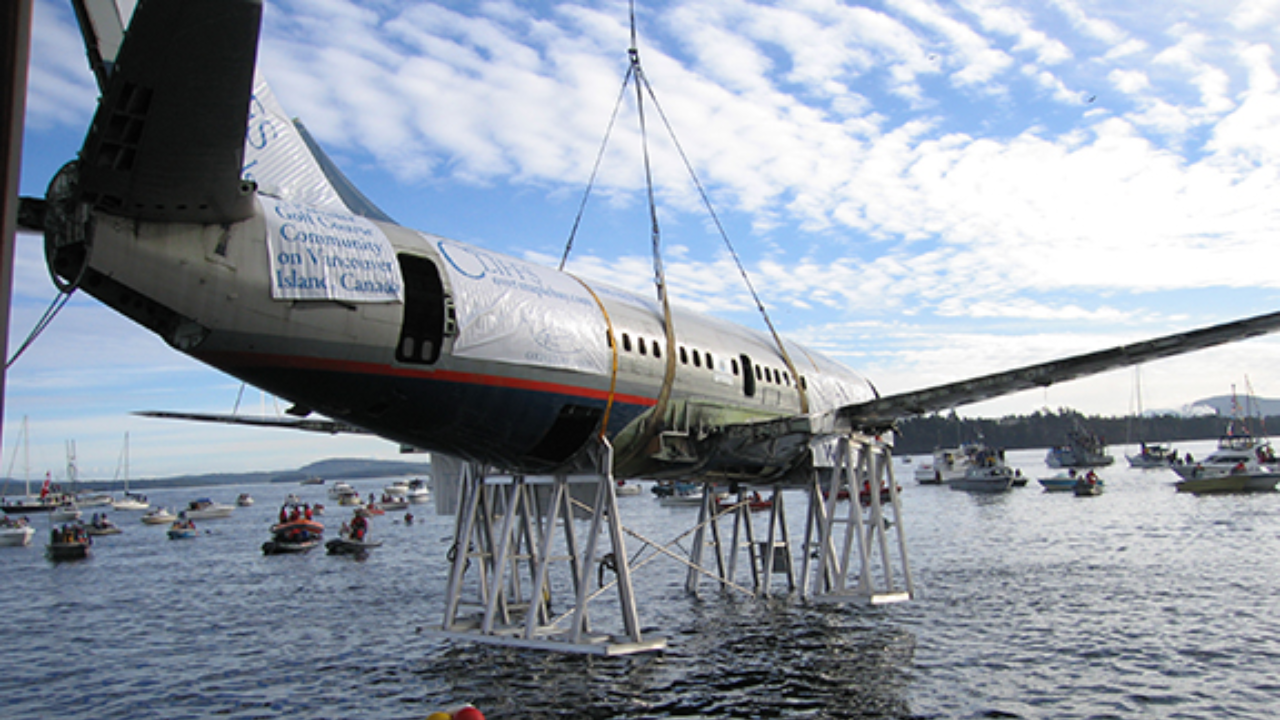
Every few years, mainstream media outlets rediscover the retired Boeing 737 resting quietly on the seabed off Vancouver Island and hyperventilate over a supposed ecological triumph. The narrative writes itself: human ingenuity finds a second life for industrial scrap metal, transforming a dead commercial airliner into a bustling underwater metropolis for plumose anemones, rockfish, and red sea urchins. Tourists clap. Conservation groups pat themselves on the back.
It is a comforting fairy tale. It is also a lazy distraction from actual marine stewardship.
I have spent decades watching environmental projects get hijacked by theatrical stunts. Sinking a 15-tonne aluminum and steel fuselage into the Salish Sea makes for phenomenal television and viral social media clips, but let us dispense with the romantic fiction that tossing aviation debris into the ocean constitutes high-level conservation. We are celebrating the deployment of industrial waste as if it were a coral reef blueprint handed down by the gods.
Let us look past the press releases from the Artificial Reef Society of British Columbia and examine what is actually happening on the ocean floor.
The Myth of the Metal Metropolis
The lazy consensus claims that any hard substrate dropped into a barren sandy or silted zone automatically upgrades the local biome. Drop a tank, drop a subway car, drop a twin-engine jetliner, and nature will instantly say thank you.
Biology does not work that way. When you submerge a commercial aircraft, you are not building a complex, self-sustaining ecosystem; you are creating a localized aggregation device. Marine organisms like lingcod and rockfish do not materialize out of thin air because a Boeing product showed up. They relocate from existing, natural habitats. You are simply rearranging the neighborhood furniture, drawing fish away from genuine rocky reefs and clustering them around a glorified aluminum cage for easy viewing by recreational scuba divers.
Furthermore, calling an aircraft frame an "artificial reef" stretches the definition of the word until it snaps. Real reefs are calcium carbonate structures built over millennia by living organisms, supporting complex geochemical cycles. A sunken 737 is an upscale parking garage for barnacles.
Imagine a scenario where a municipality dumps a fleet of gutted municipal buses into a local forest, plants some ivy over the windshields, and declares they have successfully restored an old-growth woodland. Ecologists would riot. Yet, submerge the exact same concept in saltwater, slap a scuba tourism tag on it, and it wins awards.
The Toxic Reality Beneath the Clear Coat
Volunteers spent hundreds of hours scrubbing that specific 737 clean of grease, wiring, and insulation before it met the crane. We are told the airframe was rendered pristine.
Even under the best conditions, industrial manufacturing materials do not belong in marine ecosystems. Commercial aircraft are masterpieces of metallurgical engineering optimized for aerospace physics, not chemical inertness in a corrosive saltwater bath. Aluminum alloys, composite residues, sealants, and microscopic remnants of heavy industrial coatings inevitably break down over decades. Micro-shedding is an invisible constant.
We trade short-term tourism dollars and viral novelty for long-term micro-pollutant introduction into regional food webs. The justification is always that the ocean is massive and can dilute the burden. That is the exact same logic industrial polluters used for a century. Scale does not excuse introduction.
The Distraction Economy of Conservation
The real danger of stunts like the Chemainus 737 project isn't the plane itself. It's the oxygen they suck away from hard, unglamorous conservation work.
Real marine protection requires fighting overfishing, restricting coastal runoff, managing sewage outfalls, and protecting eelgrass meadows. Those tasks are tedious, politically volatile, and entirely unphotogenic. You cannot sell a weekend dive charter package around a protected mudflat. But you can certainly charge people top dollar to swim through the cockpit of a sunken jetliner.
We have commercialized the illusion of environmental recovery. Every hour of volunteer labor and bureaucratic oversight spent scrubbing jet fuel tanks and securing permits for an airplane burial could have been channeled into restoring natural kelp forests that actually sequester carbon and filter coastal waters with brutal efficiency.
Stop pretending that throwing garbage with wings into the Pacific is a masterclass in sustainability. It is a tourist attraction dressed up in a green jersey. Leave the planes in the salvage yard, and let the ocean recover on its own terms.