The physical world is fragile. We build structures from brick, mortar, and hope, believing they will outlast our own fleeting lifespans. We carve symbols into stone so that our great-grandchildren will know who we were, what we loved, and where we bowed our heads in prayer. Then, in a matter of mere hours, a bulldozer can turn more than a century of sacred memory into a flat, empty lot.
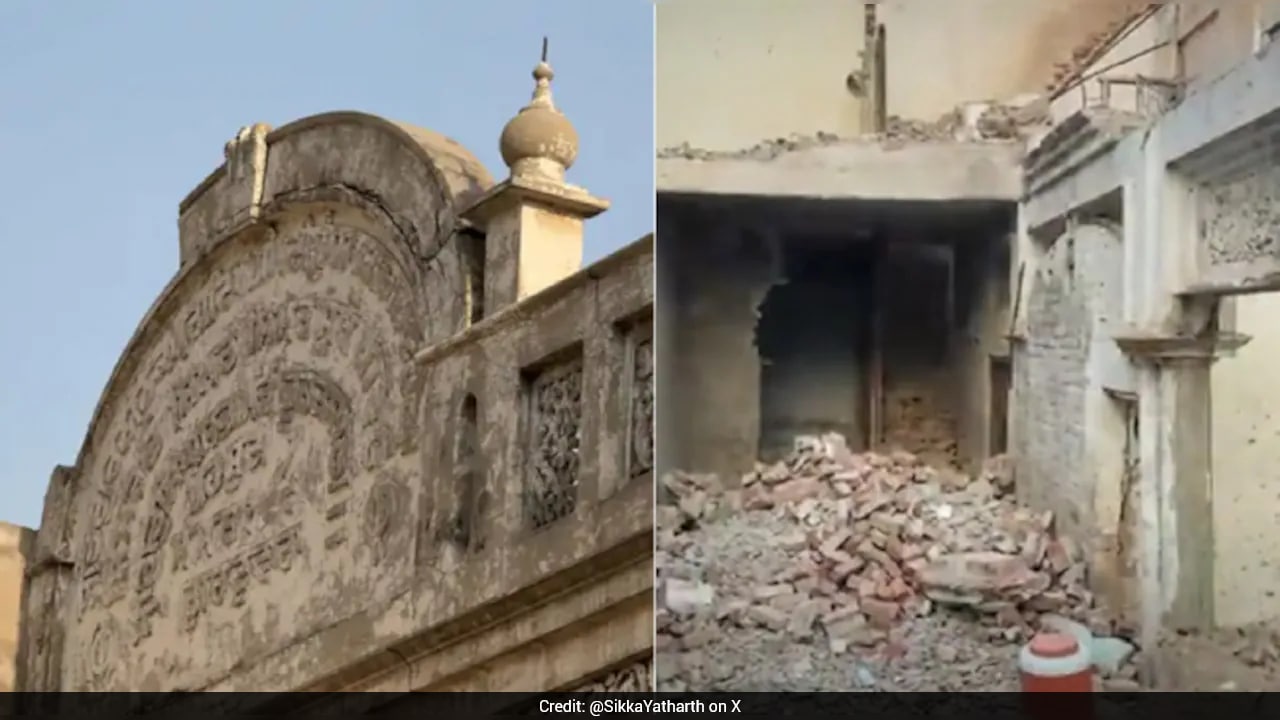
That is exactly what happened in the city of Sadiqabad, located in the Rahim Yar Khan district of Punjab, Pakistan.
A local businessman looked at a 125-year-old Gurdwara—a historical Sikh house of worship—and did not see a sanctuary. He did not see the generations of devotees who had crossed its threshold, or the intricate craftsmanship of a bygone era. He saw real estate. He saw an obstacle. So, he tore it down.
When the dust settled, a piece of shared human heritage was gone forever, replaced by the stark reality of commercial greed.
The Architecture of Memory
To understand the weight of this loss, one must look beyond the modern political borders that divide the Indian subcontinent. Imagine an elderly man living in Punjab today. For the sake of understanding the human toll, let us call him Gurnam. Gurnam’s grandfather used to tell stories of the grand old structure in Sadiqabad. He described the cool touch of the ancient bricks during the blistering summer heat, the low murmur of prayers echoing through the halls, and the sense of absolute peace that washed over anyone who entered, regardless of their background.
For decades, this Gurdwara stood as a silent witness to history. It survived the tumultuous partition of 1947, a painful historical rupture that divided families and created new nations overnight. While human beings fled across newly drawn borders in fear and confusion, the building remained. It was a physical anchor to a time when communities lived side by side, sharing the same air, the same water, and a mutual respect for the sacred.
Buildings like this are not just wood and stone. They are vessels for the soul of a community. When a businessman uses heavy machinery to systematically dismantle such a structure, he isn’t just clearing land for a new shop or apartment complex. He is erasing a chapter of a community's story. He is telling the descendants of those who worshipped there that their history does not matter.
A Flashpoint of Heritage and Politics
The demolition did not happen in a vacuum. News traveled fast across the border, sparking immediate outrage and profound sorrow.
The government of India reacted swiftly, calling the destruction of the historical site "highly deplorable." Officials lodged a strong protest with Pakistani authorities, demanding immediate accountability and the protection of remaining religious minority sites. In New Delhi, the diplomatic wires hummed with tension.
This reaction stems from a deep, recurring anxiety. Minorities in both nations often watch their cultural and religious footprints shrink, sometimes through neglect, and other times through deliberate destruction. When a historical Gurdwara is leveled for commercial gain, it sends a chilling message to religious minorities everywhere. It suggests that heritage is a luxury that can be sold to the highest bidder or sacrificed for a quick profit.
The tragedy is compounded by the fact that Pakistan contains countless historical Sikh sites, many of which are of immense spiritual importance. While some sites, like the famous Kartarpur Sahib, have seen historic openings and state-supported preservation efforts, many smaller, regional Gurdwaras face a much darker fate. They sit in disrepair, vulnerable to land grabbers and local developers who see ancient walls merely as prime real estate waiting to be exploited.
The Invisible Stakes
What happens when we allow our history to be bulldozed?
The real loss is subtle, creeping, and permanent. When a historical building disappears, the physical evidence of a diverse past fades away. Future generations grow up looking at a homogenized environment, completely unaware that people of different faiths once walked the very same streets and contributed to the local culture.
Consider what happens next: the rubble is cleared. A new, sterile commercial building rises in its place. Customers walk in and out, buying goods, entirely oblivious to the fact that they are standing on ground that was consecrated by tears, songs, and over a century of devotion. The memory fades from the collective consciousness until it is nothing more than a footnote in an old textbook or a bitter memory kept alive by a dwindling number of elders.
The local authorities in Pakistan have reportedly faced intense pressure to investigate the incident and hold the businessman accountable. Activists and heritage conservationists within Pakistan have also raised their voices, recognizing that the destruction of the Gurdwara harms the country's own cultural wealth. True progress cannot be built on the ruins of a community's sacred past.
The true value of a society is measured by how it treats its most vulnerable elements—including the silent, defenseless monuments left behind by history. A 125-year-old Gurdwara should have been protected by law, cherished by locals, and preserved for the world. Instead, it became dust. The challenge now lies not just in condemning the destruction, but in ensuring that the remaining monuments of our shared human story are guarded with fierce, uncompromising resolve before the bulldozers start their engines again.