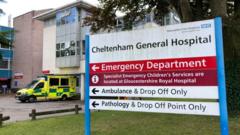
The headlines are dripping with relief. "A&E to remain open as doctors' strike called off." The public breathes a sigh of relief. Politicians pat themselves on the back. The mainstream media serves up the standard narrative: a crisis has been averted, patient safety is secured, and the status quo lives to fight another day.
It is a comforting story. It is also entirely wrong. You might also find this connected article interesting: The Anatomy of Clinical Dismissal: Systemic Failure Modes in Emergency Triage and Patient Advocacy.
Canceling this strike did not save Accident and Emergency departments. It merely guaranteed their slow, agonizing suffocation. By celebrating the preservation of the current setup, we are cheering for a broken machine that processes human suffering at an inefficient, unsustainable rate. Keeping the doors open under these conditions is not a victory. It is a stay of execution for a system that desperately needs a structural overhaul.
The Myth of the Functioning Emergency Department
Let us dismantle the lazy consensus. The common assumption is that an open A&E equals a functioning healthcare system. As extensively documented in detailed coverage by Psychology Today, the results are significant.
It does not.
When an emergency department is "open" during a staffing crisis, it operates as a pressure cooker. I have spent years analyzing clinical workflows and hospital operational data. I have watched management teams burn through millions of dollars in premium agency staff fees just to keep the lights on for a single weekend.
What does that "open" department actually look like?
- Ambulances lined up outside like a supermarket parking lot because there are no beds available.
- Boarded patients spending 24 to 48 hours on metal trolleys in corridors.
- Triage nurses forced to make split-second decisions with zero margin for error under extreme fatigue.
Calling off a strike does not magically inject resources, retain senior clinicians, or fix the social care backlog that prevents patients from being discharged. It simply removes the visibility of the crisis. A strike forces a system to acknowledge its failure points. Calling it off pushes those failure points back behind closed doors, out of sight of the evening news, where they continue to erode patient safety incrementally every single day.
The Broken Economics of the Status Quo
To understand why this cancellation is a step backward, you have to look at the macroeconomic reality of hospital funding.
Every time a major strike is threatened, hospital trusts shift into an emergency posture. They cancel elective surgeries. They clear outpatient clinics. Paradoxically, during some previous industrial actions, senior consultants stepped down to cover the front lines, leading to highly experienced clinicians handling initial triage. In some instances, mortality data actually improved or held steady because the hospital stripped away the bureaucratic bloat and focused purely on acute care.
By calling off the strike without forcing a fundamental restructuring of working conditions and pay, we enter a worse phase: the quiet quit.
Doctors do not just walk out on strike days. They walk away permanently. They leave for Australia, New Zealand, or the private sector. The cost of replacing a single fully trained middle-grade or senior emergency physician runs into six figures when you account for recruitment, onboarding, and the loss of institutional knowledge.
When you prevent a strike without solving the underlying rot, you do not save money. You simply shift the cost from a visible, short-term disruption to a hidden, long-term operational deficit funded by expensive temporary locum staff.
Dismantling the Patient Safety Argument
The immediate counterargument to any industrial action in healthcare is always patient safety. "Strikes put lives at risk."
Let us look at that argument with brutal honesty.
Yes, a strike disrupts care. It delays elective procedures and causes logistical chaos. But the current baseline of healthcare delivery is already an active threat to patient safety. Chronic understaffing means medication errors increase, diagnostic delays compound, and nosocomial infections rise because staff do not have the time to follow basic protocols to the letter.
Imagine a scenario where a pilot is forced to fly a commercial jet with a faulty engine day after day because grounding the plane would disrupt the airline's schedule. If the pilot refuses to fly to force a repair, who is putting the passengers at risk? The pilot demanding a safe aircraft, or the airline executive demanding the plane take off regardless of the defect?
The canceled strike is the equivalent of patching that engine with duct tape and telling the passengers everything is fine because the plane left the gate on time.
The Unconventional Solution
Stop trying to fix the current emergency care model by simply throwing more money into the same bureaucratic black hole or begging staff not to walk out. It is a structural design flaw.
True resilience requires two drastic, unpopular changes:
1. Enforce Hard Gates on Emergency Access
The modern A&E has become a catch-all for every failure of primary care, social services, and mental health infrastructure. Up to 30% of emergency department presentations could be managed effectively in lower-acuity settings. We must transition from an open-door policy to a strict, structurally enforced gatekeeping model where non-emergencies are turned away at the door and redirected to urgent treatment centers or community clinics.
2. De-tether Acute Care from Elective Capacity
Hospitals clog up because acute patients occupy beds needed for elective recoveries, and vice versa. The physical infrastructure must be separated. If emergency departments are to remain open and functional, they must have dedicated, non-negotiable bed pools that cannot be cannibalized by other hospital departments.
The Reality Check
The contrarian approach is not without its casualties. Restructuring access means public backlash. It means telling people they cannot use the emergency room for a minor ailment they have had for three weeks. It means admitting that public healthcare cannot be all things to all people at all times without limit.
But the alternative is what we are experiencing right now: a slow-motion collapse disguised as a victory because the front doors happen to be unlocked today.
The strike being called off is not a win for patients. It is a temporary political ceasefire that guarantees the underlying disease will continue to go untreated. Stop celebrating the open doors and start looking at the rot inside.