We've spent decades staring at distant points of light, searching for signs of intelligent alien civilizations. But the real astrobiological breakthrough isn't coming from little green men building cities. It's happening in dirty little flasks filled with stubborn single-celled organisms right here on Earth.
Recent laboratory simulations replicating the crushing, freezing, chemical-soup reality of Saturn’s moon Enceladus have revealed something startling. Earthly microbes don't just survive these alien environments. They can actually thrive.
When you strip away the science fiction hype, the reality of space exploration gets much weirder. We aren't just looking for life out there. We are testing how tough our own homegrown life really is. And as it turns out, life is way more resilient than we ever gave it credit for.
The Enceladus Enigma
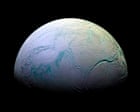
Enceladus is an ice-covered moon orbiting Saturn. Beneath its frozen crust lies a global liquid water ocean. We know this because dramatic geysers erupt from cracks in the south polar region, blasting water vapor, ice grains, and organic molecules straight into space.
When NASA's Cassini spacecraft flew through those plumes, it detected molecular hydrogen, carbon dioxide, and methane. To an astrobiologist, that cocktail looks less like a dead rock and more like an all-you-can-eat buffet for specialized microorganisms.
Scientists decided to test this hypothesis in the lab. They took methanogens—ancient, methane-producing microorganisms that inhabit extreme environments on Earth like deep-sea hydrothermal vents and cow stomachs—and subjected them to simulated Enceladus conditions.
Think about what that means. We took creatures from terrestrial mud and dropped them into a digital and physical pressure cooker mimicking an alien world a billion miles away. The results shattered our assumptions about where life can draw a breath.
Why Methanogens Refuse to Die
Methanogenic archaea are survivors. They don't need sunlight, oxygen, or organic food to stay alive. They eat hydrogen and carbon dioxide, exhaling methane as a byproduct.
In the simulation chambers, researchers dialed in the exact pressure, temperature, and chemical composition expected in the core-ocean boundary of Enceladus. The environment is pitch black, freezing cold, and hyper-alkaline, laced with heavy salts and toxic compounds. Any normal cell would rupture or denature within minutes.
Instead, strains like Methanothermobacter wolfeii adapted. They ingested the available hydrogen gas and kept metabolizing. They proved that a subsurface ocean on an outer solar system moon isn't just a pool of water. It's a functional, habitable biosphere waiting to be claimed.
This completely shifts how we think about planetary protection and habitability. We used to think life needed a very narrow sweet spot—the Goldilocks zone where liquid water sits on a rocky surface under a friendly star. Enceladus orbits far outside that zone. Yet, internal tidal heating from Saturn keeps its internal waters warm and liquid.
Life doesn't need a surface. It just needs energy, liquid water, and the right chemistry. And the universe has those ingredients in abundance.
The Chemistry of Alien Survival
Let's look at the actual mechanisms driving this resilience. On Earth, methanogens rely on enzymes containing nickel, iron, and sulfur to catalyze their metabolic reactions. These trace metals act as biological catalysts, turning raw inorganic molecules into cellular energy.
When researchers analyzed the mineral makeup of Enceladus's predicted rocky core, they found evidence of hydrothermal activity. Hydrothermal vents on Earth spew out mineral-rich fluids packed with the exact metals methanogens crave.
It is a matching puzzle piece. The physical conditions inside Saturn's moon mirror the harshest, most productive deep-sea ecosystems on Earth. When you feed these microbes the chemical output of serpentinization—a rock-water reaction that produces hydrogen—they go to work.
Critics always point out that surviving a lab simulation isn't the same as evolving on an alien world. That is true. Contamination or adaptation bias can happen. But the point isn't that Earth life originated on Saturn. The point is that the biochemical machinery of life is universal enough to operate under alien physics. If Earth bugs can hack it on Enceladus, native life could easily do the same.
Redefining the Search for Extraterrestrial Life
For a long time, the search for life focused on Mars. We sent rovers to look for dry riverbeds and ancient mud cracks, hoping to find fossilized microbes. Mars is dusty, exposed, and irradiated. It is a tough neighborhood.
Ocean worlds like Enceladus and Jupiter's moon Europa represent a massive strategic shift in planetary science. These moons hide their oceans beneath miles of solid ice. That ice shield protects any underlying biology from cosmic radiation and solar flares.
Think about the implications for future missions. We don't necessarily have to drill through ten kilometers of ice to find out if life exists there. We can fly right through the geysers erupting from the south pole, scoop up the frozen mist, and analyze it for biosignatures using mass spectrometers.
If Cassini could sniff out organic molecules during a flyby, our next-generation orbiters and landers will be able to search for intact cellular structures, amino acid chirality, or lipid membranes. We are moving from remote observation to direct biochemical sampling of another world.
The Human Error in Astrobiology
We often project our own fragility onto the cosmos. Humans need an atmospheric pressure of one bar, a comfortable temperature range, atmospheric oxygen, and protection from UV rays. When we look at extreme environments, our first instinct is to assume nothing can live there.
History proves us wrong over and over again. Every time we explore a new extreme environment on Earth—whether it is boiling acid springs in Yellowstone, crushing pressures at the bottom of the Mariana Trench, or radioactive waste storage pools—we find thriving biological communities.
Life fills every available niche. It is a persistent, chemical imperative.
When we simulate alien worlds and watch our local microbes shrug off the conditions, we are confronting our own anthropocentrism. We are not a special, fragile exception in the cosmos. We are just one expression of a stubborn chemical process that takes root wherever the physics allows it.
What This Means for the Future of Space Exploration
The discovery that Earth microbes can endure simulated Saturnian moon conditions changes our funding priorities, our mission architectures, and our contamination protocols.
Space agencies now take planetary protection more seriously than ever. When we send a spacecraft to Enceladus or Europa, we must sterilize it to extreme degrees. We cannot risk seeding an alien ocean with terrestrial bacteria that might outcompete or contaminate indigenous life. Imagine driving millions of miles to find alien life, only to realize you brought the contamination with you in a bolt crevice.
At the same time, these findings give us a target. We know what metabolic signatures to look for. If future probes detect methane spikes co-occurring with specific isotopic ratios in those plumes, the evidence for biological activity becomes difficult to ignore.
We are standing on the precipice of answering the oldest question in human history. We are not alone, because life is fundamentally tough, adaptable, and written into the fabric of the cosmos. The oceans of the outer solar system are waiting. And our own microscopic companions have already proven they could live there.