The rain in London does not wash away the tension; it merely makes the pavement slick under the boots of protesters. Outside the Houses of Parliament, a crowd stands huddled against the chill, their voices rising in a rhythmic cadence that cuts through the hum of afternoon traffic. They hold signs bearing names of places most passersby could not find on a map. They speak of a homeland fractured by lines drawn in the dirt decades ago.
Thousands of miles away, in the jagged valleys of Pakistan-administered Kashmir—known locally as Azad Kashmir or Pakistan-occupied Kashmir—the silence is different. It is the heavy, suffocating silence of a digital blackout. No dial tones. No internet bars. Just the metallic clatter of paramilitary boots patrolling empty market squares.
This is not a localized dispute over borders. It is a story about the breaking point of human endurance, where a spike in the price of a loaf of bread can ignite a diaspora half a world away.
The Spark in the Valley
To understand why British Members of Parliament are standing in solidarity with Kashmiri activists on the streets of London, one must look at the kitchen tables of Muzaffarabad and Rawalakot.
For over a year, a grassroots movement called the Joint Awami Action Committee (JAAC) has been organizing quiet, persistent resistance. They were not demanding grand geopolitical shifts. Their initial demands were agonizingly basic: subsidies on flour, a reduction in the exorbitant electricity bills plaguing the region, and an end to the elite privileges of government officials.
Imagine a family living along the Neelum River. The water rushes past their village, churning through massive turbines to generate megawatts of clean hydroelectric power. This power feeds the national grid of Pakistan, lighting up the mega-cities of Punjab and Sindh. Yet, when the bill arrives at that riverside home, the cost is inflated, taxed, and entirely unaffordable for the person watching the water flow by.
It is an economic paradox that breeds deep resentment. When the JAAC called for a strike, the region answered. Shutter down. Wheels jammed. Markets closed, and wheels stopped turning as thousands poured into the streets.
Then came the crackdown.
The Cost of a Voice
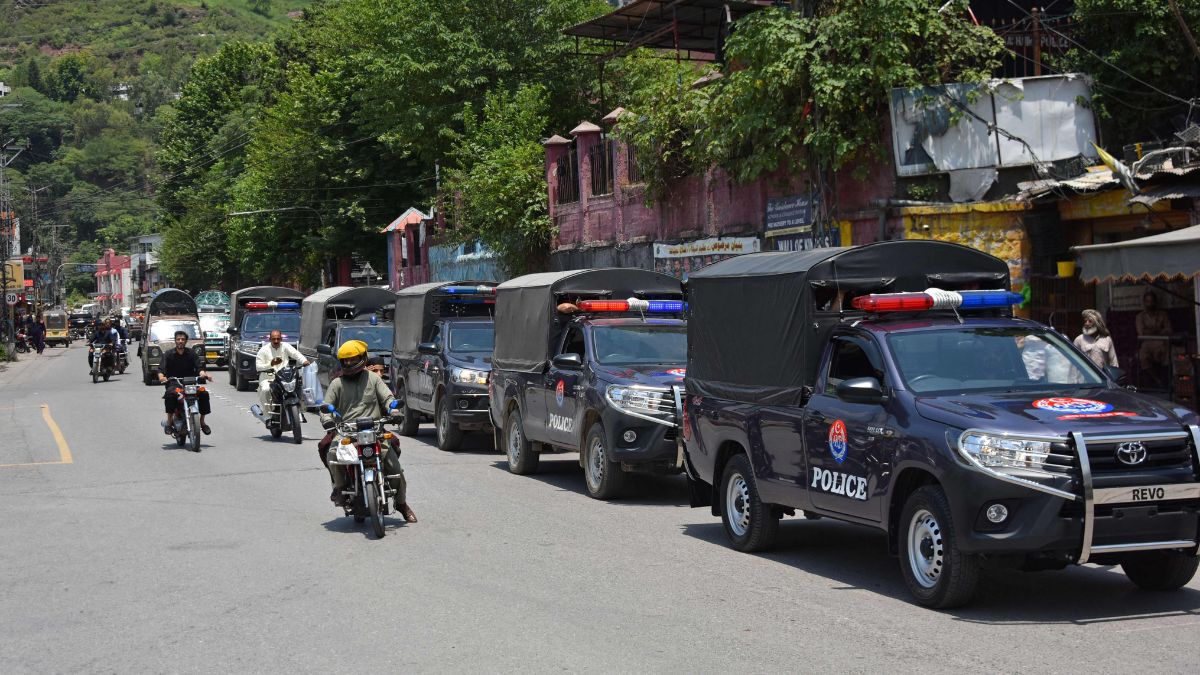
The response from Islamabad was swift and heavy-handed. The Rangers, a federal paramilitary force, were deployed to quell the unrest. What began as a peaceful march toward the capital of the region quickly devolved into a flashpoint of violence. Tear gas choked the mountain air. In the clashes that followed, lives were lost—both protestors and law enforcement officers.
But the state did not stop at physical barriers. They severed the digital arteries of the region.
Mobile internet services vanished overnight. In the modern age, cutting the internet is not merely an inconvenience; it is a profound act of isolation. It means a son in Birmingham cannot call his elderly mother to see if she has medicine. It means local journalists cannot upload footage of the military vehicles rolling down their streets. It turns a populated territory into a black box.
This is where the diaspora steps in.
From the Mountains to the Midlands
The connection between the UK and Kashmir is deep, historic, and intensely personal. A significant portion of the British Pakistani community traces its roots directly to this region, particularly around the Mirpur district. When Mirpuris migrated to cities like Bradford, Birmingham, and London in the mid-20th century to help rebuild post-war Britain, they brought their family ties with them.
When Kashmir bleeds, the UK diaspora feels the pain acutely.
The protest in London was born from that pain. Organizers from various Kashmiri diaspora groups rallied outside Parliament to draw international eyes to what they describe as a severe human rights crisis. They brought together a coalition that crossed party lines, securing the presence of British MPs who understand that their constituents' hearts are anchored in those troubled valleys.
The MPs spoke of a double standard. They argued that while the world frequently debates the status of the region on an international stage, the day-to-day civic rights of its residents are routinely trampled under the guise of national security.
Consider the vulnerability of a community that cannot reach its loved ones. The anxiety builds with every hour of an unanswered call. The diaspora is not just protesting out of political alignment; they are screaming because their families are trapped behind a wall of silence.
The Invisible Stakes
The geopolitical chess match over Kashmir usually focuses on the nuclear-armed rivalry between India and Pakistan. It is a macro-narrative of troop movements, international treaties, and high-level diplomacy. But this focus misses the true friction point.
The recent upheaval reveals a different reality: the internal instability within Pakistan-administered Kashmir is driven by governance failures and economic desperation, not just external sabotage. The people living there are tired of being treated as a strategic buffer zone. They want to be treated as citizens with economic rights.
The government in Islamabad eventually blinked, announcing a massive relief package worth billions of rupees to lower bread and electricity prices. It was a concession that proved the protestors' point—the grievances were legitimate all along. But the deployment of paramilitary forces and the subsequent arrests of JAAC leaders have left wounds that a subsidized bag of flour cannot heal.
The anger has mutated. It is no longer just about the cost of living; it is about the right to dissent without facing the barrel of a gun.
The Ripple Effect
The gathering in London broke apart as dusk fell, but the momentum did not dissipate. The activists left the parliament gates with a promise to take their case to the United Nations and the Commonwealth Secretariat.
They face an uphill battle. The international community is often reluctant to intervene in the internal administrative affairs of a sovereign state, especially one navigating its own complex economic crisis. Pakistan is currently walking an economic tightrope, balanced on the edge of IMF bailouts and structural reforms that mandate the removal of the very subsidies the Kashmiris are fighting to keep.
Yet, the diaspora has a potent weapon: memory. They refuse to let the plight of their homeland be buried under bureaucratic statements or forgotten in the fast-paced cycle of global news.
A lone protester remained near the Westminster tube station for a few minutes after the main crowd left, folding a green and red flag with practiced care. He looked toward the parliament buildings, where lights were flicking on in the offices of lawmakers. The distance between those warm halls of power and the cold, dark streets of Muzaffarabad felt immense, yet completely erased by the sheer will of the people refusing to look away.