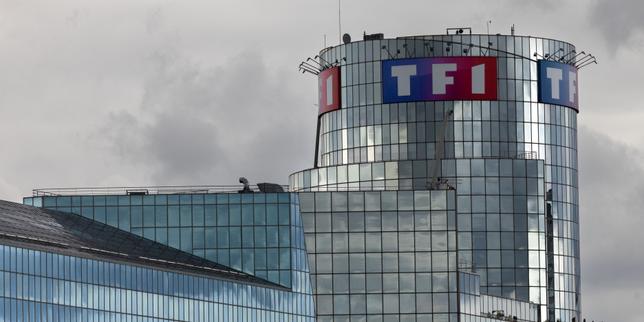
The unilateral termination of distribution agreements for TF1 Group’s thematic channels by Canal+ across its French and African networks marks a structural shift in the economics of linear television. This decision, affecting established brands like TV Breizh, Histoire TV, and Ushuaïa TV, is not an isolated negotiation tactic. It represents a calculated reallocation of capital driven by changing audience metrics, content production costs, and shifting platform dynamics. Distributors are systematically re-evaluating the ROI of paying premium carriage fees for non-exclusive thematic content when consumer attention is migrating toward on-demand architectures.
Understanding this disruption requires dissecting the bipartite relationship between free-to-air (FTA) broadcasters trying to monetize secondary assets and pay-TV operators optimization of their content acquisition budgets. Also making headlines recently: Why Understanding an Interconnected World is Your Best Survival Strategy.
The Bipartite Valuation Model of Thematic Carriage
The commercial tension between TF1 and Canal+ stems from a fundamental disagreement over the valuation of linear thematic channels. Broadcasters calculate value based on historical brand equity, production expenditures, and the niche loyalty of their viewership. Pay-TV platforms utilize an entirely different utility function structured around subscriber acquisition costs (SAC) and churn mitigation.
A pay-TV operator evaluates a linear channel using three distinct operational variables: Additional insights on this are detailed by The Wall Street Journal.
- Subscriber Retention Elasticity: The probability that a subscriber will cancel their subscription if a specific channel is removed from the bundle. For generalized thematic channels, this elasticity has dropped significantly due to SVOD alternatives.
- Alternative Content Substitution Cost: The financial outlay required to replace the viewership hours of a dropped channel with owned-and-operated content or cheaper third-party licensing.
- Direct Carriage Fee Yield: The fixed or per-subscriber fee demanded by the broadcaster relative to the advertising revenue split allowed to the platform.
When TF1 demands premium carriage fees for channels like TV Breizh, Canal+ balances this against the cost of producing or acquiring equivalent library content for its proprietary streaming infrastructure, Canal+ Séries or MyCanal. Because thematic channels rely heavily on catalog programming rather than first-run live events, their substitution cost is historically low. Canal+ determined that the carriage fee demanded exceeded the retention value of the channels, making a blackout the economically rational choice.
Dual Market Dynamics France versus Sub Saharan Africa
The strategic implications of this distribution freeze manifest differently across the two primary geographic regions involved, exposing distinct structural bottlenecks in each market.
The French Market: Saturation and SVOD Cannibalization
In France, the pay-TV ecosystem is mature and highly compressed. Canal+ competes not just with traditional telecom bundles (Orange, SFR, Bouygues Telecom) but directly with global streaming platforms. In this environment, linear thematic channels face severe structural headwinds.
The first limitation of these channels is their programming overlap. Audiences seeking documentaries or scripted catalog content increasingly favor asynchronous streaming over linear scheduling. For Canal+, paying a linear distribution fee for content that replicates the utility of an SVOD catalog creates an inefficient cost structure. By dropping TF1's thematic portfolio, Canal+ frees up balance sheet capacity to invest in exclusive premium rights—such as UEFA Champions League football or high-budget original drama series—which possess significantly higher subscriber retention elasticity.
The African Market: Satellite Dominance and Scale Mechanics
In Sub-Saharan Africa, the strategic calculus operates on scale and infrastructure limitations. Canal+ International holds a dominant market position via its satellite bouquets, making it a critical gatekeeper for international French-language content.
The primary driver in this region is the maximization of average revenue per user (ARPU) relative to satellite transponder bandwidth costs. Every linear channel broadcasted via satellite incurs fixed transponder distribution costs. If a channel's viewership does not directly drive premium tier upgrades or stabilize low-tier churn, it reduces the net margin per subscriber.
Furthermore, local content production in Africa has emerged as a far more effective subscriber acquisition tool than imported French thematic channels. Audiences demonstrate a clear preference for hyper-local programming, African cinema, and regional sports. Canal+ has systematically shifted capital away from paying carriage fees for European thematic feeds toward funding African original productions through channels like A+, Sunu Yeuf, and Maboke TV. Dropping TF1's thematic channels in Africa reflects a pivot toward structural localization, replacing low-yield European imports with high-yield regional assets.
The Structural Breakdown of Broadcaster Revenue Models
This distribution termination exposes a deeper vulnerability in the business model of commercial broadcasters like TF1. Traditional broadcasting relies on a dual-revenue stream framework combining advertising revenue with distribution/carriage fees paid by platforms.
Total Channel Revenue = (Linear Ad Inventory × Fill Rate × CPM) + (Subscriber Base × Per-Subscriber Carriage Fee)
When a distributor like Canal+ cuts access, the broadcaster suffers an immediate compounding financial shock:
- Instantaneous Carriage Fee Loss: The contractual revenue paid by the distributor drops to zero immediately upon contract expiration.
- Audience Fragmentation and Ad Revenue Decline: Removal from Canal+ platforms significantly reduces the channel's household reach. This drop in cumulative rating points diminishes the value of the channel’s advertising inventory, forcing down Cost Per Mille (CPM) pricing and overall fill rates during ad auctions.
- Operating Leverage Inversion: Linear television production and broadcasting incur high fixed costs (satellite uplinks, playout facilities, long-term content licensing agreements). When revenue drops precipitously due to a distribution blackout, these fixed costs cannot be easily scaled down, leading to rapid margin compression or operating losses for the specific channels.
TF1’s strategy relied on bundling these thematic channels with its core free-to-air signal (TF1, TMC, TFX) during historical negotiations to force compliance from distributors. However, regulatory frameworks and antitrust rulings in France have increasingly decoupled free-to-air distribution mandates from paid thematic bundles, allowing Canal+ to target and drop the paid tier channels without risking its access to the main public-interest FTA signals.
Operational Realities and Strategic Limits
While the math favors the distributor in this specific scenario, this strategy contains clear operational boundaries. A platform cannot infinitely strip down its linear packages without degrading the perceived value of the baseline bundle.
The primary risk for Canal+ is the aggregation of micro-churn. While no single thematic channel like Histoire TV may trigger a mass exodus of subscribers, the simultaneous or sequential removal of multiple niche channels can alienate specific demographic segments within a household. A family subscription is often sustained by a diversity of niche interests; removing the specific channel that satisfies one family member weakens the overall household retention logic.
Furthermore, this strategy accelerates the transformation of Canal+ from a traditional aggregator into a pure digital platform. This transition requires heavy, continuous capital expenditure into the engineering architecture of MyCanal and global content rights, fields where it competes directly with tech giants possessing lower capital costs.
The Shift Toward Direct Consolidation
The structural decoupling of TF1 and Canal+ in the thematic space points toward a permanent fragmentation of traditional media partnerships. Broadcasters can no longer rely on pay-TV operators to subsidize their secondary linear portfolios.
The logical progression for broadcasters like TF1 is the acceleration of their own direct-to-consumer digital hubs, such as TF1+. By consolidating thematic content libraries directly into a free, ad-supported streaming (FAST) or premium AVOD/SVOD architecture, broadcasters can bypass the platform gatekeeper entirely. This strategy allows them to recapture the direct consumer relationship, collect first-party data for targeted programmatic advertising, and eliminate carriage fee negotiations.
For the wider industry, this friction confirms that linear distribution space is shrinking to two sustainable categories: premium live events (sports and news) that require immediate linear distribution, and hyper-local programming that cannot be easily replicated by global streaming algorithms. General thematic linear channels occupying the middle ground face systematic decommissioning or absorption into broader streaming catalogs.