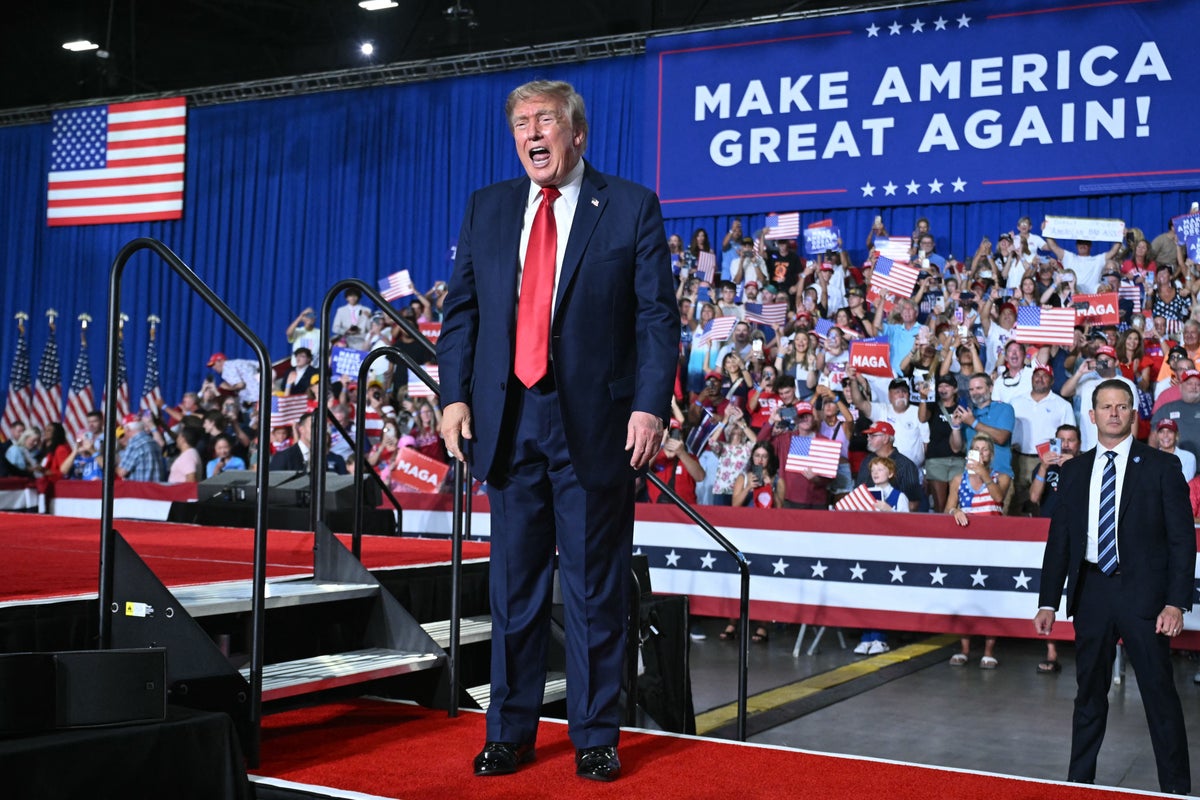
Political events function under distinct economic and behavioral constraints compared to traditional entertainment or corporate assemblies. When the Texas Republican Party structured participation packages for the Donald Trump midterm convention at the American Airlines Center in Dallas, ranging from five thousand to twenty thousand dollars, commentators labeled the execution flawed due to high pricing hurdles, potential crowd volume discrepancies, and scheduling overlap with the National Football League. Treating this high-stakes political gathering as a conventional ticketing failure misdiagnoses the structural mechanics at play. Large-scale partisan assemblies operate less like open-market consumer concerts and more like exclusive donor-capital allocation mechanisms. Dissecting the event requires evaluating the cost function of political mobilization, the opportunity cost of attendee time, and the structural trade-offs of premium-tier fundraising models.
The Cost Function of High-Tier Political Access
Standard event ticketing relies on volume pricing to maximize capacity utilization and gate revenue. Political fundraising events invert this priority matrix. The objective shifts from filling every seat to maximizing yield per attendee while filtering for donor qualification. Building on this theme, you can also read: Why Every Narrative About That Knesset Stunt Gets the Real Power Dynamic Completely Backward.
When participation tiers are established at five thousand dollars for a guest pass, fifteen thousand dollars for an alternate delegate slot, and twenty thousand dollars for an honorary delegate designation, the pricing strategy is intentionally restrictive. This economic wall filters out casual observers and restricts entry to high-net-worth individuals, corporate political action committees, and dedicated benefactor networks.
Viewing these price points through the lens of ordinary consumer demand curves leads to analytical errors. The target demographic for a twenty-thousand-dollar package is insulated from micro-economic ticket price elasticity. Instead, the transaction represents an investment in political capital, direct proximity to leadership, and organizational networking. Evaluating the performance of such a gathering based on traditional stadium sell-out metrics misunderstands the core revenue architecture. The financial success of the model depends on high-margin yield from a concentrated donor base rather than mass-market ticket turnover. Analysts at TIME have also weighed in on this situation.
Opportunity Costs and Attention Scarcity
Scheduling major political rallies during the autumn sports calendar introduces structural friction, most notably direct competition with the National Football League. Media attention and public mindshare represent finite commodities. When a live political broadcast coincides with high-profile athletic broadcasts, the friction of audience capture increases significantly.
Attention scarcity operates on three distinct levels during a midterm convention window:
- Media bandwidth allocation across cable networks and digital platforms
- Corporate sponsor and VIP travel scheduling conflicts
- Local logistical bottlenecks including hospitality pricing and venue capacity constraints
The collision between political staging and professional sports programming impacts the passive observer segment rather than the core political base. While casual viewers might opt for athletic entertainment over political speeches, the primary objective of a midterm mobilization convention is internal alignment, media generation for downstream distribution, and direct donor consolidation. The macro-level audience footprint matters less for immediate fundraising yield than the density of institutional actors present in the venue.
Donor Fatigue and Corporate Extraction Mechanics
Criticism surrounding high-priced political events often centers on the perception of aggressive fundraising from corporate networks. In strategic planning terms, political organizations extract capital from donor ecosystems that face continuous demands throughout an election cycle. Midterm election cycles compress massive fundraising targets into condensed windows, accelerating donor fatigue.
Corporate and individual donors evaluate political contributions based on projected return on investment, legislative alignment, and access value. When admission fees scale upward, the friction between the sponsor and the organizing body intensifies. Organizers must continually demonstrate that the networking utility of events held at venues like the American Airlines Center outweighs the capital expenditure required to attend. If participation yields diminishing returns in terms of direct access or strategic influence, donor resistance surfaces publicly through anonymous leaks to trade publications and media outlets.
Operational Execution and Venue Dynamics
Executing a high-security, high-profile political gathering inside a major indoor sports arena requires complex orchestration across multiple operational vectors. Security protocols, credential verification for honorary tiers, and media staging create structural friction that can manifest as logistical delays or visual perception issues on broadcast feeds.
When crowd distribution appears uneven due to upper-tier sections remaining unpopulated or restricted for security purposes, external observers frequently misinterpret the visual layout as a lack of baseline support. In practice, elite donor rallies frequently utilize localized floor seating and lower bowls to concentrate attendees, creating an optimized visual frame for television cameras while leaving upper decks dark or restricted. Evaluating spatial efficiency in political logistics requires separating broadcast optics from actual operational capacity utilization.
Resource allocation must prioritize the security perimeter and VIP mobility corridors over raw attendance volume. Traditional entertainment venues are optimized for rapid ingress and egress of high-volume ticket holders. Political conventions operating under heightened Secret Service protocols require restricted access points, causing throughput bottlenecks that change the physical dynamics of crowd movement.
Strategic Resource Allocation
The long-term viability of high-yield midterm conventions depends on aligning capital requirements with clear institutional deliverables. Organizers must balance the imperative to extract maximum funding from elite donor tiers with the necessity of maintaining robust populist enthusiasm. Relying exclusively on high-cost attendance packages risks alienating grassroots segments, while abandoning premium tiers starves the operational apparatus of necessary campaign liquidity.
Future iterations of midterm mobilization events must account for media fragmentation and schedule congestion by building multi-channel engagement loops that bypass direct broadcast competition. Maximizing institutional yield requires treating the physical venue not as a mass-attendance spectacle, but as a high-density transaction hub for political capital.