Urban canopy conservation operates at the direct intersection of real estate capitalization and municipal asset management. When institutions like the National Trust of Australia launch public campaigns such as Victoria Tree of the Year, the discourse frequently frames the exercise around heritage, aesthetics, and community sentiment. Behind this cultural veneer lies a strict economic and ecological optimization problem. Mature urban trees function as long-dated capital assets that yield non-linear ecosystem dividends, directly opposing the short-term marginal revenue yields of real estate densification.
Evaluating the finalists across Victorian botanical gardens, streetscapes, and historic estates requires analyzing three distinct asset classes: transplanted exotics, indigenous remnants, and engineered landscape interventions. Each category carries a different risk profile, maintenance cost function, and mitigation value against urban heat island effects.
The Asset Class Breakdown
Urban trees do not depreciate in the traditional linear fashion of physical infrastructure; their structural value and ecological output compound over time, provided maintenance inputs keep pace with biological stress.
The 2026 cohort demonstrates the divergence of these asset types:
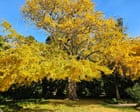
- Relict Exotics and Historical Markers: Specimens like the 1859 Ginkgo biloba in Geelong or the 1867 Canary Island pine in Ballarat represent living archives. Their primary utility is cultural anchoring and microclimatic stability in high-traffic municipal zones.
- Functional Hydrological Agents: Plantings such as the Warburton Californian redwoods—originally established as an experimental watershed management intervention by the Melbourne Metropolitan Board of Works in the 1930s—demonstrate active environmental engineering. They alter local hydrology and particulate composition.
- High-Density Urban Survivors: Specimens like the Prahran smooth-barked apple myrtle or the South Yarra golden wych elm exist in high-friction environments surrounded by construction and infrastructure density. Their survival metrics test the limits of municipal zoning laws and architectural integration.
The Cost Function of Urban Canopy Loss
As urban centers densify, land value per square meter increases, creating an aggressive opportunity cost for surface area occupied by root zones and canopies. The marginal cost of retaining a heritage tree is borne directly by the adjacent developer or municipality through lost floor-space ratio (FSR) potential and mandatory root-zone protection buffers.
The return on investment for canopy retention is deferred and distributed across several vectors:
- Thermal Mitigation: Mature shade trees disrupt solar radiation absorption by dark asphalt and concrete surfaces, reducing peak ambient surface temperatures and lowering local cooling energy demands.
- Hydrological Management: Large-canopy specimens intercept significant volumes of precipitation, decreasing peak stormwater runoff loads on municipal drainage infrastructure.
- Asset Longevity: Retaining established specimens avoids the multi-decade lag phase required for newly planted saplings to reach functional ecological parity. A newly planted street tree requires 15 to 20 years of active irrigation and pruning before delivering ecosystem services comparable to a century-old canopy.
Structural Bottlenecks in Heritage Protection
Public advocacy campaigns create broad awareness, but they expose a structural vulnerability in how legal protections operate. Registers maintained by trusts preserve historical context without automatically granting absolute zoning immunity. When real estate development pressures collide with significant tree registers, the outcome is typically governed by discretionary municipal planning approvals rather than absolute statutory prohibitions.
The primary constraint is enforcement asymmetry. Penalties for unauthorized canopy removal or root-zone destruction often function as a manageable cost of doing business for large-scale developers, rather than an effective deterrent. Unless municipal frameworks tie tree preservation directly to structural density bonuses or severe legal liabilities, preservation remains vulnerable to economic arbitrage.
Strategic Resource Allocation
Municipalities and urban planners face an optimization threshold between grey infrastructure expansion and green asset preservation. To maximize the long-term yield of urban forestry, capital allocation must shift from reactive preservation to proactive spatial integration. Planners must mandate architectural designs that treat mature root zones and canopy spreads as inviolable structural pillars, exactly akin to subterranean utility lines or load-bearing foundations.
The long-term viability of the urban canopy depends on establishing binding legislative frameworks that penalize root compaction and canopy truncation at levels proportional to the true replacement cost of a century-old specimen. Without hard numerical valuation of ecosystem services integrated into municipal property assessments, tree preservation will remain a discretionary amenity rather than a mandatory utility.