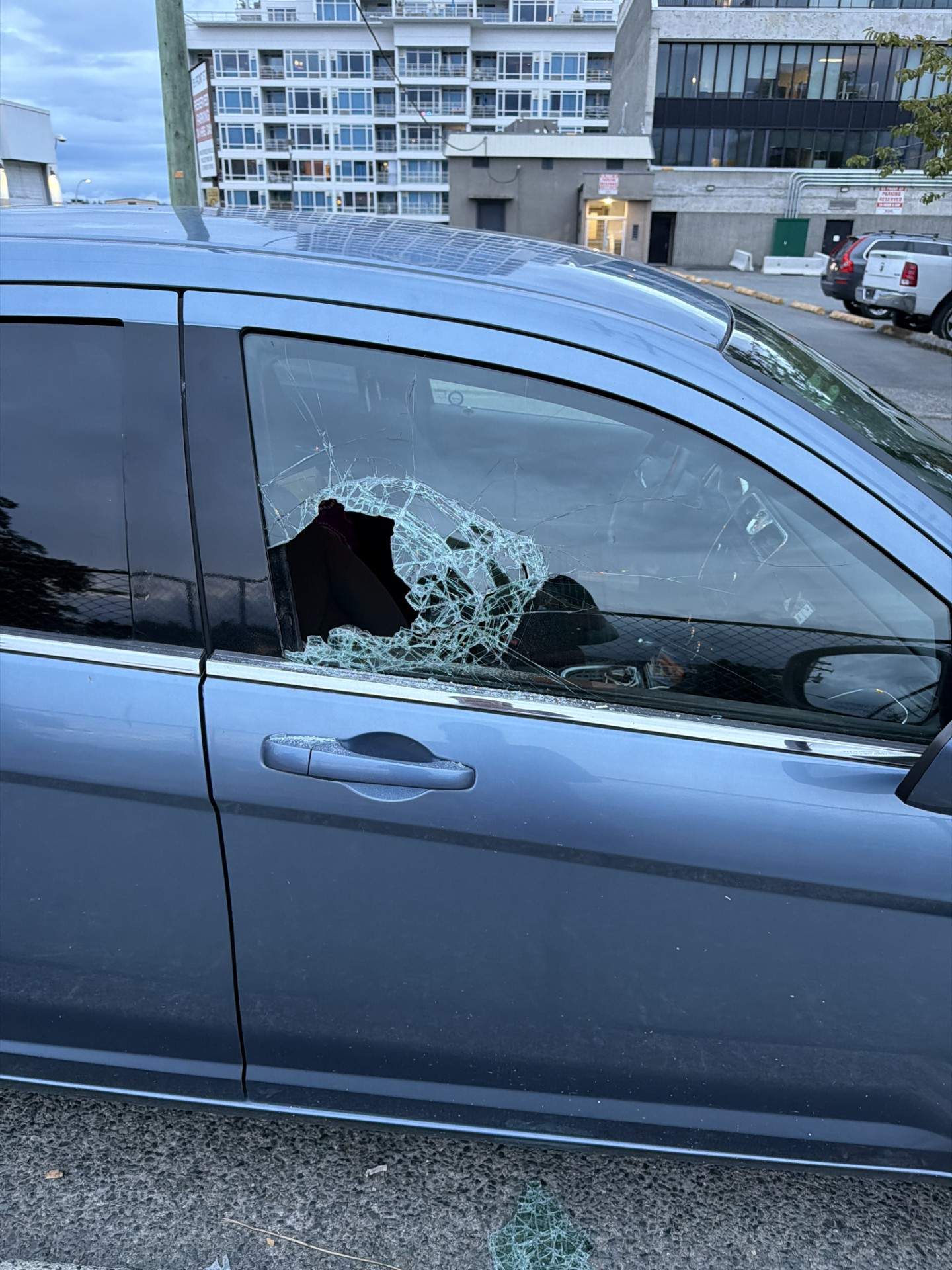
Small business survival in contemporary mid-sized municipalities depends less on product-market fit and more on the unquantified friction cost of security externalities. When a downtown Nanaimo bakery owner publicly declares an intention to shutter operations due to chronic property victimization, the discourse immediately defaults to emotional sensationalism. Local news cycles saturate public consciousness with anecdotes about shattered vehicle glass, delayed police response times, and civic frustration. This narrative framing is structurally useless for strategic decision-making.
To analyze the situation accurately, one must strip away the emotional resonance of the retail storefront and view the intersection of urban crime and small business through the lens of institutional economics. Private enterprises are functioning as absorbers of public safety deficits. When municipal infrastructure fails to maintain a baseline environment of public order, the resulting negative externalities are offloaded directly onto commercial ledgers. This dynamic creates a hidden tax on local commerce, distorting the free market by punishing high-density, pedestrian-oriented operations that rely on accessible physical spaces.
Evaluating the viability of urban enterprise requires an examination of three distinct mechanisms: the cost function of asset vulnerability, the asymmetric burden of municipal friction, and the structural limits of reactive policing.
The Cost Function of Asset Vulnerability
Operating a brick-and-mortar establishment exposes capital to physical degradation that cannot be fully mitigated by standard operational insurance. Property crime targeting employee vehicles, customer delivery fleets, and facility perimeters introduces a volatility factor into cash flow modeling.
Standard risk assessment models evaluate loss based on asset replacement value. This calculation misses the true economic damage, which manifests as disruption variance. When an owner or staff member spends four hours dealing with insurance adjusters, vehicle repair yards, and police reports, productive labor hours are diverted from revenue generation to loss mitigation. The marginal cost of this disruption disproportionately impacts independent operators who lack the administrative redundancy of enterprise corporations.
Insurance markets compound this structural vulnerability. In urban zones experiencing elevated property crime metrics, commercial underwriters respond by adjusting policy parameters through higher deductibles, restrictive exclusions, and premium escalations. A business owner absorbing repeated minor victimization events quickly discovers that filing claims triggers premium penalties that exceed the value of the stolen or damaged property. The rational economic actor absorbs the loss directly, converting insurance from a risk transfer mechanism into an expensive, unused contingency fund.
This reality alters the risk-adjusted return on capital for downtown merchants. The prospective upside of running a retail storefront must now outpace a baseline operational drag that includes physical fortifications, security subscriptions, and uncompensated asset loss.
The Asymmetric Burden of Municipal Friction
Urban centers market themselves as vibrant commercial hubs to capture tax revenue, yet the municipal apparatus often fails to provide the foundational public goods required to sustain that vibrancy. Public safety is the primary non-excludable public good. When the state under-delivers on this obligation, it generates a profound regulatory asymmetry.
Municipalities collect commercial property taxes and business licenses based on the assumption of a secure, functional operating environment. When crime rates escalate, the municipality does not scale back its revenue extraction; instead, the business owner is forced into a double-taxation scenario. They pay the public authority for protection services while simultaneously funding private security measures, window replacement contracts, and advanced surveillance hardware out of pocket.
The friction manifests in the administrative feedback loop between business operators and municipal enforcement agencies. Low-tier property offenses frequently fall beneath the prosecution threshold of overburdened judicial systems. Police departments, operating under resource constraints, triage emergency calls while treating property damage and petty theft as administrative nuisances rather than criminal acts.
This triage creates a moral hazard for offenders and a sense of institutional abandonment for business owners. When repeated reporting yields zero investigative follow-up, the reporting mechanism breaks down. Official crime statistics begin to diverge sharply from actual victimization rates, creating a false sense of security for municipal planners while business operators make exit decisions based on real-time balance sheet degradation.
The Structural Limits of Reactive Policing
Public debates regarding urban crime invariably pivot to demands for increased police presence. This focus on reactive enforcement misunderstands the systemic drivers of property crime in commercial districts. Police patrols are a lagging indicator of public order; they respond to crime after the point of failure.
Property victimization thrives in environments characterized by poor environmental design, unmonitored transitional zones, and unaddressed social disorder. A police cruiser driving down a commercial alleyway once every four hours does little to alter the calculus of an individual looking to break a vehicle window for opportunistic gain. The deterrence factor requires continuous guardianship, which is economically inefficient to supply via traditional municipal policing models.
Effective urban defense relies on the routine, everyday activities of citizens and workers occupying the space, a principle well-established in urban studies. When retail density declines—triggered by business closures like the one referenced in Nanaimo—natural surveillance drops proportionally. As storefronts go dark and foot traffic thaws, the public realm becomes more hospitable to illicit activity, accelerating a localized feedback loop of urban decay.
Relying on reactive enforcement without addressing the root environmental and social contributors guarantees a continuation of the cycle. Municipalities treat symptoms with temporary patrols while structural conditions—such as unmanaged localized substance abuse crises, housing instability, and inadequate mental health intervention infrastructure—continue to generate the population of offenders cycling through the downtown core.
Strategic Capital Allocation Under Urban Stress
Faced with institutional failure at the municipal level, business owners cannot wait for systemic policy reform to secure their operations. Survival requires a systematic decoupling of business performance from local safety conditions through operational engineering.
Capital must be reallocated away from aesthetic enhancements and toward physical hardening and asset isolation. For mobile assets like employee and delivery vehicles, this means removing parking dependencies from high-risk urban cores, utilizing secure municipal or private structured parking facilities, or restructuring compensation packages to offset transit and parking security costs.
Operationally, businesses must audit their exposure to administrative time drains. Establishing a standardized protocol for dealing with property damage—one that bypasses exhaustive reporting cycles when law enforcement recovery probabilities are near zero—preserves cognitive bandwidth for core business functions.
Furthermore, merchants must build defensive coalitions. Isolated businesses operating in urban centers are price-takers in a failing security market. By aggregating commercial density through merchant associations, businesses can internalize the cost of private security patrols, negotiate collective insurance blocks, and exert coordinated political leverage on municipal councils that respond primarily to organized tax-base threats rather than individual complaints.
The ultimate strategic posture requires acknowledging that the municipal entity is an unreliable guarantor of operational security. Business planning models must incorporate systemic safety deficits as a permanent line-item cost of doing business in deteriorating urban zones. If the resulting cost structure eliminates operational margin, the only economically rational response is capital flight to jurisdictions where public infrastructure matches municipal extraction.