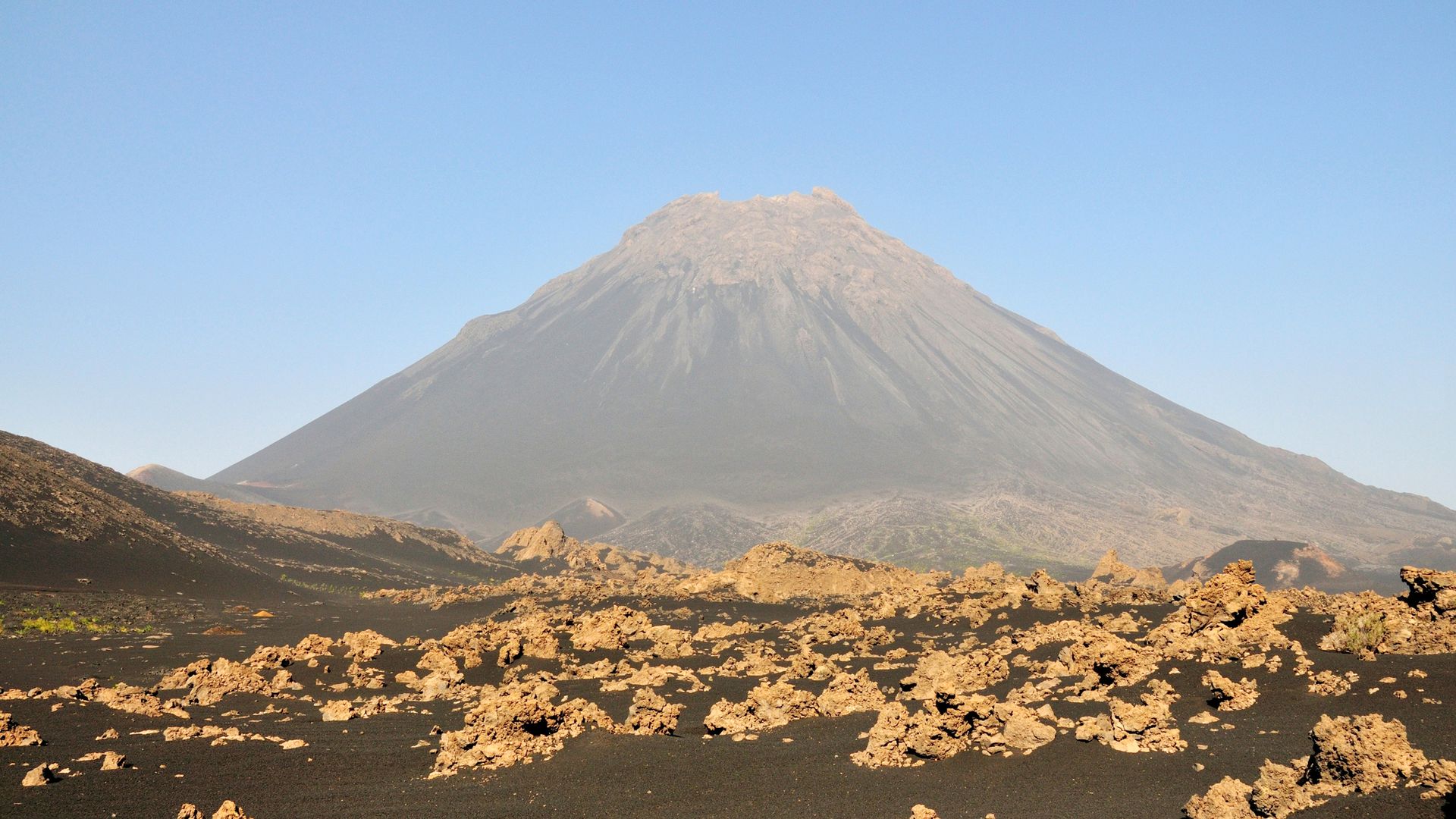
The map of Santiago island in Cape Verde looks like a volcanic fist clenched against the Atlantic. It is an island of sharp, sudden verticals, where green valleys carved by ancient rains crash abruptly into sheer walls of basalt. To move across this terrain is to negotiate with gravity. Every road is a compromise carved into the flank of a mountain, a narrow ribbon of asphalt clinging to the geological bones of the earth with stubborn hope.
Up in the northern highlands, near the municipality of Santa Cruz, the air thins and the horizon tilts. The edges of the asphalt often meet nothing at all. There are no guardrails for miles—just a shoulder of loose gravel, a sharp drop, and the empty, rushing wind of the canyon.
Passengers boarding the local transport vans on routes like the one connecting Assomada to the coastal ports know this geography intimately. They are mothers carrying market produce, students heading toward regional classes, laborers who measure their lives in the rhythm of early morning departures. They pay their fare, squeeze onto crowded benches, and trust the driver. They trust the brakes. They trust the invisible margin between routine travel and absolute catastrophe.
That margin vanished on a Tuesday that began like any other.
Consider what happens in the final three seconds before a tragedy unfolds. The human mind refuses to accept the physics of a fall until it is already underway. There is the sudden, sickening shift of weight as tires lose traction on a crumbling shoulder. There is the driver’s desperate counter-steering, the screech of rubber against dust, and then the profound, terrifying lightness of suspension.
The bus did not simply crash. It plummeted.
Gravity took hold of the vehicle, pulling it over the lip of a steep ravine in the interior of Santiago. Down it went, tumbling through scrub brush and jagged volcanic boulders, a freefall of metal and panic that ended only when the crushed chassis slammed into the rocky floor of the canyon far below.
At least twenty-five lives ended in that descent.
Numbers on a screen are cold. They are abstractions designed to fit into morning news bulletins and brief international wire updates. Twenty-five. A statistic. But behind that number lie twenty-five distinct universes of human experience. Twenty-five kitchen tables that will remain set for meals that will never be eaten. Twenty-five sets of hands whose work remains unfinished.
In small island communities like those scattered across the volcanic archipelago of Cape Verde, grief is not an individual burden; it is a communal shockwave. Everyone knows everyone. The driver who lost control was likely a familiar face, a neighbor who navigated those treacherous curves a dozen times a week without incident. The passengers were cousins, aunts, friends, and anchors of local commerce. When a ravine swallows a bus, it swallows the social fabric of the valley.
Emergency responders faced a nightmare of geography. Getting to the bottom of a sheer drop in the rugged interior of Santiago requires specialized equipment, sheer physical endurance, and time—that cruelest element when survival hangs by a thread. Helicopters, local police, civil protection units, and ordinary villagers rushed to the scene, forming makeshift human chains to reach the wreckage. They descended into the dust and the heat, working in silence, haunted by the realization that in places this remote, help always arrives just a fraction too late for the worst of it.
Survivors, pulled from the twisted wreckage with severe injuries, carried the physical and psychological weight of a very specific kind of survival guilt. Why did the seat hold? Why did the body ahead of them absorb the fatal impact? These are questions that defy simple logic, lingering long after the sirens have faded and the mangled remains of the bus have been hauled away by heavy cranes.
The immediate aftermath brought national mourning. Flags lowered. Condolences arrived from across the globe, whispered through diplomatic channels and broadcast across state media. Prime Minister Ulisses Correia e Silva spoke for a shaken nation, acknowledging a collective sorrow that cut deep into the heart of the island’s identity.
Yet, mourning on an island is always accompanied by an uneasy reckoning with infrastructure.
How do you build a modern society on the spine of a volcano? How do you guarantee safety when geography itself seems hostile to human passage? These are the questions that haunt transportation ministers and civil engineers long after the TV cameras pack up and leave.
Road safety in mountainous developing regions is a quiet crisis of resources and terrain. Paved routes expand to connect isolated agricultural communities, bringing much-needed economic integration, education, and healthcare access. But expansion without robust safety barriers, regular vehicle safety inspections, and rigorous driver training creates a deadly gamble. Every hairpin turn becomes a test of endurance. Every worn brake pad is a ticking clock.
When the dust settles over the valleys of Santiago, the survivors return to the roads. They have no choice. Commerce must happen, children must go to school, and families must visit one another across the mountainous divides. They board the vans, pay their fares, and look out the windows at the sheer drops just inches from their tires.
They know what waits at the edge. They look anyway, holding their breath until the curve is safely behind them, haunted by the ghosts of the ravine and bound by the fragile, beautiful necessity of moving forward.


