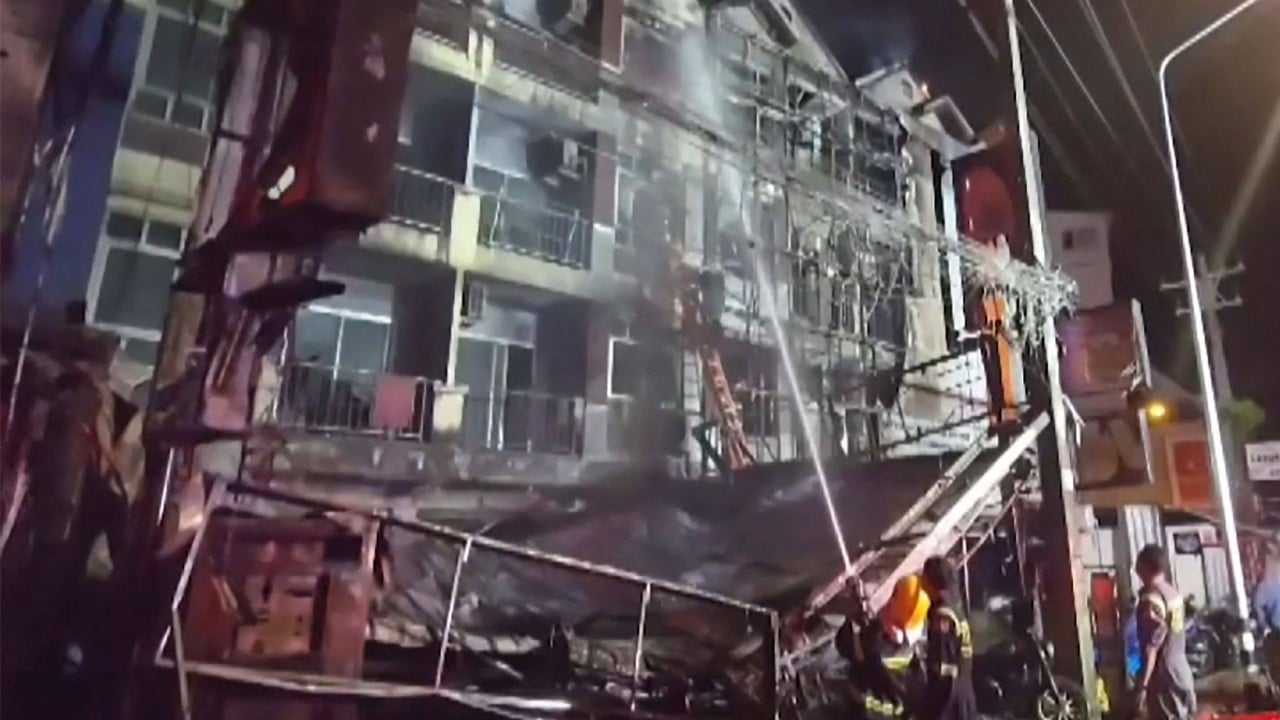
Eleven people died in a Phuket shophouse fire after an electrical transformer exploded outside the building, turning a routine neighborhood power failure into a mass-casualty event that Thai police are now investigating for criminal negligence.
Initial reports treat the incident as an isolated mechanical accident. That framing misses the real story. When a pole-mounted utility transformer ruptures in a dense commercial district, it does not merely cut the lights. It sprays burning mineral oil across wooden shutters, tangled telecom cables, and blocked fire exits. The Phuket tragedy is the predictable outcome of decades of deferred grid maintenance colliding with unregulated urban density across Thailand's busiest tourist provinces.
How a Routine Transformer Failure Becomes an Inferno
To understand why eleven people could not escape a standard shophouse, you have to look at what sits inside the metal drum hanging outside thousands of Thai storefronts.
Distribution transformers step down high-voltage electricity from overhead primary lines to the 220-volt current used inside homes and businesses. Inside that steel tank, copper windings sit submerged in hundreds of liters of dielectric oil. This oil insulates the electrical components and absorbs massive amounts of heat.
Under normal conditions, the system runs quietly for years. Problems start when demand spikes beyond what the unit was rated to handle.
Phuket's commercial corridors have undergone rapid, unplanned conversion. A three-story concrete shophouse originally wired for a single family and a ground-floor tailor shop now houses commercial freezers, industrial air conditioning units, laundry machines, and subdivided rental rooms on the upper floors. The electrical load triples, while the transformer on the concrete pole outside remains unchanged.
Overloading cooks the transformer from the inside out. As internal temperatures climb, the insulating oil breaks down and generates volatile gases, including hydrogen and acetylene. Pressure builds inside the sealed steel tank. If the pressure relief valve is corroded, painted over, or missing altogether, the tank fails catastrophically.
The rupture is violent. Boiling, vaporized oil sprays outward and instantly ignites from the electrical arc. Within seconds, a localized equipment failure becomes a pressurized flamethrower aimed directly at the second-floor windows of adjacent buildings.
The Concrete Trap of the Thai Shophouse
Even a severe exterior fire should not automatically claim eleven lives. The architecture of the traditional Thai shophouse turns a survivable street fire into a lethal enclosure.
Built in continuous rows sharing party walls, these narrow, deep structures typically feature only one staircase running from the ground floor to the roof. The ground floor serves as a shop, storage area, or parking space for motorbikes. When fire breaches the front facade—often fed by plastic signage, awnings, and sagging bundles of dead telecommunications wires—the intense heat and toxic smoke immediately rush up that single stairwell like a chimney.
Upper-floor residents wake up to zero visibility and superheated air. Escape through the front windows is blocked by the flames outside. Escape through the rear is almost universally impossible because property owners install heavy steel security grilles over every rear window and balcony to deter burglars.
Firefighters arriving on the scene face a brutal tactical problem. They cannot reach trapped occupants through the front because of live, downed high-voltage lines whipping across the wet asphalt. They cannot breach the rear without hydraulic cutting tools, costing precious minutes while carbon monoxide fills the upper bedrooms.
Consider a hypothetical scenario illustrating how quickly this timeline collapses. At 2:15 AM, an overloaded transformer vents burning oil onto a tangled web of fiber-optic cables strung two meters from a shophouse balcony. By 2:17 AM, melting plastic insulation drips onto parked scooters below, igniting their fuel tanks. By 2:19 AM, thick black smoke fills the single interior stairwell, rendering occupants on the third floor unconscious before the first emergency call even reaches the local dispatch center.
Following the Trail of Shared Negligence
Thai police investigators probing the Phuket fire face a familiar bureaucratic maze where responsibility is fractured across multiple agencies and private landlords.
On the utility side, provincial electricity authorities manage the high-voltage distribution network, yet maintenance budgets rarely keep pace with commercial expansion in resort towns. Visual inspections from the ground cannot detect degraded internal winding insulation or dissolved gases building up inside an aging transformer tank. Without regular oil sampling or thermal imaging audits, utilities operate on a run-to-failure model. When a unit blows, crews replace it. Until it blows, it stays on the pole.
Then there is the overhead cable crisis. Anyone who has walked down a street in Phuket, Pattaya, or Bangkok has seen the massive, sagging loops of black wires hanging beneath the power lines. Private telecom and internet providers attach new cables to utility poles without removing obsolete ones. These bundles act as both physical bridges for fire and additional weight stressing aging concrete poles. When a transformer explodes, those tangled cables catch fire and carry flames horizontally down the entire block, jumping from one shophouse facade to the next.
Municipal building inspectors carry their own share of the blame. Thailand's Building Control Act mandates clear egress routes, fire-rated separations, and specific occupancy limits. Enforcement in older commercial districts is virtually nonexistent. Landlords routinely partition upper floors into windowless worker dormitories or budget rooms using flammable plywood and drywall, packing a dozen people into spaces designed for four, all without a single smoke detector or emergency exit sign.
Why Past Investigations Rarely Change Street-Level Reality
Every major fire in Thailand triggers the same official choreography. Senior police officials visit the scorched site. Provincial governors announce task forces to inspect electrical infrastructure. Utility spokespeople promise to bury overhead cables underground and audit high-risk transformers.
Months later, the momentum stalls.
Burying power lines in coastal resort areas is extraordinarily expensive and technically difficult due to high water tables, narrow rights-of-way, and constant flooding during the monsoon season. While flagship tourist strips eventually get underground conduits, the dense residential and commercial side streets—where local workers and small business owners actually live—remain untouched.
Criminal prosecutions also tend to stall at the lowest rung of accountability. Investigators may charge a building owner with negligence causing death, or cite a local contractor for improper wiring. Rarely do inquiries reach systemic failures in utility load monitoring or municipal code enforcement. Without financial penalties that force utilities to upgrade overloaded transformers proactively, or strict liability holding landlords accountable for barred windows without interior quick-release latches, the physical conditions on the ground stay exactly the same.
The Uncomfortable Math of Urban Density and Aging Grids
Phuket's economy depends on relentless growth. New hotels, restaurants, and retail strips open every month, drawing tens of thousands of migrant workers and service staff who live in the older shophouse districts flanking the main tourist zones.
This demographic shift puts unprecedented strain on infrastructure built thirty or forty years ago. Air conditioning is no longer a luxury; it runs twenty-four hours a day in cramped quarters. Electric vehicle chargers, commercial kitchens, and high-draw appliances pull continuous power through distribution networks designed for a fraction of that load.
A transformer does not care about tourism revenue targets or municipal zoning exemptions. It obeys the laws of thermodynamics. When electrical current exceeds design capacity for sustained periods, heat accumulates, insulation fails, and steel ruptures.
Police forensic teams sifting through the charred concrete in Phuket will eventually determine the exact point of electrical failure and identify which municipal rules were ignored. Their report will sit in a file alongside findings from previous nightclub fires, market blazes, and dormitory tragedies across the country. Until provincial authorities strip the dead cables off the poles, enforce quick-release fire exits on every barred shophouse window, and replace overloaded transformers before they rupture, the next mass-casualty fire is already humming overhead.