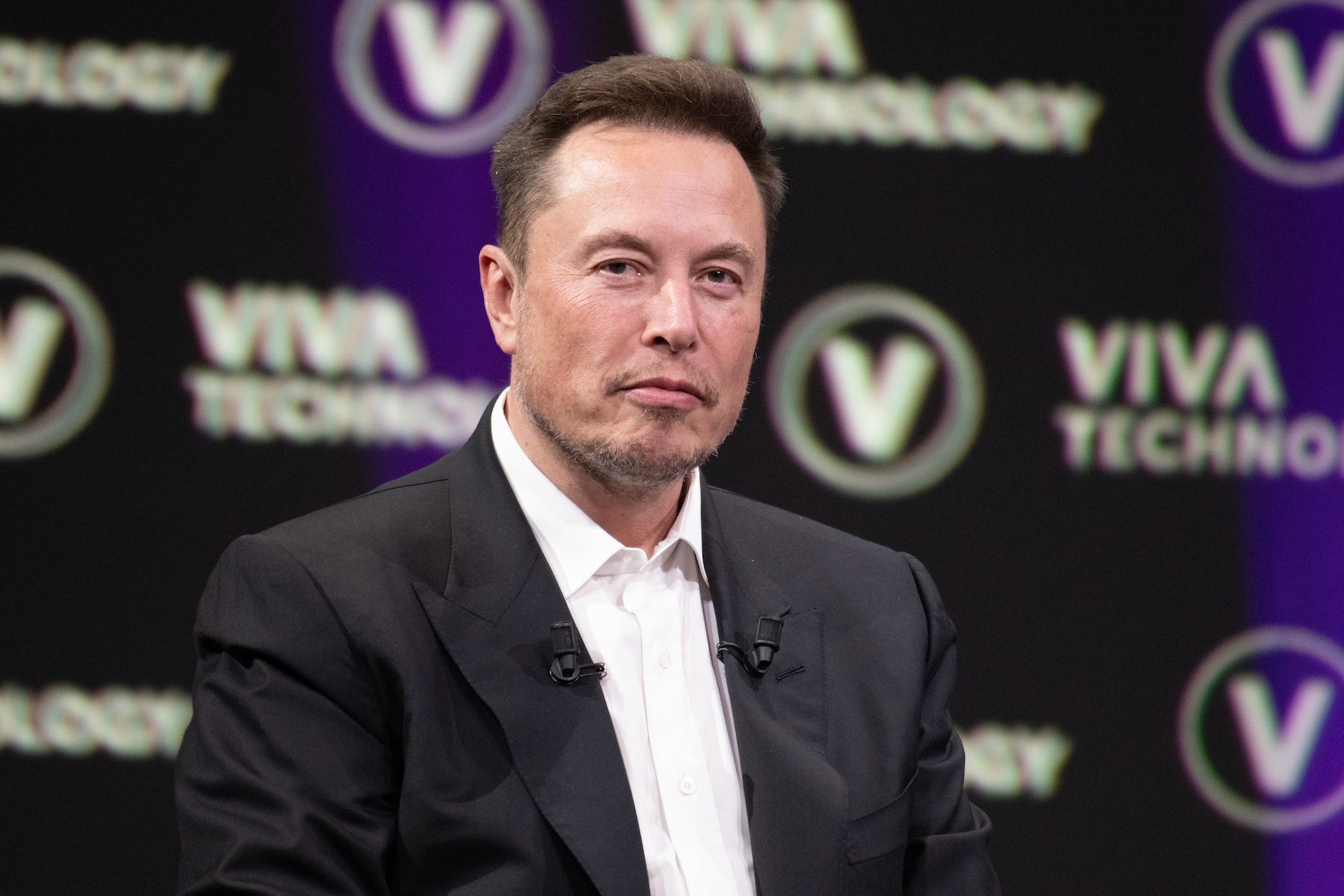
Silicon Valley has a chronic addiction to hero worship, and Elon Musk just handed the tech press its favorite new narcotic.
When Musk publicly declared Nvidia CEO Jensen Huang "irreplaceable" while expressing regret over political midterm spending, the collective financial media swooned. Headlines framed it as a rare moment of vulnerability from the world's richest man. A touching tribute between two titans of industry. A strategic mea culpa on Washington lobbying. Don't miss our earlier article on this related article.
That reading is naive. It is the exact kind of surface-level stenography that costs retail investors and enterprise buyers billions of dollars every single cycle.
If you look past the leather jacket and the soundbites, Musk wasn't paying a compliment. He was executing a textbook supply-chain maneuver while quietly admitting that writing checks to politicians yields a terrible return on investment compared to hoarding silicon. If you want more about the context of this, CNET provides an excellent breakdown.
The Anatomy of a Billion-Dollar Flattery Campaign
Let’s look at the mechanics of the semiconductor market right now. Nobody in the history of modern computing has held more pricing power over hyperscalers than Jensen Huang. When a single company controls the vast majority of the training compute required to build frontier artificial intelligence models, you do not criticize its chief executive. You praise him. You call him irreplaceable. You ensure your allocation of next-generation Blackwell and Rubin architectures arrives on schedule while your competitors sit on a waitlist.
I have sat in boardrooms where enterprise infrastructure teams burned eight figures trying to negotiate hardware allocations without understanding vendor leverage. The moment a supplier realizes you have no viable short-term alternative, your negotiating power drops to zero.
Musk understands this better than anyone alive. xAI’s Memphis supercluster, Colossus, did not scale to hundreds of thousands of GPUs by accident. It scaled because Musk played the exact political game inside Nvidia’s allocation queue that he claims to despise in Washington.
Calling Jensen Huang irreplaceable is not an objective assessment of corporate governance. It is a survival tactic by a buyer who is currently captive to a monopoly.
The Myth of the Irreplaceable Founder
The tech press loves the "founder mode" mythology—the idea that a company’s entire market capitalization rests inside the skull of one visionary leader.
Yes, Huang’s thirty-year bet on accelerated computing and the CUDA software ecosystem is one of the greatest strategic runs in business history. Nobody disputes his execution. But calling any CEO of a multi-trillion-dollar enterprise "irreplaceable" ignores how structural moats actually work.
Nvidia’s dominance does not depend on Jensen Huang personally signing off on every wafer fab run at TSMC. It rests on three concrete pillars:
- Software lock-in via CUDA: Millions of developers have spent nearly two decades writing libraries, kernels, and optimization frameworks specifically for Nvidia’s architecture. Switching away requires rewriting foundational codebases from scratch.
- Networking integration: Through the acquisition of Mellanox, Nvidia owns the InfiniBand and high-speed Ethernet interconnects that allow tens of thousands of chips to act as a single brain. Competitor chips often sit idle waiting for data because their networking bottlenecks kill cluster efficiency.
- Supply chain pre-booking: Nvidia buys up advanced packaging capacity (CoWoS) and High Bandwidth Memory (HBM) years in advance, starving rivals of the physical components needed to scale.
If Huang stepped down tomorrow, those three structural moats would remain intact for years. Conversely, if TSMC’s advanced packaging lines in Taiwan went offline tomorrow, Huang’s genius would not produce a single GPU.
Musk knows the difference between a charismatic leader and a physical bottleneck. By elevating Huang to mythical status in the press, Musk reinforces the narrative that Nvidia’s margins are untouchable—even as Musk’s own engineers at Tesla and xAI work around the clock to design custom ASICs like Dojo and AI5 specifically to break free from Nvidia’s tax.
Why Midterm Spending Was Always a Sucker's Bet
Now examine the second half of Musk’s headline-grabbing statement: his regret over political spending during the midterm elections.
The mainstream narrative paints this as a philosophical awakening—a realization that partisan politics is messy, divisive, and distracts from building rockets and humanoid robots.
Strip away the drama and look at the balance sheet. Political capital has the worst liquidity and the highest depreciation rate of any asset class on earth.
When you spend $100 million on political action committees, you buy temporary proximity to people whose primary skill is getting re-elected every two to six years. You do not buy physics. You do not buy transformer capacity on the electrical grid. You do not buy high-bandwidth memory stacks.
Capital Allocation Reality Check
Consider what happens when an industrial operator allocates capital to Washington versus allocating capital to physical infrastructure:
- Political Spend: High reputational blowback, zero intellectual property created, outcomes subject to razor-thin voter margins, and promises that evaporate the moment a committee chair loses a primary.
- Compute and Power Spend: Tangible assets, compounding engineering velocity, direct control over product roadmaps, and immediate leverage over every competitor in your sector.
I have watched mid-cap tech CEOs completely derail their companies because they caught the D.C. bug. They started spending three days a week testifying before subcommittees and attending fundraising dinners, convinced that regulatory capture would protect their market share. Meanwhile, hungry competitors stayed in the lab, shipped faster products, and made the regulations irrelevant before the ink was dry.
Musk’s regret over midterm spending isn't a moral epiphany. It is basic math. Every dollar and every hour spent managing political blowback is an hour not spent solving inference latency or securing gigawatts of baseload power for data centers.
The Questions Investors and Operators Should Actually Be Asking
When headlines like this dominate the cycle, most people rush to search engines asking the wrong questions. They ask whether Nvidia stock is still a buy, or whether Musk is pivoting away from politics. Both questions miss the structural shift happening underneath the AI hardware market.
Is Nvidia’s Monopoly Actually Permanent?
No hardware monopoly in computing history has lasted forever, and the seeds of Nvidia’s margin compression are already planted by its biggest customers.
Google has spent a decade perfecting its Tensor Processing Units (TPUs), training its largest Gemini models entirely without Nvidia silicon. Amazon is scaling Trainium. Microsoft has Maia. Meta is deploying MTIA. And Tesla is building its own inference and training chips.
Why are every single one of Nvidia’s best customers spending billions to replace their "irreplaceable" supplier? Because when compute becomes your primary cost of goods sold, paying a 75% gross margin to a single vendor is an existential threat.
The catch—and the reason Nvidia will keep printing money for the next several years—is that custom silicon only works for predictable, massive-scale workloads. The moment an AI lab changes its model architecture, shifts from dense transformers to mixture-of-experts, or pivots to heavy test-time compute, rigid custom chips lose efficiency. Nvidia’s general-purpose programmability acts as an insurance policy against architectural obsolescence.
Does Founder-Led Tech Need Political Protection to Survive?
The lazy consensus in Silicon Valley argues that AI is so powerful that governments will inevitably regulate it, therefore tech leaders must buy influence in Washington to survive.
History proves the exact opposite. Heavy lobbying invites scrutiny. When tech executives camp out in Washington demanding "AI safety" frameworks or regulatory moats, they hand lawmakers the exact excuse needed to slow down innovation and bog down deployments in compliance audits.
The companies that win technological shifts move faster than legislative calendars can process. By the time a regulatory committee drafts a bill governing last year’s model weights, the industry has already moved on to edge inference and autonomous agents.
The Contrarian Playbook for Operators and Investors
If you are building a company, managing an engineering budget, or allocating capital in the AI sector right now, stop reacting to billionaire press tours. Watch what they buy, not what they say.
1. Treat Vendor Praise as a Warning Sign
Whenever a major CEO publicly gushes over a sole-source supplier, recognize it for what it is: a hostage video disguised as a partnership. If your own business relies on a single cloud provider, a single foundation model API, or a single hardware vendor, you are paying a hidden tax. Start building abstraction layers today so you can route workloads across multiple providers the moment pricing shifts.
2. Audit Your "Non-Product" Burn
Look at your company’s calendar and budget over the last two quarters. How much money went toward PR, government affairs, industry conferences, and strategic advisory boards versus raw engineering, customer acquisition, and infrastructure? Musk’s admission about political spending is a reminder that even the most powerful operators get seduced by status games outside their core competency. Cut the vanity spend and put it back into production.
3. Bet on the Bottlenecks Behind the Bottleneck
Everyone knows GPUs are scarce. Investing purely on that thesis means buying at the top of the hype cycle. Look one layer deeper in the physical supply chain. GPUs are useless paperweights without high-voltage transformers, liquid cooling manifolds, optical transceivers, and dedicated power generation. The companies solving thermal density and grid interconnection have the exact same pricing power Nvidia enjoyed three years ago, without the daily media circus.
The Uncomfortable Truth About This Approach
Before you go liquidating your Nvidia shares or swearing off regulatory awareness entirely, let’s be honest about the risks of this contrarian view.
Betting against an incumbent monopoly too early is one of the fastest ways to go broke in tech. For five straight years, smart analysts have predicted that AMD, Intel, or custom hyperscaler chips would crush Nvidia’s gross margins. Every single year, Nvidia widened its lead because its software ecosystem evolved faster than rival hardware could tape out. Underestimating CUDA’s gravity has ruined countless short sellers.
Similarly, completely ignoring Washington can be fatal if you operate in heavily regulated sectors like energy, autonomous vehicles, or aerospace. You cannot ignore the Federal Aviation Administration when launching rockets, and you cannot ignore the National Highway Traffic Safety Administration when removing steering wheels from cars.
The mistake is confusing compliance with campaigning. You engage regulators because you have to clear legal hurdles to ship products. You do not dump tens of millions into partisan midterm races expecting politicians to loyalty-test their way into protecting your stock price.
Stop Watching the Theater
Elon Musk did not wake up this week and suddenly realize Jensen Huang is a great engineer, nor did he just discover that Washington is a money pit.
He is running multiple capital-intensive businesses in an environment where physical compute is the ultimate currency and political theater is a depreciating distraction. He praised the guy holding the keys to the foundry, and he wrote off a bad investment in D.C. influence.
Read the signal, ignore the applause, and check your own supply chain before your biggest vendor decides what your margins should be.