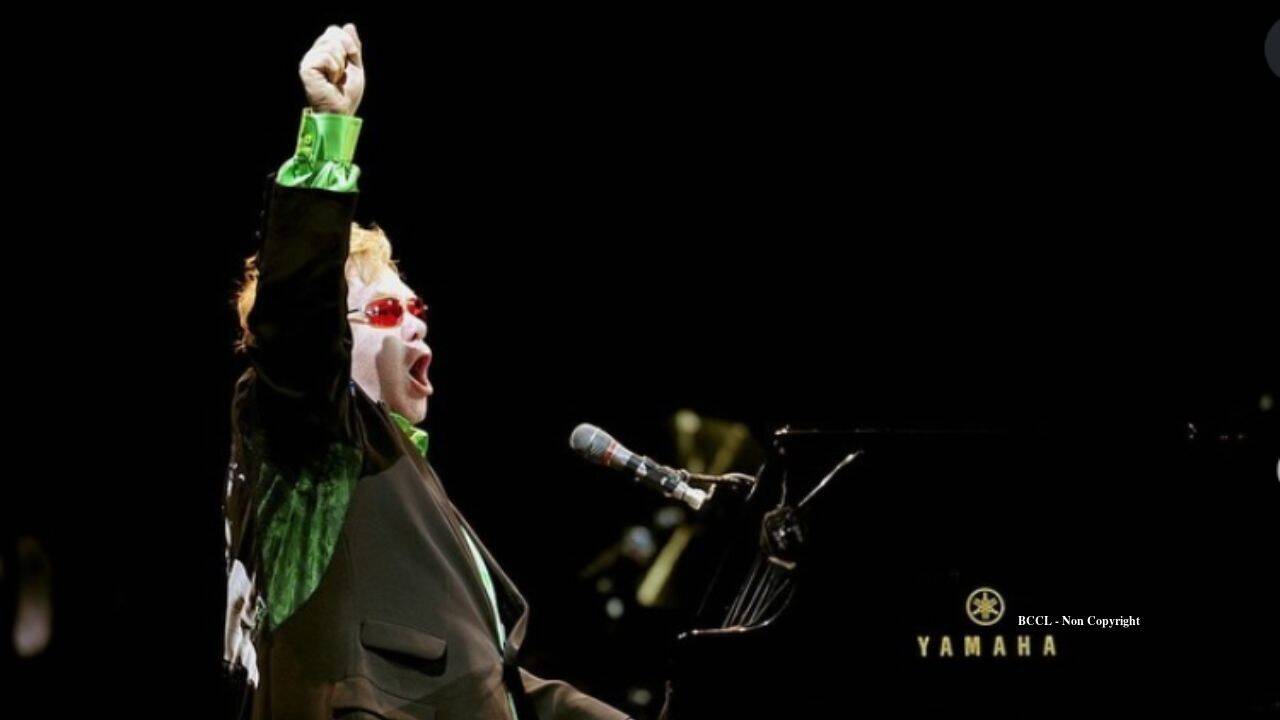
In February 2016, Elton John walked unannounced onto the concourse of London’s St Pancras International railway station, sat down at a black Yamaha upright piano, and played a brief, joyful set for stunned commuters before leaving the instrument behind with a handwritten note. Nearly a decade later, that exact public railway station piano—the catalyst for an entire wave of viral transit-hub performances—is hitting the auction block to raise an estimated £250,000 for the Elton John AIDS Foundation.
On the surface, it is a heartwarming celebrity charity story. Look closer at the mechanics of modern music memorabilia, public-space marketing, and high-net-worth philanthropy, and a far more calculated picture emerges.
The Anatomy of a Staged Viral Moment
Public pianos in train stations were not invented by Elton John. British artist Luke Jerram launched his Play Me, I’m Yours installation back in 2008, placing street pianos across global cities to turn passive commuters into active participants. St Pancras International adopted the concept, turning its concourse into a reliable stage for amateur virtuosos and wandering tourists.
John’s 2016 appearance changed the commercial calculus of the concourse forever. He did not merely sit down to play; he arrived alongside a film crew, delivered a tight medley, and signed the fallboard in silver marker. His inscription read, "Enjoy this piano. It's a gift. Love, Elton John."
That single afternoon transformed a standard retail-grade upright piano into an authenticated cultural artifact.
For Yamaha, the brand placement was priceless. Every subsequent viral video filmed on that specific instrument—whether played by touring concert pianists, reality television contestants, or everyday travelers—carried Elton John’s signature directly in the camera frame. The piano became a permanent, self-sustaining marketing engine inside one of Europe’s busiest international rail terminals.
From Public Commons to Private Vault
When an object moves from a public railway concourse to an international auction house, its fundamental nature changes. For years, the St Pancras Yamaha existed as a rare democratic artifact. Anyone with a ticket or a passing connection could sit on the bench and touch the same keys as a rock-and-roll hall of famer.
Auctioning the instrument effectively privatizes a piece of shared urban history. Once the hammer falls, the piano will almost certainly disappear into a climate-controlled private collection, a corporate lobby, or a high-end hospitality venue. The £250,000 valuation reflects not the acoustic quality of the instrument—a standard Yamaha upright retails for a fraction of that figure—but the scarcity of its provenance.
How Celebrity Provenance Inflates Hardware Value
In the traditional musical instrument market, value is dictated by craftsmanship, age, tonal quality, and rarity. A vintage Steinway Model D or a pre-war Bechstein commands six figures because of superior engineering and acoustic performance. Celebrity memorabilia operates under an entirely different set of economic laws.
Consider the baseline economics of the instrument itself. A factory-new Yamaha upright piano of similar build costs roughly £4,000 to £8,000. After nearly ten years of heavy public use in a drafty, high-traffic railway station—subjected to spilled coffee, fluctuating humidity, aggressive amateur pounding, and constant tuning adjustments—its intrinsic value as a musical tool is negligible.
Yet auction specialists confidently attach a quarter-million-pound estimate. That 3,000 percent markup is driven by three distinct market forces.
- Photographic Verification: In the memorabilia sector, a signature alone is easily forged and heavily discounted. Because John’s 2016 performance was captured from dozens of angles by professional cameras and commuter smartphones, the chain of custody is airtight. Buyers are purchasing indisputable proof.
- The Viral Multiplier: Unlike a studio piano locked behind closed doors during the recording of a single album, the St Pancras instrument accumulated hundreds of millions of digital impressions over a decade. Every subsequent viral clip reinforced the object's fame, compounding its cultural equity.
- Tax-Advantaged Philanthropy: High-net-worth collectors frequently use charity auctions to acquire trophy assets while offsetting tax liabilities or fulfilling corporate social responsibility mandates. Bidding £250,000 at a standard commercial sale yields only an object; bidding the same amount at a charity gala buys public prestige and philanthropic goodwill.
The Retiring Artist Effect
Timing plays an equally critical role in this valuation. Elton John wrapped up his massive Farewell Yellow Brick Road tour in 2023, officially stepping away from the grueling cycle of global stadium performances.
In the collectibles market, retirement acts as a soft trigger for price appreciation. When an artist stops touring, the supply of newly generated performance artifacts drops to zero. Collectors who missed out on his stage-worn eyewear, bespoke Gucci suits, or personal grand pianos from earlier estate sales view the St Pancras upright as one of the final accessible entry points into his live-performance legacy.
The Business Model Behind the Elton John AIDS Foundation
To understand why a worn railway piano is being liquidated now, you have to look at how the Elton John AIDS Foundation (EJAF) operates. Founded in 1992, the organization has raised hundreds of millions of dollars globally, operating with the efficiency of a mid-sized venture capital firm rather than a traditional grassroots charity.
Celebrity foundations face a persistent structural challenge: donor fatigue. Gala dinners and standard fundraising appeals yield diminishing returns over decades unless paired with unique, high-visibility hooks that command mainstream media coverage.
By pulling the piano out of St Pancras and placing it on the auction block, EJAF achieves two objectives simultaneously. First, it generates a global press cycle without spending a penny on paid advertising. Newsrooms around the world naturally pick up the story because it combines a beloved public landmark, a global music icon, and an easily digestible price tag. Second, it converts a depreciating physical asset into liquid capital for HIV prevention and treatment programs.
The Hidden Costs of Public Art Maintenance
There is also a practical, unglamorous reality behind removing the instrument from the station concourse. Public pianos are notoriously expensive to maintain.
A piano sitting in a busy transport hub requires tuning every few weeks rather than twice a year. Hammers wear down prematurely, strings snap under heavy-handed playing, and internal felts degrade from exposure to damp winter air rushing through station doors. St Pancras International had to absorb the ongoing maintenance costs, security oversight, and crowd-control headaches caused by influencers monopolizing the bench for hours to film social media content.
Over the past few years, the culture around public station pianos shifted noticeably. What began as spontaneous musical joy increasingly turned into staged content creation, complete with ring lights, tripods, and territorial disputes between YouTubers. Retiring the original Elton John piano from the concourse cleanly resolves a growing operational headache for station management while allowing Yamaha or the terminal to reset the space with a fresh instrument.
What Buyers Actually Pay for When Bidding on Pop Culture Relics
If you have ever watched a major memorabilia auction in London or New York, you know that estimates like £250,000 are carefully engineered psychological anchors. Auction houses set the low estimate just low enough to entice three or four serious bidders into registering, banking on competitive ego in the salesroom to push the final hammer price well past the threshold.
For a hypothetical buyer—say, a London-based hospitality group looking for a centerpiece for a flagship hotel lobby, or a tech founder decorating a private residence—the piano functions as an instant conversation piece. It requires zero explanation. Unlike an abstract contemporary painting that demands art-historical context, an Elton John railway piano communicates its exact story to anyone who walks past it.
However, the buyer inherits a severe conservation dilemma.
If the new owner restores the piano—refinishing the scuffed black lacquer, replacing the worn hammers, and polishing out the scratches—they risk destroying the very patina that proves it spent years in a public train station. In high-end collecting, over-restoration is fatal to value. Conversely, if they leave it in its battered, heavily played state, it remains a compromised musical instrument that cannot hold a concert-grade tune without major mechanical intervention.
Most trophy memorabilia of this caliber ends up unplayed. The silver marker signature on the fallboard is fragile; regular use or aggressive cleaning will smudge or erase the ink over time. Once sold, the St Pancras piano will likely live out its days as a silent sculpture, roped off behind velvet stanchions or preserved under climate-controlled glass.
The Evolution of Station Pianos as Cultural Real Estate
The journey of this single Yamaha upright mirrors the broader commercialization of urban public spaces over the last ten years. When the piano arrived in 2016, social media video was still largely raw and unpolished. Commuters genuinely stumbled upon unexpected moments of artistry on their way to catch the Eurostar to Paris.
Today, transit hubs are tightly curated media environments. Brands actively sponsor public installations, algorithms reward predictable emotional tropes, and every square foot of concourse floor space is evaluated for its potential to generate digital engagement.
Elton John’s 2016 stunt inadvertently wrote the playbook for modern experiential marketing. It proved that dropping a high-status celebrity into a mundane, everyday environment creates an enduring piece of intellectual property. By the time the auctioneer brings the gavel down, the piano will have generated millions of pounds in earned media value for Yamaha, St Pancras International, and John’s personal brand—long before the final £250,000 check is ever written to the charity.
The commuters rushing through St Pancras tomorrow will likely find another upright piano waiting near the platforms, ready for the next amateur pianist or passing tourist to test the keys. It will look nearly identical to the original, save for the absence of a silver signature on the fallboard and a quarter-million-pound price tag hanging over its bench.