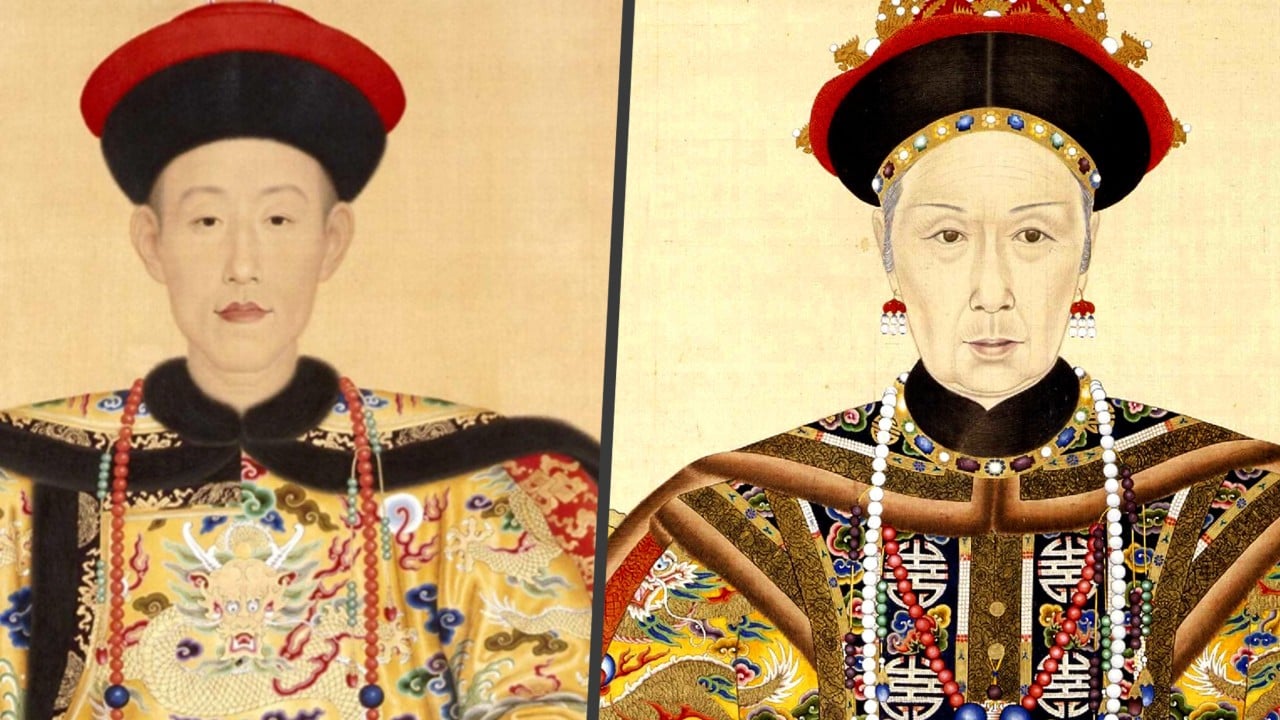
Silence inside the Forbidden City has a distinct weight. It is not the quiet of a tranquil forest or an empty room at midnight. It is a dense, suffocating quiet forged by thousands of courtiers walking on tiptoe, by silk slippers sliding across polished brick, by the constant, unspoken awareness that every breath you take is recorded, judged, and woven into the official chronicles of a dynasty.
Imagine living behind high red walls where your name is rarely spoken aloud, where your face is a sacred icon, and where your physical body is practically imprisoned by ritual. Every morning begins with the same heavy choreography. Layers of embroidered silk are draped over your shoulders. Heavy pearls press against your collarbone. You are told where to sit, whom to look at, and what expressions are permitted upon your countenance.
You are the Son of Heaven. You own everything.
And yet, you cannot walk down a street to buy a bowl of hot noodles. You cannot sit by a quiet river and watch the reeds bend in the autumn wind. You are entirely, exquisitely trapped.
History often portrays emperors, empresses, and supreme rulers as stone statues carved from unyielding ambition. We picture them staring forward with cold eyes, meditating on tax policy, troop movements, and dynastic survival. We forget that power strips away the most ordinary human privilege: the right to reinvent oneself.
Long before anyone coined the term cosplay, long before fiberglass armor was crafted in suburban garages or elaborate wigs were styled for convention halls, China’s highest rulers discovered a brilliant, clandestine escape hatch. They played pretend.
The Secret Albums of the Yongzheng Emperor
Consider the Yongzheng Emperor. He ruled the vast Qing Empire during the early eighteenth century with an iron fist and a legendary work ethic. State papers piled high on his desk until dawn. He trusted almost no one, building an elaborate spy network to monitor his own officials. By all accounts, his life was an unyielding exercise in absolute control.
Yet, hidden deep within the palace archives, a series of extraordinary paintings tells a radically different story.
In these silent scrolls, Yongzheng is completely unmasked. Or rather, he is masked in a dozen different ways.
In one panel, he sits on a mossy boulder, wearing the coarse robes of a Daoist ascetic, a bamboo hat tilted back as he gazes into a swirling mountain stream. In another, he wears the opulent turban and flowing robes of a foreign traveler from the distant West, holding a coral branch with wide-eyed curiosity. Turn the page, and he is a humble fisherman resting his boat by the reeds, a scholarly literatus bent over ancient poetry scrolls under the shadow of a pine tree, or even a European aristocrat posing with a telescope.
These were not official state portraits intended to project imperial might. They were private fantasies.
Commissioned by the emperor himself, these albums were kept in his private chambers. They were portable theaters. When the crushing burden of managing millions of subjects became too heavy, Yongzheng could open a scroll and instantly teleport himself out of the palace. He became the hermit he could never be. He became the wanderer freedom denied him. He became an ordinary man.
There is a profound melancholy in this. Absolute power demands the total erasure of the individual self. To be the state, you must cease to be a person. Yongzheng’s costumed portraits reveal a man yearning for the margins of society, aching to experience the simple textures of a life unburdened by destiny.
When we look at modern role-players stepping into the shoes of fictional heroes, we recognize the impulse instantly. We dress up because our daily lives feel too narrow, too predictable, or too demanding. We wear the armor of a warrior or the robes of a mage because we want to borrow their agency, their strength, or their magic.
An emperor did the exact same thing, just with a court painter instead of a sewing machine.
The Empress Dowager and Her Divine Transformation
Centuries later, as the Qing Dynasty teetered on the edge of the abyss, another master of disguise took the stage.
Empress Dowager Cixi ruled China behind a silk screen for nearly half a century. Her world was collapsing around her. Foreign powers were carving up Chinese territory. Revolutionary murmurs grew louder by the day. Domestic rebellions threatened to sweep away the Manchu throne. The pressures upon her were unimaginable.
In the twilight of her reign, a new technology arrived at the gates of the palace: the camera.
While conservative officials viewed the lens with superstitious dread—fearing it would capture their souls or bring bad joss—Cixi embraced photography with theatrical brilliance. She did not merely pose for portraits to document her likeness. She used the camera as a stage to rewrite her reality.
Step into her private courtyard for a moment. The morning sun filters through the ancient ginkgo trees. Eunuchs scurry about carrying heavy props—bamboo baskets, lotus branches, silk banners, and elaborate headgear. Cixi steps out of her apartments, not as the feared political matriarch holding the strings of an empire, but as Guanyin, the Buddhist Goddess of Mercy.
She wears long white silk robes embroidered with delicate lotuses. A string of heavy prayer beads hangs from her fingers. A sacred halo is artfully arranged behind her head through clever framing and painted backdrops. Her chief eunuch, Li Lianying, stands nearby disguised as a heavenly attendant holding a willow branch in a vase.
Click.
The shutter opens and closes, freezing a fleeting moment of divine illusion.
In these photographs, Cixi was not just recording history; she was actively manufacturing a myth. She was stepping outside the patriarchal constraints of the imperial court, where women were theoretically barred from supreme political authority, and draping herself in the highest spiritual legitimacy available. She was playing a goddess because playing a mortal ruler had become an impossible nightmare.
Think about the psychological relief of that flash. For a few moments, the wars, the treaties, the betrayals, and the crumbling dynasty vanished. She was no longer the aging widow fighting to keep a crown on her head. She was eternal, compassionate, and divine.
It is easy to judge historical figures through the lens of their worst policies or their grandest ambitions. We tally their victories and condemn their failures. Yet, standing before these photographs and painted scrolls, we catch a glimpse of raw, universal vulnerability. They were lonely souls hiding behind silk curtains, wishing, if only for an hour, that they were someone else.
The Architecture of Escapism
Why does this resonate so deeply with us today?
Because the desire to escape our assigned skin is written into our DNA. Modern life locks us into boxes just as surely as the Forbidden City locked up its emperors. We are defined by our job titles, our credit scores, our zip codes, and our social media profiles. We are told how to dress, how to speak, and how to behave in polite society.
When the weekend arrives, millions of people transform. They glue foam armor together in basements. They spend months embroidering historical garments down to the very last stitch. They paint their faces blue, strap wings to their backs, and walk into convention centers filled with strangers who understand the unspoken language of transformation.
We roll our eyes at times, calling it childish or eccentric. We wonder why adults spend thousands of dollars to pretend to be elves, cyberpunks, or anime heroes.
The paintings of the Yongzheng Emperor and the photographs of Empress Dowager Cixi give us the answer. Role-playing is not an escape from reality; it is an escape to authenticity. When you put on a mask, you paradoxically reveal something truer about yourself than your everyday clothes ever could. You reveal your aspirations, your hidden sorrows, your longing for adventure, and your refusal to let the world define the boundaries of your imagination.
Consider what happens when a person steps into a costume. Posture changes. Shoulders drop or square off. The eyes light up with a different kind of focus. The timid accountant suddenly carries himself with the swagger of a space pirate. The overworked teacher radiates the quiet wisdom of an ancient wizard.
The costume acts as a permission slip. It grants the wearer the authority to feel differently, to move differently, and to exist outside the exhausting script written by society.
The Red Silk Curtain Remains
Today, the palace guards are gone. Tourists with smartphones wander through the courtyards where emperors once plotted and worried. The dragon thrones sit empty behind thick glass barriers, silent relics of a vanished world.
Yet the impulse that drove Yongzheng to pose as a fisherman and Cixi to dress as a goddess remains completely intact. It hums quietly in the glowing screens of our phones, in the cluttered workshops of costumiers, and in the hearts of anyone who has ever looked in the mirror and wished to see someone more interesting, more powerful, or simply more free staring back.
We are all looking for our own private albums. We are all searching for a camera lens that can catch us in the middle of a divine transformation.
The next time you catch yourself losing hours in a fictional world, or meticulously crafting a persona for a weekend gathering, do not judge yourself. You are participating in a very old, very noble human tradition. You are stepping past the heavy red walls of expectation. You are picking up the brush, adjusting your robes, and stepping into a story where you finally get to choose who you are.
The crown is heavy. The world is demanding.
Sometimes, the only rational response is to play pretend.