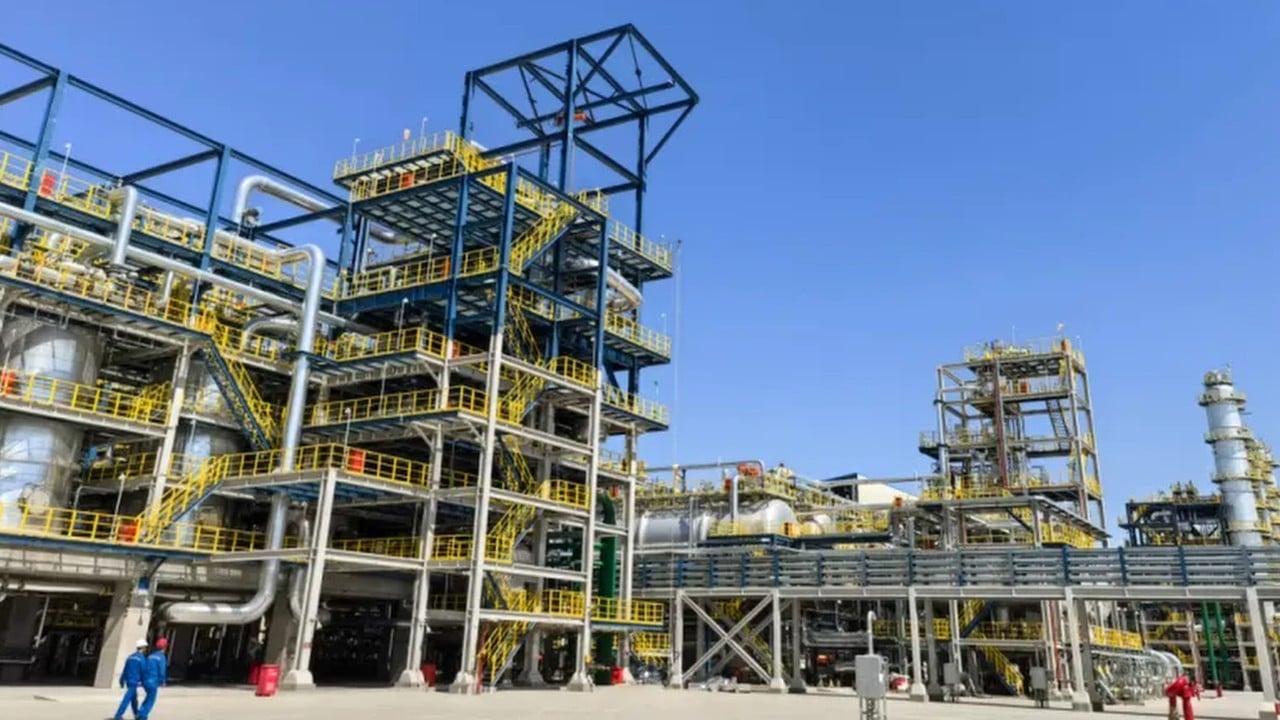
Tire manufacturing is fundamentally a multi-variable optimization problem governed by conflicting material requirements: high elasticity, thermal stability, high tear resistance, and minimal rolling resistance. Traditional synthetic rubbers, primarily polyisoprene and polybutadiene synthesized via conventional coordination catalysts like titanium or cobalt systems, consistently run into physical boundaries. These conventional elastomers hit yield ceilings under high thermal and mechanical stress because their microstructures lack precise stereoregularity. Chinese materials science laboratories have pivoted toward rare earth coordination catalysts—specifically neodymium-based systems—to override these performance ceilings. By exerting precise control over the polymer chain architecture, these catalysts alter the molecular geometry of synthetic rubber, yielding materials that dissipate less heat, resist abrasive wear, and maintain structural integrity across extreme thermal ranges.
The Molecular Bottleneck of Conventional Elastomers
The mechanical performance of a tire tread depends on stereospecificity. When 1,3-butadiene polymerizes, it can form cis-1,4, trans-1,4, and 1,2-vinyl microstructures. High cis-1,4 content is the primary determinant of elasticity, resilience, and low heat build-up. Cobalt and nickel catalysts achieve high cis content but yield broad molecular weight distributions and linear chain structures that tangle poorly under heavy load, leading to high hysteresis and rapid degradation under shear stress. Titanium catalysts offer narrower molecular weight distributions but suffer from low catalytic activity, requiring large volumes of transition metals that leave residual impurities in the polymer matrix. These impurities act as stress concentrators, accelerating crack propagation during high-speed flexing cycles.
Neodymium-based rare earth catalysts resolve this structural limitation by providing high catalytic activity coupled with exceptional stereoselectivity. Neodymium catalysts routinely achieve a cis-1,4 content exceeding ninety-eight percent while maintaining a controlled, linear-to-branched ratio. This precise molecular architecture suppresses cold flow during storage and drastically reduces internal friction when the tire deforms against the road surface. Lower internal friction translates directly to reduced rolling resistance, which lowers fuel consumption in internal combustion engines and extends the battery range of heavy electric vehicles.
The Catalytic Mechanism of Neodymium Systems
The integration of rare earth elements into polymerization vats involves complex Ziegler-Natta type catalyst compositions. A typical neodymium catalytic system consists of a neodymium source, an alkylaluminum compound as a co-catalyst, and a halogen donor. The synergistic interaction among these three components dictates the active center's oxidation state and spatial orientation.
During the polymerization reaction, the neodymium atom coordinates with the diene monomer, holding it in a fixed spatial orientation before insertion into the growing polymer chain. This steric control prevents the formation of branched structures that act as weak points in the polymer network. Furthermore, the active centers in rare earth systems exhibit uniform propagation rates. Uniformity in chain length eliminates the low-molecular-weight fractions that migrate to the surface or evaporate under elevated temperatures, and it eliminates the ultra-high-molecular-weight fractions that cause processing difficulties during extrusion and mixing.
The operational parameters governing this catalytic pathway require absolute anhydrous environments. Trace moisture or polar impurities poison the active neodymium centers immediately, halting polymerization. Consequently, industrial adoption requires high-capital-expenditure purification infrastructure. The cost function shifts from raw material expense to processing control, demanding higher capital investment upfront in exchange for superior end-product performance metrics.
Reinforcement Chemistry and Filler Dispersion
Synthesizing high-cis polybutadiene via neodymium catalysis is only the first step. The rubber must be compounded with reinforcing fillers, typically carbon black or precipitated silica, to achieve commercial utility. Traditional rubbers struggle with filler agglomeration. When filler particles clump together within the polymer matrix, they form localized stress nodes that initiate micro-cracks under cyclic loading.
Rare earth catalyzed elastomers exhibit superior interaction with both carbon black and functionalized silica surfaces. Because the polymer chains possess a uniform microstructure and lack random branching, functional end-groups can be attached more efficiently during termination reactions. These functionalized chain ends form strong chemical bonds with silica surfaces, ensuring homogeneous filler dispersion throughout the compound.
Uniform dispersion alters the viscoelastic properties of the tread compound. At low strain amplitudes during straight-line cruising, the storage modulus remains high, while the loss modulus drops. This divergence minimizes energy dissipation. Under high strain amplitudes during cornering or braking, the dynamic network reorganizes effectively, absorbing kinetic energy without permanent plastic deformation. This dual-behavior resolves the traditional trade-off between wet grip and rolling resistance, a compromise that has constrained tire engineering for decades.
Supply Chain Realities and Geopolitical Concentration
The industrial scaling of rare earth enhanced rubber production faces severe material supply constraints. Neodymium is a light rare earth element, yet global supply chains remain heavily concentrated in a single geographic jurisdiction. China controls the vast majority of both the mining and the refining capacity for rare earth elements globally.
When state-backed research institutions integrate neodymium into industrial-scale synthetic rubber production, the strategic implications extend far beyond the laboratory. Tire manufacturers outside this sphere face structural vulnerabilities. Procuring refined neodymium requires navigating export quotas, geopolitical trade restrictions, and volatile commodity pricing.
Substitute catalysts using cheaper or more accessible metals, such as iron or manganese, fail to match the stereospecificity and catalytic activity of rare earth formulations. Attempts to optimize iron-based catalysts have yielded moderate success in lower-tier industrial rubber applications, but they fall short of the strict fatigue resistance and thermal stability required for high-load commercial vehicle tires and high-performance aviation applications. The technical superiority of neodymium-based elastomers is chemically absolute under current technological constraints, forcing global competitors to either absorb supply chain risks or accept performance deficits in their product lines.
Manufacturing Integration and Thermal Processing Dynamics
Transitioning from batch-scale laboratory synthesis to continuous industrial production of rare earth polybutadiene introduces distinct rheological challenges. Neodymium-catalyzed polymers possess high green strength due to their linear structure, which prevents the rubber bales from slumping or deforming during storage and transport. However, this same characteristic increases Mooney viscosity, making the rubber difficult to masticate and mix with fillers in standard Banbury mixers.
Factory floors must adjust internal mixing temperatures and rotor speeds to prevent premature cross-linking during processing. If the compound temperature exceeds critical thresholds during the incorporation of sulfur and accelerators, scorch occurs, rendering the batch unusable. Manufacturers must implement precise thermal monitoring systems and modify processing aids, such as specialized plasticizers and fatty acid zinc salts, to reduce compound viscosity without compromising the final cross-link density.
Curing kinetics also shift when utilizing rare earth elastomers. The high regularity of the polymer chains allows sulfur vulcanization networks to form more uniformly. Cross-links are distributed evenly across the polymer network rather than clustering in amorphous regions. This uniform cross-link density enhances the material's resistance to reversion—the thermal degradation of the cross-linked network under prolonged exposure to high operating temperatures. For heavy truck tires that operate continuously under heavy loads and high internal temperatures, resistance to reversion prevents catastrophic tread separation and blowout events.
Economic Trade-offs in Commercial Deployment
The implementation of rare earth technology in tire production is an economic calculus balancing upfront material costs against lifecycle durability. Neodymium catalysts carry a premium over traditional cobalt or titanium systems, both in raw material acquisition and the rigorous solvent purification required to prevent catalyst poisoning. Furthermore, the specialized mixing equipment and stringent environmental controls required for handling organometallic rare earth compounds increase facility capital expenditures.
These increased production costs must be offset by the value proposition delivered to the end consumer. For passenger vehicle fleets and logistics operators, fuel savings derived from lower rolling resistance and extended tread life compensate for the higher initial purchase price of the tire. Fleets running long-haul freight operations measure total cost of ownership on a cost-per-kilometer basis. A fifteen percent extension in tread life combined with a three percent reduction in fuel consumption alters fleet operating margins significantly.
For passenger vehicles, the primary market driver is the proliferation of electric vehicles. Electric vehicles impose unique mechanical demands on tires due to their immediate torque delivery and heavier vehicle mass, which accelerates tread wear by thirty to fifty percent compared to internal combustion vehicles. Utilizing rare earth reinforced elastomers provides the structural resilience required to mitigate rapid EV tire wear, positioning this material science advancement as a critical component in the ongoing redesign of automotive components for electrified transport systems.
Deploy capital toward retrofitting existing synthetic rubber facilities with anhydrous purification loops and specialized neodymium handling infrastructure, prioritizing high-load commercial and electric vehicle tire production lines to capture maximum margin from lifecycle performance gains.