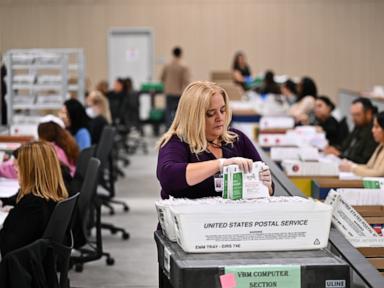
The kitchen table smells like cold coffee and yesterday's circulars. Outside, the autumn wind rattles the bare branches against the windowpane, a dry, anxious sound. Maria sits there with a blue ballpoint pen in hand, staring down at an official envelope. Her knees ache when the weather turns like this—a phantom reminder of thirty-two years spent standing behind a cash register at the local pharmacy. She does not drive anymore. The highway expansion carved right through her neighborhood a decade ago, leaving a concrete canyon that makes crossing on foot a dangerous gamble for someone with a cane and a slow gait.
For Maria, the ballot inside that envelope is not a political abstraction. It is a lifeline. It is the quiet dignity of having a voice without having to beg a neighbor for a ride or stand for forty minutes in a freezing November line on an aching joint.
She fills in the ovals carefully, sliding the paper into the secrecy sleeve, sealing the flap, and signing her name across the back just so. She knows the rules. She has practiced them.
Then comes the news alert flashing silently on her phone screen across the table.
Democratic states have just filed a fresh, urgent lawsuit. Their target is a sweeping executive order signed by Donald Trump designed to clamp down on mail-in voting right as the midterm elections loom on the horizon. The order seeks to impose severe federal restrictions, choke off local distribution methods, and erect iron-clad procedural hurdles for ballots cast far from the physical booth.
Maria looks from her phone back to the envelope resting beside her coffee cup.
She feels a familiar, cold weight settle in her chest. It is the feeling of a door slowly closing.
The Architecture of Friction
Power rarely announces itself with a battering ram. More often, it arrives disguised as administrative hygiene. It speaks in the sterile vocabulary of security, integrity, and efficiency.
Consider what happens next when a government decides that convenience is a threat rather than a right.
In state capitals across the country, legal briefs are flying like paper shrapnel. Attorneys general are scrambling, typing frantic injunctions into the small hours of the night. They argue that the executive order oversteps constitutional boundaries, violating the explicit authority granted to states under the Elections Clause to run their own federal contests. They point to the chaos such a mandate would ignite—millions of validly issued ballots suddenly plunged into legal limbo, local election boards paralyzed by contradictory federal edicts, and citizens disenfranchised by administrative whiplash.
On the other side of the courtroom aisle, the architects of the order frame their mission as a crusade for absolute certainty. They argue that remote voting invites systemic vulnerability, that the distance between a voter's kitchen table and the local precinct box is a breeding ground for doubt.
But distance is not just physical. For millions of Americans, distance is measured in hours of lost wages, lack of childcare, inflexible shift work at the warehouse, and the brutal calculus of physical endurance.
To understand this fight, you have to look past the dense legalese of injunctions and standing motions. You have to look at the geometry of access.
A History of Paper
We forget how fragile our civic machinery truly is. We treat democracy like an immovable monument carved into granite, when in reality it is more like a house of cards built on a very windy hill.
Think back to the spring of 2020. When the world paused behind locked doors, the mail-in ballot became the nervous system of the republic. States that had historically required strict excuses for absentee voting suddenly opened the floodgates because there was no other choice. Millions discovered a profound truth: voting at home was not just convenient; it was transformative. Participation surged, particularly among the elderly, rural communities, shift workers, and people with disabilities.
It turns out that when you remove the friction, people show up.
That sudden surge created an ideological earthquake. When more citizens participate, the electorate shifts. It grows younger, more diverse, and less beholden to traditional power structures.
And so, the counter-offensive began. State legislatures introduced hundreds of restrictive bills. Drop boxes vanished from suburban strip malls. Signature match requirements tightened into microscopic forensic tests. Mail deadlines were pulled closer to election day, creating a frantic race against an increasingly overburdened postal service.
Now, this executive order represents the escalation of that campaign from the statehouse to the Oval Office. It is an attempt to federalize restrictions, creating a uniform ceiling on how easily a citizen can cast a ballot from afar.
The lawsuit filed by the coalition of democratic states is the firewall. It asserts a fundamental principle: the federal executive cannot simply rewrite the rules of democracy by decree because the outcome of a high-turnover election makes them uneasy.
The Cost of the Margin
Let us be entirely honest about what is at stake here.
Elections are rarely decided by landslides. They are won in the margins. A few thousand votes in a suburban Philadelphia county, a few hundred ballots in a rural Nevada district, a handful of envelopes sorted through a sorting machine in a damp Detroit warehouse.
When you introduce federal hurdles to mail-in voting—when you require notarization, shorten return windows, or invalidate drop boxes—you do not stop fraud. Fraud is already vanishingly rare, studied to death by academics and election security experts who consistently find error rates hovering near zero.
What these restrictions stop is momentum.
They stop the exhausted nurse working a twelve-hour night shift from mailing her ballot on her morning break. They stop the college student whose campus post office operates on restricted hours. They stop Maria, sitting at her kitchen table with her blue pen, wondering if her signature will be scrutinized by a partisan clerk looking for an excuse to throw her voice into the recycling bin.
Every barrier is a sieve. And every sieve catches disproportionately the people who can least afford the time, the money, or the legal recourse to fight back.
This is why the courtroom battle unfolding right now matters. It is not a technical dispute over municipal code. It is a struggle over who gets to belong to the political community.
The Silence Before the Count
Back at the kitchen table, the light has shifted. The afternoon sun cuts a long, pale stripe across the linoleum.
Maria picks up the envelope. She slides it into her purse. She knows she cannot rely on the law to save her vote today, tomorrow, or by next November. The lawyers will argue. The judges will issue temporary restraining orders, followed by appeals, followed by emergency stays rushing up to a heavily divided Supreme Court. The legal ping-pong will play out on cable news tickers while ordinary life grinds forward.
Yet, she refuses to let the anxiety paralyze her. She puts on her heavy winter coat, grabs her wooden cane, and opens the back door.
The walk to the corner mailbox is short, but every step is a deliberate act of will against the pavement. The wind bites at her cheeks. The metal box stands tall and indifferent against the gray backdrop of the afternoon.
She reaches out, pulls the heavy iron handle down, and drops her vote into the dark, echoing interior.
It is a small gesture. In the grand sweep of national politics, amidst the billions of dollars spent on advertising, the thunderous speeches, and the high-stakes constitutional warfare in federal courts, it looks like nothing at all.
Just a piece of paper falling into the dark.
And yet, that is where the whole magnificent, fragile machinery rests. Not in the executive suites, not in the marble halls of the judiciary, but in the quiet, stubborn refusal of ordinary people to be erased from the ledger of their own country.