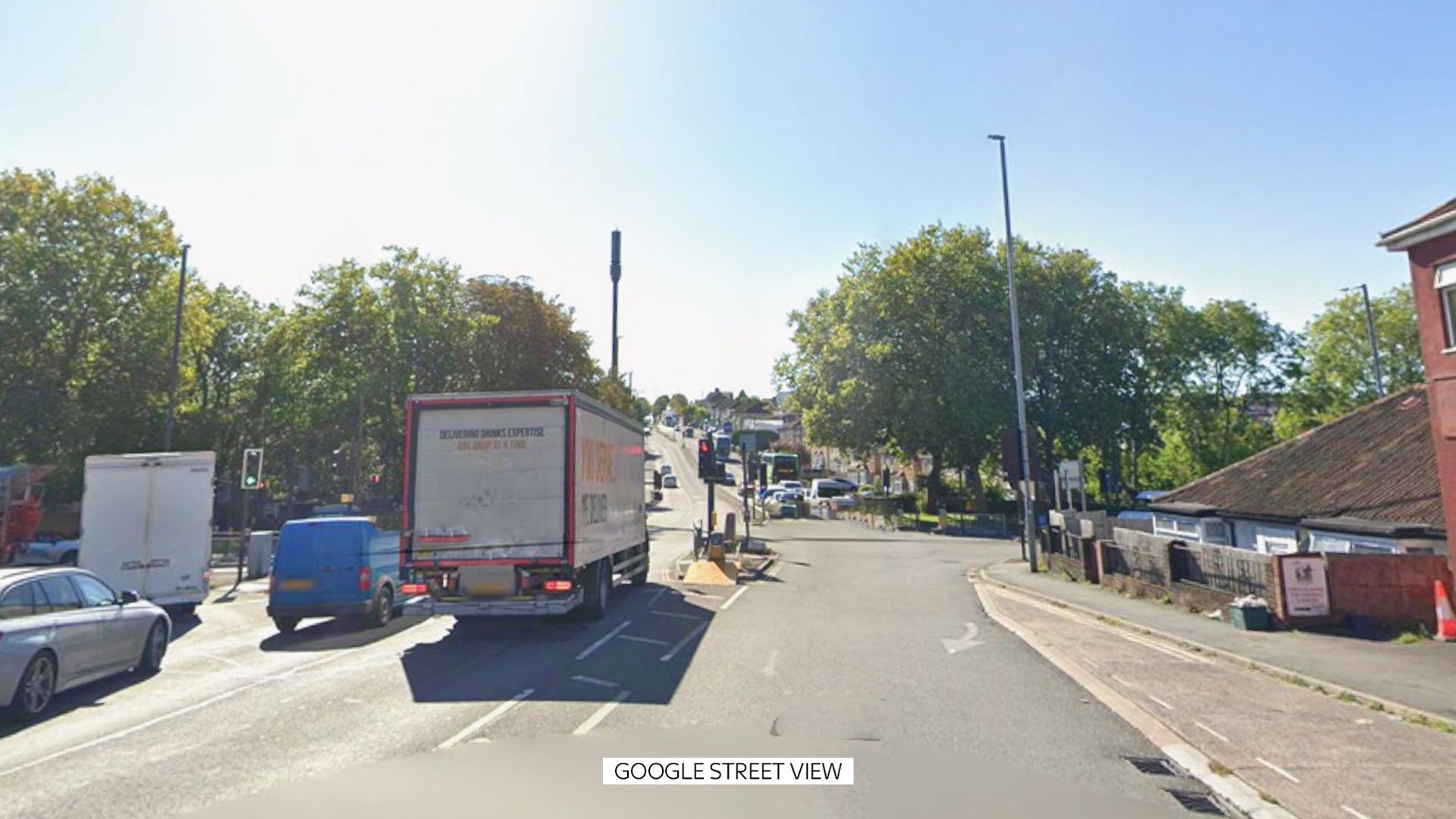
A fatal collision involving a 17-year-old driver following a law enforcement pursuit represents the terminal failure of two intersecting risk-management systems: adolescent cognitive impulse control and police pursuit protocols. Standard incident reporting reduces such events to a linear sequence—an infraction, a flight, a pursuit, a fatality, and an arrest. That surface-level framing obscures the operational variables that convert a minor traffic violation into a lethal kinetic event. Understanding why these incidents occur requires examining the biomechanical limits of vehicle dynamics, the neurological asymmetries of the adolescent brain under high-stress conditions, and the institutional decision matrices governing law enforcement engagement.
The Behavioral Economics of Adolescent Flight
When a 17-year-old driver initiates flight from a traffic stop, the decision rarely stems from a rational cost-benefit calculation of criminal liability. In behavioral economics and developmental neurobiology, this behavior is explained by the dual-systems model of adolescent risk-taking. The socioemotional system—driven by dopaminergic pathways in the ventral striatum—matures rapidly during puberty, heightening sensitivity to immediate rewards, peer presence, and acute emotional arousal. Conversely, the cognitive control system—anchored in the prefrontal cortex—undergoes synaptic pruning and myelination well into the mid-twenties.
Under baseline conditions, a 17-year-old understands traffic laws and the physical dangers of high-speed driving. The introduction of flashing lights and sirens triggers an acute sympathetic nervous system response, flooding the bloodstream with cortisol and adrenaline. This physiological stress narrows attentional focus, a phenomenon known as cognitive tunneling, while simultaneously suppressing prefrontal executive function.
- Hyperbolic Discounting: The adolescent brain heavily discounts future consequences—such as felony charges, vehicular homicide liability, or permanent physical injury—in favor of the immediate objective of evading apprehension.
- Peer Amplification: Fatal juvenile crashes frequently involve teenage passengers. Empirical research in traffic psychology demonstrates that the presence of peer passengers significantly increases risk-taking behavior in adolescent drivers, shifting the driver's internal reward matrix toward social status preservation rather than hazard avoidance.
- Illusion of Control: Lacking accumulated driving experience, novice drivers systematically overestimate their vehicle-handling capabilities while underestimating stopping distances and lateral g-force thresholds.
The arrest of the surviving 17-year-old driver marks the transition from this acute neurobiological state back into the legal framework, where adult-level accountability applies to a decision made under compromised executive function.
Kinetic Energy and the Physics of Pursuit Escalation
A police pursuit introduces a competitive feedback loop onto public roadways. Once a pursuit begins, both the fleeing driver and the pursuing officer operate at elevated speeds, fundamentally altering the physics of the environment. The primary determinant of crash severity is kinetic energy, governed by the equation $E_k = \frac{1}{2}mv^2$. Because velocity ($v$) is squared, incremental increases in speed produce exponential increases in destructive force.
Doubling a vehicle's speed from 35 mph to 70 mph does not double the energy involved in a collision; it quadruples it. At 70 mph, a standard 3,500-pound passenger vehicle carries roughly 573,000 foot-pounds of kinetic energy. In the event of an impact with a fixed object or another vehicle, that energy must be dissipated through structural deformation and occupant deceleration within milliseconds.
- Braking Distance Expansion: Total stopping distance is the sum of perception-reaction distance and braking distance. Under high-adrenaline pursuit conditions, perception-reaction time degrades due to cognitive overload. Simultaneously, braking distance increases proportionally to the square of the vehicle's velocity. A vehicle traveling at 80 mph requires over four times the distance to come to a complete stop compared to one traveling at 40 mph, assuming optimal road friction.
- Lateral Traction Degradation: Juvenile drivers fleeing police routinely enter curves at speeds exceeding the friction coefficient limits of their tires. When lateral acceleration exceeds tire grip, the vehicle transitions from understeer or oversteer into an unrecoverable yaw, leading directly to roadway departure, rollovers, or broadside impacts.
- Structural Compromise: Modern passenger vehicles are engineered to absorb frontal impacts through crumple zones at standardized crash-test speeds, typically 35 to 40 mph. High-speed pursuit crashes frequently involve side impacts—where structural intrusion space is minimal—or speeds exceeding 70 mph, completely overwhelming the vehicle's passive safety systems, including airbags and seatbelt pretensioners.
The death of a teenager in the aftermath of a chase is the predictable physical outcome of operating a motor vehicle beyond the structural and frictional tolerances of civilian infrastructure.
Law Enforcement Pursuit Matrices and Operational Trade-Offs
From an institutional standpoint, a police pursuit is a high-liability operational intervention governed by a proportionality calculus: the immediate public safety threat posed by the suspect's continued freedom versus the immediate public safety threat created by the pursuit itself. Law enforcement agencies utilize restrictive, discretionary, or judgmental pursuit policies to manage this trade-off.
| Policy Framework | Operational Trigger | Termination Threshold | Primary Risk Exposure |
|---|---|---|---|
| Restrictive | Violent felony or immediate threat to life only | Speed exceeds threshold, traffic density rises, or suspect identity is known | Suspect escapes immediate apprehension; potential for delayed re-offending |
| Discretionary | Officer assessment of offense severity vs. environmental risk | Supervisor intervention or subjective determination of excessive hazard | Inconsistent application across shifts; high reliance on individual officer temperament |
| Pursuit-Prohibited | No vehicular pursuits permitted under any circumstances | Immediate non-engagement; reliance on aerial or digital tracking | Loss of deterrence for routine traffic stops; public perception of lawlessness |
When an agency engages in a pursuit that ends in a fatality, the operational breakdown typically occurs in the dynamic reassessment phase. Initial authorization to pursue may be based on incomplete information—such as a stolen vehicle report or reckless driving—without knowledge that the operator is an inexperienced 17-year-old.
The pursuit creates an external stimulus that drives the suspect's speed upward. While the fleeing driver bears direct legal and moral responsibility for failing to yield, the pursuing vehicle acts as the psychological pacemaker. Empirical data from law enforcement studies consistently indicates that when police terminate a pursuit and deactivate emergency equipment, fleeing drivers decelerate within a short distance, reverting to normal traffic speeds once the immediate threat of capture is removed.
The operational limitation of restrictive policies lies in the deterrence deficit. If juvenile offenders recognize that law enforcement will automatically terminate pursuits upon reaching a specific speed threshold or entering residential zones, high-speed flight becomes a rational, repeatable strategy to evade accountability. Conversely, aggressive pursuit policies accept a statistically quantifiable probability of third-party or passenger fatalities in exchange for immediate apprehension.
Post-Incident Legal and Forensic Attribution
Following a fatal pursuit crash, the investigation bifurcates into an internal administrative review and a criminal prosecution. The arrest of the 17-year-old driver initiates a forensic reconstruction process designed to establish causation and culpability.
Crash reconstructionists utilize Event Data Recorders (EDRs)—commonly referred to as black boxes—extracted from the involved vehicles. EDRs capture pre-crash telemetry in the five seconds prior to airbag deployment, recording vehicle speed, throttle position, brake application, steering input, and seatbelt status. This data eliminates subjective testimony, establishing whether the driver attempted evasive maneuvers or maintained full throttle until impact.
Simultaneously, prosecutors evaluate the charging threshold. Depending on jurisdiction, a 17-year-old driver involved in a fatal pursuit crash faces charges ranging from vehicular manslaughter to felony murder, particularly if the underlying offense that triggered the flight qualifies as an enumerated felony. In many legal systems, the age of 17 sits at the jurisdictional boundary between juvenile court—which prioritizes rehabilitation and seals records—and adult criminal court, which imposes mandatory minimum sentences and permanent felony convictions.
The internal law enforcement review runs parallel to this criminal process, auditing dashcam footage, body-worn camera audio, and radio dispatch timestamps. Investigators assess whether the pursuing officers maintained proper following distances, whether a field supervisor actively monitored the pursuit, and whether environmental variables—such as wet pavement, school zones, or heavy intersection traffic—mandated an earlier termination order.
Strategic Mitigation Protocols for Municipal Systems
Reducing fatalities in juvenile-involved pursuits requires decoupling apprehension from high-speed kinetic engagement. Municipal governments and law enforcement administrators must treat these incidents as systemic failures of detection and containment rather than isolated behavioral anomalies.
- Deploy Non-Kinetic Tracking Infrastructure: Agencies must transition from physical tailing to remote tracking technologies. GPS dart systems, which launch a miniaturized adhesive tracker from the grille of a patrol vehicle onto the fleeing car, allow officers to drop back, deactivate sirens, and coordinate low-speed containment via dispatch. Similarly, integrating Automated License Plate Readers (ALPRs) with municipal traffic camera networks enables investigators to identify the vehicle's registered owner and execute a warrant at a stationary residence, eliminating the high-speed chase entirely.
- Enforce Mandatory Supervisory Takeover: Pursuit decisions cannot remain solely with the primary pursuing officer, who is subject to the same adrenaline-induced cognitive narrowing as the fleeing driver. Dispatch protocols must require an uninvolved field supervisor to assume command of the pursuit within 30 seconds of initiation, evaluating the risk matrix objectively based on telemetry and traffic density.
- Implement Hard Speed-Differential Caps: Rather than relying on vague directives to "drive with due regard," agencies should establish hard operational ceilings. If a fleeing vehicle exceeds the posted speed limit by more than 25 mph in a residential or commercial corridor for a non-violent offense, termination must be mandatory and immediate.
- Restructure Graduated Driver Licensing (GDL) Enforcement: Because peer presence is a primary catalyst for adolescent risk-taking, traffic enforcement must strictly penalize GDL passenger violations before they escalate into flight scenarios. Automated vehicle immobilization technologies, such as parental speed-limiters and geofencing apps built into modern vehicle infotainment systems, offer a preventative mechanical barrier that limits top speeds regardless of the adolescent driver's emotional state.
Systemic risk reduction requires removing the physical capacity for high-speed flight and replacing reactive vehicular chases with asynchronous, intelligence-led apprehension.