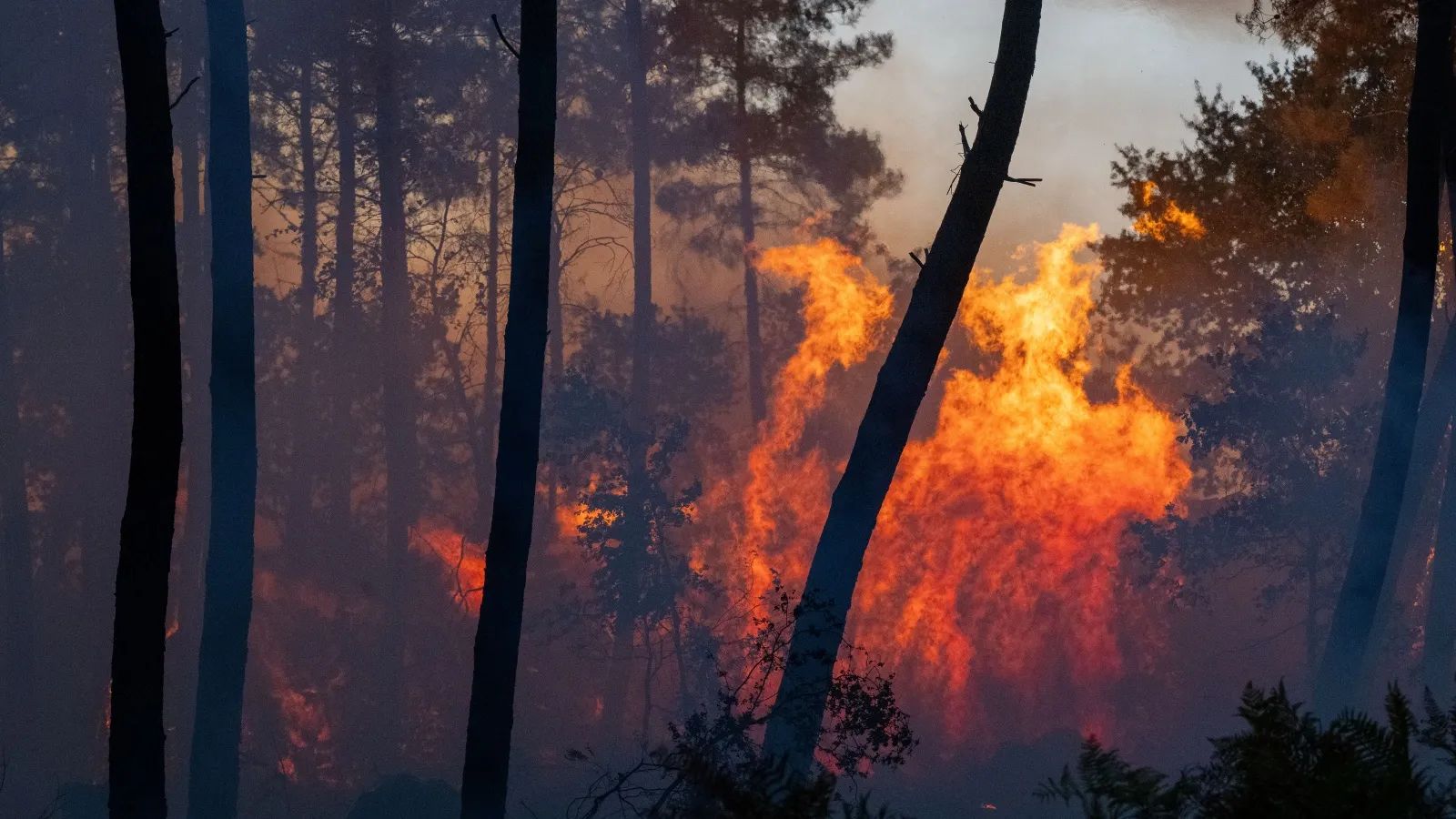
Europe wildfires have forced over 300,000 residents and tourists to evacuate as historic heatwaves turn France, Spain, and the wider Mediterranean basin into a tinderbox. The smoke chokes cities hundreds of miles away, while fire crews fight an unwinnable war against shifting winds and triple-digit temperatures. This is not a series of unfortunate seasonal accidents. It is the predictable outcome of an infrastructure built for a climate that no longer exists.
Years of underfunded prevention, antiquated municipal response protocols, and political hesitation have left southern Europe dangerously exposed. When politicians talk about unprecedented weather anomalies, they are masking a systemic failure of policy and planning. The continent is pouring billions into emergency firefighting equipment while completely starving the long-term vegetation management and soil hydration projects required to stop fires before they spark.
The Economics of Suppression Versus Prevention
For decades, European civil protection agencies operated under a simple economic mandate. Suppress every flame as fast as possible. This policy, mirrored in North America for much of the twentieth century, created a massive accumulation of dense underbrush and dead timber.
When a forest burns naturally on a small scale, it clears out accumulated debris. When human intervention suppresses every small fire for fifty years, the forest floor transforms into a gunpowder keg.
Insurance markets are beginning to price in this reality, though governments are slow to react. Property values along the Mediterranean coastline are artificially inflated because local municipalities refuse to zone out high-risk areas. If a homeowner builds a villa in a dense pine forest with a single access road, the state assumes the liability of defending that property when the inevitable occurs.
Municipal budgets tell the story clearly. Fire departments consume the vast majority of disaster relief funds. Controlled burns, pastoral grazing programs, and manual thinning of undergrowth receive crumbs.
Why Traditional Firefighting Tactics Are Failing
Water-bombing aircraft are the visual symbol of modern crisis management. They swoop low over orange horizons, dropping thousands of gallons of water on roaring infernos. They make for exceptional television footage. They also do very little to stop a high-intensity crown fire driven by fifty-mile-per-hour winds.
Once a fire reaches the canopy of a dry pine forest, water dropped from the air largely evaporates before it hits the ground.
Ground crews face a different set of logistical nightmares. Roads designed for quiet rural tourism become death traps when thousands of panicked vacationers attempt to flee simultaneously. Evacuation gridlock turns secondary roads into parking lots. People abandon vehicles, blocking the heavy machinery and water tankers needed to establish firebreaks.
Communication breakdowns compound the physical chaos. Regional emergency services often operate on disparate radio frequencies. Coordination between national forestry departments, local police forces, and volunteer brigades remains fragmented.
The Human Toll and Economic Fallout
Tourism is the lifeblood of southern Europe. When holiday regions become evacuation zones, the economic shockwaves ripple across the continent. Tour operators cancel flights by the hundreds. Hotels empty out in the middle of peak season. Local economies that rely entirely on three summer months of revenue face financial ruin.
The psychological toll on rural communities is harder to measure but equally devastating. Farmers lose centuries-old olive groves, vineyards, and livestock in a matter of hours. These are generational investments wiped out before lunch.
When the smoke clears, the soil is left scorched and hydrophobic. The first heavy autumn rains will not nourish the land. They will wash the sterile ash into rivers, triggering catastrophic mudslides and contaminating municipal water reservoirs.
Rethinking Regional Defense
If Europe is going to survive the coming decades, the entire philosophy of civil defense must pivot. Reactive firefighting is a dead end.
Governments must empower local agricultural cooperatives to reintroduce traditional grazing methods. Goats and sheep are exceptionally efficient at clearing volatile underbrush. They reduce fuel loads naturally and cheaply.
Urban planning laws must change. Building codes in high-risk zones need to mandate fire-resistant architecture, mandatory defensible space buffers around structures, and multi-route evacuation infrastructure. Developers who build in high-risk zones should bear the true cost of their insurance and infrastructure protection, rather than passing the burden to taxpayers.
The current trajectory leads to a future where large swaths of southern Europe become seasonally uninhabitable. The 300,000 people displaced this season are only the beginning of a much larger demographic shift. Fixing this crisis requires political courage, long-term funding, and an admission that the old ways of managing the land are gone forever.


