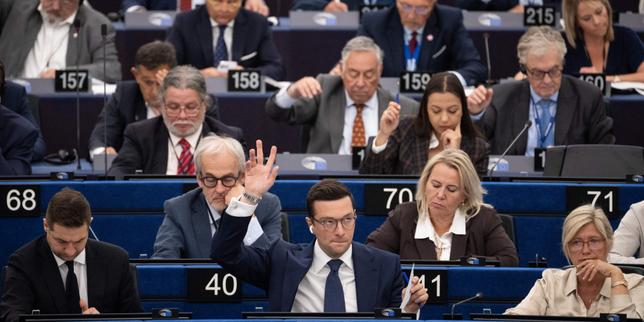
The outrage machine is running at full throttle again. Out
The Myth of the European Funds Scandal and Why Brussels Hates Political Competition
news, business Read more on a similar topic: this related article.
The media is currently obsessing over the latest administrative dust-up in Brussels. Right-wing and far-right coalitions are allegedly locking arms to deliver a "minimalist response" to infractions regarding the use of European Parliament funds. The commentary follows a predictable, tired script: establishment figures express deep shock, journalists point fingers at systemic corruption, and the public is told that the entire democratic framework is under imminent threat because a few political assistants allegedly spent more time campaigning in Paris than sitting in committee rooms in Strasbourg.
This entire narrative misses the point. Additional analysis by Al Jazeera explores similar perspectives on this issue.
The outrage machine wants you to look at the paperwork. They want you to believe this is a clear-cut story of financial grift. It is not. The ongoing battle over European Union funds is not a crusade for financial integrity; it is the weaponization of bureaucratic compliance to suppress domestic political competition.
When you strip away the moral panic, you find a highly sophisticated, self-preserving system that uses complex budgetary rules to punish outsiders. The establishment is not angry that money was spent; they are angry about who spent it and where.
The Compliance Trap: How Rules Are Engineered to Favor the Status Quo
Let us dismantle the foundational premise of the mainstream critique. The argument goes that European funds are sacred pools of capital meant strictly for "European governance," and any deviation constitutes a breach of trust.
This is a fiction designed for the naive.
In my years analyzing institutional governance and legislative budgets, I have watched established parties burn millions of euros on vague "informational campaigns" that just happen to align perfectly with their reelection efforts. They do it legally because they write the rules. They know exactly how to phrase a invoice, how to structure a policy institute, and how to classify a staffer to keep the auditors happy.
The compliance framework of the European Parliament is an administrative labyrinth. It requires a massive, permanent bureaucracy just to navigate. Established parties have built this infrastructure over decades. When a populist or insurgent party enters the arena, they face a choice: either hire an army of compliance lawyers instead of political operatives, or run the risk of an audit that will inevitably find "infractions."
Imagine a scenario where a corporate incumbent creates a 500-page compliance manual for vendor procurement. The incumbent can easily absorb the legal costs of filling out the forms. A disruptive startup cannot, makes a filing error, and is promptly sued for fraud. That is not ethical governance. That is anti-competitive behavior masquerading as accountability.
The Absurdity of the "Local vs. European" Staffer Split
The core of the recent accusations against parties like the National Rally (RN) rests on a bizarre administrative distinction: the idea that an assistant paid by European funds must only work on "European matters" and never on "national political matters."
This distinction is intellectually dishonest.
- Politics is interconnected: You cannot separate European policy from national policy. Every directive passed in Brussels directly impacts French, German, or Italian law. To suggest a staffer can only think about Europe between the hours of nine and five without benefiting their national party is absurd.
- The establishment does it better: Legacy parties use their think tanks and parliamentary groups to host massive events that serve as de facto campaign rallies. Because they use the correct institutional jargon, it is deemed "educational."
- The asymmetry of enforcement: Audits and leaks happen with remarkable strategic timing, usually right before major electoral cycles.
The European Parliament operates on a system of strategic oversight. If the goal were pure financial rectitude, the institution would look at the astronomical waste embedded in its own dual-seat setup, which forces thousands of officials to travel between Brussels and Strasbourg every month, costing taxpayers upwards of €114 million annually. That waste is perfectly legal, so the critics remain silent.
The Right-Wing Alliance is Corporate Pragmatism, Not a Conspiracy
The mainstream press is wringing its hands over the fact that the traditional right and the populist right are voting together to minimize the penalties and tighten the definitions of these infractions. They call it a betrayal of values.
It is actually simple self-defense and sound institutional strategy.
The traditional right-wing parties realize that the compliance weapon is a double-edged sword. Today it is used against the far-right; tomorrow it will be used against anyone who challenges the center-left bureaucratic consensus. By voting for a "minimalist response," they are not defending fraud. They are capping the power of unelected auditors to overturn democratic election results through administrative technicalities.
If a political party wins millions of votes in a national election, the establishment should defeat them at the ballot box, not through an audit of their office supply expenditures. Using financial regulations to bankrupt political opponents is a tactic borrowed from autocracies, yet it is celebrated in Brussels as the defense of democracy.
The Cost of the Contrarian Approach
Let us be completely transparent here. There is a downside to challenging this compliance regime. When insurgent parties ignore the minutiae of Brussels regulations, they hand their opponents an easy weapon. It allows the media to shift the conversation away from actual policy failures—like stagnant economic growth, energy insecurity, and failed immigration strategies—and focus instead on administrative misconduct.
It is bad strategy to be sloppy with paperwork when you know the auditor is hunting you. Insurgent parties have historically shown a staggering lack of professionalism in managing these funds, treating sophisticated institutional budgets like local campaign chests. That carelessness deserves criticism, not because it is an existential threat to Europe, but because it is politically incompetent.
However, recognizing the tactical stupidity of the populists does not mean we should swallow the sanctimonious narrative of the establishment.
Stop Asking if Rules Were Broken
The public keeps asking the wrong question. They ask, "Did these parties break the rules of the European Parliament?"
The honest answer is: probably. But the real question you should be asking is, "Why are the rules structured to ensure that only establishment parties can comply?"
When you look at the European Union through the lens of institutional capture, the picture becomes clear. The regulatory state protects itself by making non-conformity expensive, legally hazardous, and socially unacceptable.
The obsession with these funding scandals is a classic diversion tactic. It keeps voters focused on minor bookkeeping anomalies while the broader institutional machinery continues to spend billions on unvetted NGOs, bloated consulting contracts, and ideological pet projects that never face a single audit.
Stop falling for the performance of moral outrage. The battle in Brussels is not between the honest and the corrupt. It is a turf war between an incumbent political cartel and the insurgents trying to breach the walls. The paperwork is just the weapon of choice.

