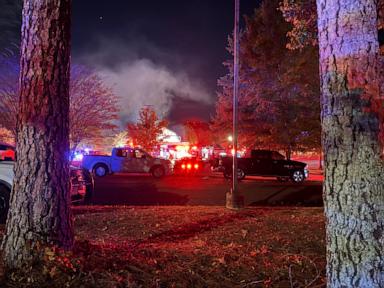
Every time a fire forces evacuations at a senior living facility in Mississippi or any other state, the coverage follows the same tired script. Smoke rises. Sirens wail. First responders arrive. Staffers push wheelchairs through parking lots while families clutch their phones and pray. Then comes the lazy consensus: praise the evacuation, blame the hazard, and write as if clearing the building is always the mark of success.
That script is lazy. Worse, it is dangerous.
When a fire breaks out in an assisted living or skilled nursing environment, moving frail residents out of a smoke-filled corridor or down a stairwell is not automatically a triumph. Sometimes it is the riskiest move on the board. A resident on supplemental oxygen, recovering from a hip fracture, living with late-stage dementia, or tethered to medical equipment faces acute physical hazards the moment they are dragged into chilly night air, crowded lobbies, or steep egress routes.
I have walked post-incident scenes and facility audits long enough to watch operators blow money on cosmetic upgrades while ignoring compartmentation, smoke control, and staff-to-resident ratios at 2:00 a.m. I have seen administrators treat a full building evacuation like a gold star on a press release when the real story is why the fire spread beyond the room of origin or why staff lacked clear, rehearsed defend-in-place protocols.
Stop treating evacuation as the default definition of safety. Start asking whether moving the most vulnerable people in the building is actually keeping them alive.
The Lazy Consensus Around Senior Facility Fires
Standard news reporting treats a fire at a senior living facility as a simple binary: either people got out, or tragedy struck. That framing flatters everyone except the people who actually understand fire protection engineering and long-term care operations.
In life-safety codes—most notably National Fire Protection Association (NFPA) standards such as NFPA 101 (Life Safety Code) and NFPA 72 (National Fire Alarm and Signaling Code)—fire protection in healthcare and certain residential board-and-care settings relies heavily on defend-in-place strategies alongside engineered fire barriers. The premise is straightforward: modern commercial buildings with proper fire walls, smoke barriers, self-closing fire doors, and automatic fire sprinklers are designed to contain fire and smoke within a zone long enough for suppression or controlled horizontal movement to an adjacent safe compartment.
Yet headlines almost always measure safety by one metric: did everyone exit the front doors?
That metric misses the physical reality of senior care. Older adults often have reduced mobility, slower gait speeds, cognitive disorientation, and fragile cardiopulmonary reserves. Rapidly moving dozens of high-acuity residents out of a multi-story structure during an active alarm creates bottlenecks, falls, hypothermia exposure, and missed medications. Even a routine fire drill in a memory care unit can trigger severe agitation and disorientation that lasts for days.
A successful fire response is not defined by how fast you empty the parking lot. It is defined by whether the fire stayed contained, smoke stayed out of occupied spaces, and every resident ended up in a safe, controlled environment with minimal secondary harm.
Defend in Place vs. Full Evacuation
To understand why reflexively cheering every mass evacuation misses the point, you have to separate three distinct tactical responses used in fire safety:
- Defend in place (sheltering in place): Keeping residents inside their current room or suite when the room is protected by sprinklers, tight doors, and low smoke threat, while staff verify conditions and firefighters knock down the hazard.
- Horizontal evacuation: Moving residents across a smoke barrier or fire wall into an adjoining smoke compartment on the same floor. Because residents stay on the same level, staff can roll beds and wheelchairs without negotiating stairs or relying on elevators that may be recalled or restricted.
- Vertical / total evacuation: Moving occupants down stairs and out of the building entirely. Necessary when fire or structural compromise threatens the floor or compartment, or when local code and occupancy type require it, but physically demanding and slow when dealing with non-ambulatory residents.
Imagine a scenario where a small kitchen or laundry fire triggers alarms on the second floor of a sprinklered facility with functioning smoke doors. If staff panic and herd twenty mobility-limited residents into a stairwell filled with incidental smoke or congested by arriving responders, you have traded a contained room fire for a high-risk crowd-movement problem. Conversely, if staff close doors, confirm compartment integrity, move residents horizontally past rated fire doors into an unaffected wing, and coordinate directly with the incident commander, the risk profile looks completely different.
None of this means evacuation is never required. When a fire is uncontained, sprinklers are impaired, or heavy smoke enters an occupied zone, getting people out saves lives. The error is assuming full evacuation is always safer than horizontal movement or defended shelter when a building is properly compartmented.
What People Actually Get Wrong About Facility Fires
When a local fire breaks out, the public and even some facility managers reach for predictable questions—and predictable myths.
Is a fire alarm going off proof the building is in imminent danger?
No. Fire alarm systems are early-warning detection networks—smoke detectors, heat detectors, duct detectors, and manual pull stations—designed to alert occupants and dispatch the fire department before conditions become untenable. A nuisance alarm from steam, dust, or a burnt toaster is still a real operational event that must be investigated immediately, not ignored, but an alarm horn does not automatically mean flames are licking the hallway ceiling.
Do fire sprinklers put out every fire in the building at once?
Another persistent myth. Standard wet-pipe sprinkler systems use heat-sensitive elements in individual sprinkler heads. Only the heads exposed to sufficient heat open and discharge water. That targeted activation limits water damage to the fire area while cooling ceiling gases and controlling fire growth until firefighters arrive.
Why do fires in senior living facilities still force evacuations even in modern buildings?
Because codes and engineering only work when paired with human execution and maintenance. Wedged-open fire doors, propped smoke barrier doors, delayed repairs to fire alarm trouble signals, clutter in corridors, or overnight staffing stretched thin across wings can turn a manageable incident into an urgent evacuation. Add residents who refuse to leave their rooms out of fear or confusion, and even a minor fire becomes a high-stress extraction.
Why Night Shifts Expose Every Weak Link
Most fires do not care about business hours, and senior living operations are most vulnerable when staffing is leanest. During daytime shifts, facilities usually have administrators, maintenance technicians, activities staff, and full nursing aides on site. Overnight, a wing with dozens of residents may be covered by a small crew balancing call lights, medication passes, and routine checks.
I have seen facilities spend six figures on shiny exterior signage and lobby aesthetics while cutting corners on overnight drill realism. A daylight drill where every manager is standing around with a clipboard proves very little about what happens at 3:15 a.m. when one aide has to help a bariatric resident while another checks a hallway detector activation.
Real readiness shows up in unglamorous details:
- Door discipline: Fire and smoke doors only hold back smoke and fire if they are closed or properly tied into magnetic hold-open release hardware tied to the alarm system. A door held open with a rubber wedge is a failure waiting to happen.
- Horizontal compartmentation: Knowing where the smoke barriers are, how fast a bed or wheelchair can cross them, and where oxygen cylinders or wheelchairs are staged.
- Clear command handoffs: Giving arriving fire crews an accurate, up-to-date census and room-by-room mobility status—who is independent, who needs a two-person assist, who is bedbound—rather than vague guesses.
- Post-incident recovery: Having a real plan for displaced residents, including backup power, temperature control, medication continuity, and family communication that does not jam phone lines with rumor.
The Trade-Offs of Challenging the Evacuation Reflex
Pushing back against the "evacuate everyone immediately" mindset comes with real risks, and pretending otherwise would be dishonest.
First, defend-in-place or horizontal movement requires strict engineering and maintenance. If a building has compromised fire barriers, outdated construction without adequate protection, or a history of alarm and sprinkler deficiencies, delaying evacuation can be fatal. When in doubt and smoke or heat is present, life safety favors getting people out of harm's way.
Second, nuance is hard to communicate in a crisis. Telling staff "sometimes we evacuate, sometimes we move horizontally, sometimes we defend in place" can backfire if policies are vague or poorly drilled. Decision trees must be simple, practiced, and unmistakable under stress.
Third, public perception lags behind fire science. Families watching news footage of residents being wheeled outside naturally feel relieved to see them out of the building. Explaining that horizontal relocation behind a fire wall was safer than a stairwell descent takes calm communication—something hardest to deliver while sirens are blaring.
What Regulators, Operators, and Families Should Demand Next
If a fire forces evacuations at a senior living facility in Mississippi, skip the superficial comfort of "everyone got out safely" and look harder at what actually happened behind the scenes.
Operators should audit overnight staffing against actual mobility acuity, outlaw propped fire doors across every shift, and run scenario drills that test horizontal evacuation and oxygen/equipment handling—not just clock-watching exit times. Local authorities and inspectors should pair rapid response praise with hard scrutiny of maintenance logs, smoke barrier integrity, and post-fire habitability before residents return. And families evaluating a facility should ask pointed questions about fire alarm testing records, sprinkler and smoke barrier layouts, and overnight emergency staffing rather than settling for a brochure tour.
A building fire is never a routine day at work, especially when the people inside cannot sprint for the exit. Measure safety by discipline, containment, and care under pressure—not by how fast the cameras catch a crowd on the lawn.