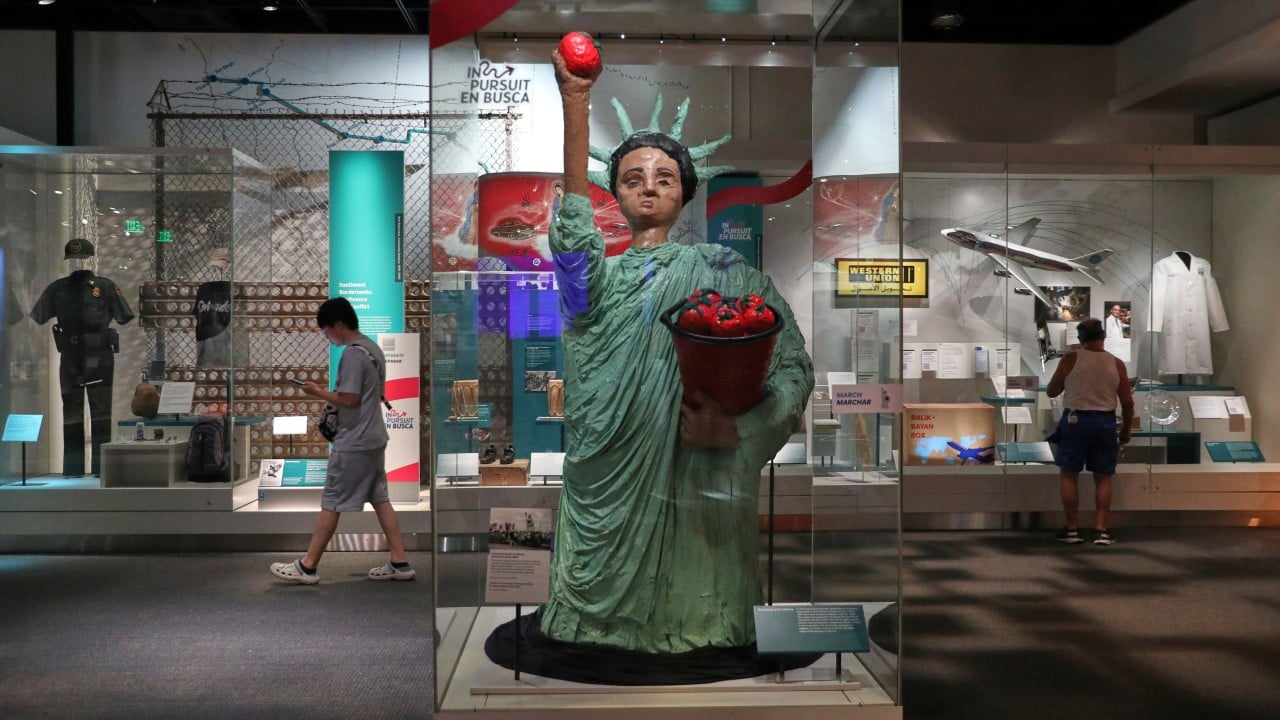
We love pretending that history is a pristine monument we can either worship or vandalize. When political factions battle over museum plaques, presidential reports, and federal signage directives, they operate under a shared, lazy consensus: the fantasy that a national museum can ever be politically neutral.
It cannot.
The recent White House showdown targeting the Smithsonian Institution—complete with a 162-page report accusing leadership of ideological capture and orders for warning signs outside—reveals a profound misunderstanding of how historical institutions operate. Critics on one side scream about revisionism and erasure, while critics on the other scream about propaganda and institutional bias. Both camps miss the structural reality of public memory.
Museums are not arbiters of absolute truth. They are mirrors of elite consensus built during the eras in which their galleries were funded and curated.
The Fallacy of the Neutral Curator
Let us dispense with the fairy tale that past museum iterations were objective. I have spent years analyzing how public cultural institutions allocate capital and shape public consciousness. When mid-century curators designed exhibits celebrating industrial triumph and westward expansion, they were not acting as dispassionate saints of chronology. They were constructing a cohesive civic religion. That religion served a specific state purpose: binding a diverse industrial workforce into a unified national identity during global conflicts and Cold War competition.
When modern curators pivot toward examining the systemic fractures of the republic, they are similarly responding to the institutional incentives and academic orthodoxies of their time.
The White House report, titled Saving America's Story, lambasts Smithsonian leadership for treating history as a "prime tool" for social transformation. The mistake is assuming this tool use is a modern invention. History has always been utilized as statecraft. The Founding Fathers understood this implicitly; they rewrote textbooks and classical ideals to forge a distinct republican virtue.
The current panic over who controls the narrative assumes that if we just scrub out the parts we dislike, we achieve purity. That is intellectually bankrupt.
The Mechanics of Institutional Capture
Imagine a scenario where a multi-million-dollar federal institution is staffed entirely by bureaucrats who answer directly to whichever party holds the executive branch.
You do not get objective truth under that model. You get whiplash.
When political entities demand warning labels outside national museums, or threaten budgetary starvation to force compliance with a specific ideological flavor, they transform cultural spaces into partisan battlegrounds. This creates a dangerous feedback loop. Institutions respond by hardening their defensive postures, retreating into insular academic language that alienates the general public, while external critics accuse them of harboring active contempt for the nation's heritage.
The data on public trust in cultural and educational institutions shows a steep, unbroken decline over the last two decades. Why? Because the public smells the greasepaint. People know when they are being sold a packaged narrative—whether it's an uncritical hagiography that whitewashes complex moral failures or an unremitting indictment that treats national origins as an original sin.
Neither perspective helps citizens navigate a complex modern state. Both perspectives demand intellectual surrender.
Escaping the Binary Trap
To fix our relationship with public history, we have to abandon the demand that museums validate our personal political neuroses.
- Stop looking for validation in glass cases. A museum's job is to preserve primary sources, artifacts, and uncomfortable contradictions. If an exhibit makes you furious, check whether your anger stems from factual inaccuracy or from an encounter with a perspective that disrupts your preferred worldview.
- Expose the funding mechanisms. Cultural institutions reflect the priorities of their donors, trustees, and federal overseers. Transparency about who pays for an exhibit is infinitely more valuable than slapping warning signs on the front lawn.
- Embrace historical friction. The strength of a free society does not lie in a sanitized, state-approved story recited in unison. It lies in the capacity to examine ugly truths and grand achievements simultaneously without collapsing into tribal warfare.
The insistence on fighting over the exact wording of a plaque or the framing of a founding figure is a distraction from real institutional reform. As long as we treat history as a weapon to bludgeon our political opponents, we will remain trapped in a cycle of cultural vandalism disguised as preservation.
Stop asking your museums to love your country for you. Go read the documents, look at the artifacts, and tolerate the cognitive dissonance.
Top Smithsonian official disputes criticism from Trump White House
This video features the Smithsonian's response to political oversight and accusations regarding its historical exhibits.
http://googleusercontent.com/youtube_content/1