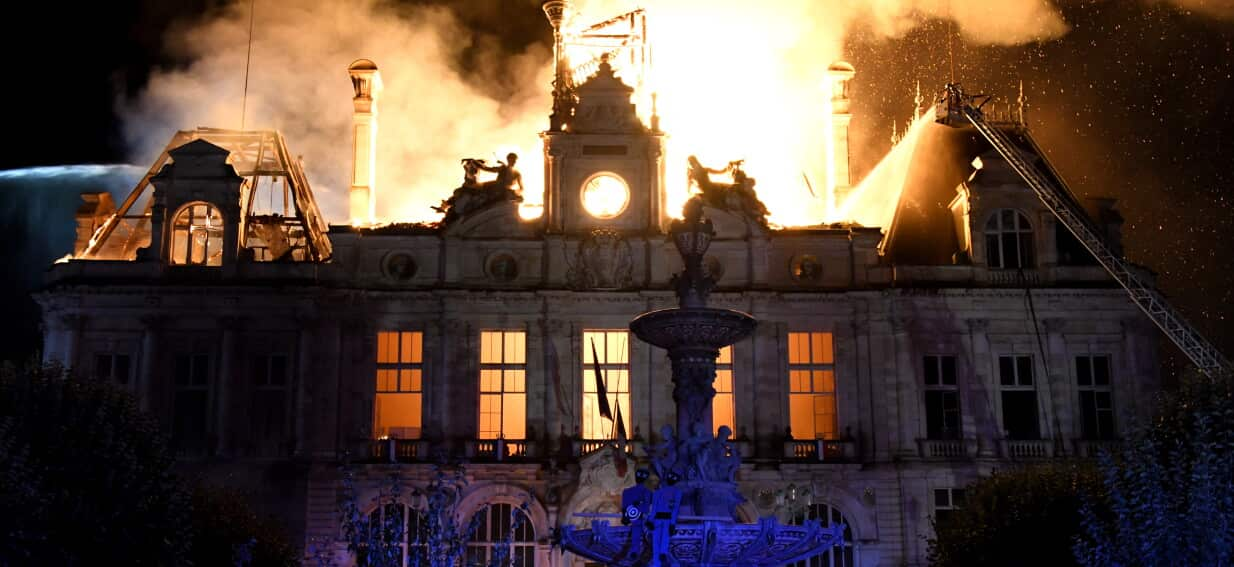
The media wants you to believe France is burning because the French simply love a good street fight. Every time unrest breaks out, the predictable footage rolls across global screens: overturned bins, tear gas clouds hanging over Parisian boulevards, and earnest anchors reporting on the eternal national pastime of civil disobedience. It is lazy, exoticizing shorthand. It frames complex structural mechanics as cultural temperament.
Stop buying the narrative that this is just national theater. For a closer look into this area, we recommend: this related article.
When riots, clashes, and looting erupt across French cities following pension reforms, police shootings, or economic pressure points, commentators point to the guillotine-happy heritage of 1789. That explanation is comforting because it lets observers write off systemic institutional failure as quaint folklore. If the French are just genetically predisposed to rebellion, then nobody outside of Paris needs to examine their own failing social compacts.
Reality is far more mechanical. What looks like chaotic anarchy is actually a rigid, highly predictable feedback loop between an over-centralized state and citizens who have realized that traditional bureaucratic channels of grievance are entirely bricked up. For further context on this topic, extensive coverage is available on Reuters.
I have spent years analyzing European labor markets and municipal governance structures, watching policy-makers design reforms in sterile glass towers while ignoring the pressure gauges in the basement. When a government attempts to force through sweeping structural shifts—raising retirement ages or altering labor protections—without building genuine consensus in the industrial peripheries, they are not executing bold leadership. They are engineering a pressure cooker.
Let us look at the mechanics. France operates on a uniquely centralized model. Power, funding, and administrative decisions pool heavily in Paris. When suburban youth or regional workers feel entirely disconnected from the economic engine, they do not have local municipal levers to force a policy pivot. Their representatives in the National Assembly are often distant technocrats. When peaceful strikes fail to move the needle in a system designed to insulate elites from public friction, escalation becomes the default language of political visibility.
Looting and property destruction are symptoms of institutional deafness. When large segments of the population conclude that the rulebook was written to protect incumbent wealth while squeezing working-class futures, the social contract frays. Property loses its sacred status when people feel they have already been stripped of their economic stake in society.
This does not excuse the chaos. Arson and violence destroy local businesses, punish innocent commuters, and terrorize neighborhoods that are already vulnerable. Condemning the violence is easy, and it is entirely necessary. But stopping at condemnation—throwing up your hands and murmuring about French history—is intellectual cowardice.
The real question we should be asking is not why protesters are angry, but why the French political architecture refuses to adapt until things catch fire.
In a functioning democracy, tension should be absorbed by institutions. Parliaments negotiate, municipal governments adjust, and policy evolves before it snaps. But when the executive branch bypasses legislative debate using constitutional loopholes like Article 49.3 to ram through deeply unpopular laws, the message to the public is unambiguous: your votes and your protests inside the lines do not matter.
When you shut down all legitimate safety valves, pressure escapes through the cracks.
Notice how international coverage treats these events as anomalies, sudden thunderstorms that ruin the vacation brochure view of the Eiffel Tower. They are not anomalies. They are recurring maintenance alerts for a republic that has forgotten how to listen to its provinces and its working class. Until the governing class decentralizes power, reforms its policing culture, and stops treating public dissent as a minor nuisance to be managed with tear gas, the smoke will keep rising.
Do not blame the crowd for reacting to the heat when the furnace operator keeps turning up the dial.


