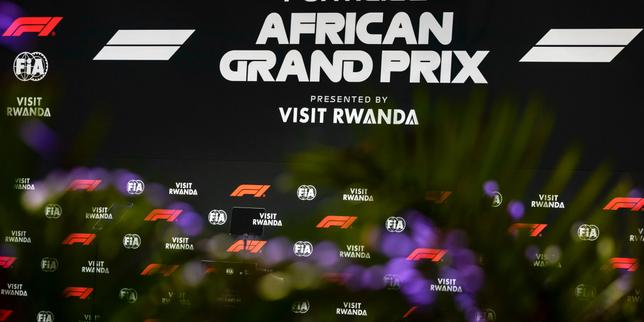
The outrage over putting a Formula 1 Grand Prix in Rwanda in the early 2030s is lazy. Both sides are fighting the wrong war.
Critics scream about sportswashing and priorities. Boosters wave glossy brochures about tourism, global prestige, and long-awaited African representation on the F1 calendar. Meanwhile, standard coverage treats a vague "early 2030s" timeline like a done deal or a moral referendum.
It is neither. It is a distraction from the real economics of motorsport and statecraft.
Formula 1 has not returned to the African continent since South Africa hosted at Kyalami in 1993. For decades, fans and commentators have treated Africa's absence from the calendar as an obvious injustice waiting to be corrected by a single checkered flag. When Rwanda stepped forward with ambition and Formula 1 leadership made encouraging noises about bringing a race back to Africa, the debate instantly split into predictable camps: moral condemnation on one side, triumphant celebration on the other.
Both camps assume that hosting a Grand Prix works the way press releases claim. It does not.
I have watched cities and governments pour fortunes into high-profile global spectacles expecting instant brand magic and effortless economic return. Usually, the spectacle arrives, the cameras pan past immaculate backdrops for two hours on a Sunday, and the balance sheet tells a much colder story. High-visibility events are brutal teachers when people confuse air time with structural wealth.
Let us define the terms before anyone else misuses them. Sportswashing is not just a buzzword for critics who dislike a government's foreign policy or domestic record. In political economy, it refers to deliberate investment in high-prestige athletic properties to shift international perception, build soft power, and distract from friction elsewhere. Calling every sporting event in a complex country "sportswashing" is intellectually lazy. Every host nation—from established European capitals to Gulf states to American cities—uses major sports to project identity and attract capital.
The real question is not whether a Rwandan Grand Prix carries political weight. Of course it does. Every modern Grand Prix does. The real question is whether a small, landlocked economy with tight fiscal constraints should ever play the hosting game on Formula 1's traditional terms.
The Hosting Math Nobody Likes to Admit
Standard commentary treats hosting a Formula 1 race like winning a golden ticket. You get the event, you get the spotlight, and prosperity follows.
Look at how modern Formula 1 actually makes money. Under Liberty Media's commercial model, Formula 1 operates like a high-margin global media and rights business. Hosting fees for Grands Prix have climbed dramatically over the past decade, frequently reported in the tens of millions of dollars per year depending on the circuit, contract length, and commercial structure. Alongside the hosting fee comes the massive capital cost of building or upgrading a grade-1 circuit, improving airport and hotel capacity, upgrading transport links, and funding security and event operations.
In motorsport governance, FIA Grade 1 is the highest circuit homologation standard required to host a Formula 1 race. Meeting it demands strict run-off areas, specialized barriers, medical facilities, pit lane infrastructure, and telemetry systems. Building a Grade 1 facility from scratch—or bringing an existing layout up to standard—requires heavy upfront capital expenditure with long payback periods.
Now compare that cost structure to Rwanda's economic reality. Rwanda has earned widespread international attention for order, cleanliness, institutional drive, and conference-led tourism. Kigali has built a strong reputation in meetings, incentives, conferences, and exhibitions (MICE), backed by flagship assets like the Kigali Convention Centre and aviation links through RwandAir.
That success is real, and pretending otherwise makes critics look foolish. Yet scaling from high-end conferences and conservation tourism to a Formula 1 Grand Prix is a completely different weight class.
A Grand Prix generates concentrated spikes in hotel occupancy, hospitality spending, and broadcast exposure. What it rarely delivers on its own is broad-based domestic job creation across a year or deep industrial spillovers for an economy still building out manufacturing, logistics, and export scale. Most of the highest-value technical roles—race engineers, mechanics, broadcast directors, commercial executives—fly in with the paddock and fly out on Monday night.
Imagine a scenario where a government commits public funds or sovereign guarantees to underwrite a multi-year F1 contract and circuit buildout for the early 2030s. Even if ticket sales sell out and international hotels fill up for race weekend, the host still carries fixed infrastructure maintenance, security commitments, and annual rights obligations long after the cars leave. If tourism demand softens or global sponsorship cools, the public balance sheet absorbs the shock.
Heavy hitters in sports economics and urban mega-events—from researchers studying Olympic and World Cup cost overruns to motorsport finance analysts—have repeated the same lesson for thirty years: mega-events amplify existing strengths; they rarely rescue weak unit economics.
Why "Early 2030s" Is Already a Giant Red Flag
Pay close attention to the phrasing around an "early 2030s" timeline. In big-ticket sports deals, vague distant windows are rarely a sign of imminent arrival. They are usually a sign of unresolved math, land and infrastructure hurdles, or commercial bargaining.
Formula 1's calendar is fiercely contested. Every slot on a 23- or 24-race schedule is a tug-of-war between legacy European circuits with history, wealthy Gulf and Middle Eastern hosts with deep pockets, and booming North American markets with massive commercial appetite. Adding a race in Africa is a stated strategic ambition for Formula 1 leadership, including figures like CEO Stefano Domenicali and seven-time world champion Lewis Hamilton, who has spoken for years about the importance of racing on the continent.
Ambition is not a signed contract. A decade or half-decade runway gives everyone room to talk big without locking in painful commitments today.
There is also a timing trap hidden in "early 2030s." By then, global motorsport economics, broadcast deals, and sustainability mandates will have shifted again. Formula 1 has pushed hard on hybrid power units, sustainable fuels, and freight logistics reductions. Hosting a race in sub-Saharan Africa involves complex freight routing, customs coordination, power reliability, and spectator access. None of those problems are impossible to solve, but none of them are solved by optimism alone.
Critics who attack the idea purely on moral grounds miss how Formula 1 actually chooses venues. Formula 1 is a commercial enterprise first and a geopolitical charity second. When a venue lands on the calendar, it happens because the commercial package, infrastructure readiness, and political backing align closely enough for both sides to claim a win.
Dismantling the Questions Everyone Keeps Asking
When people search for news about a potential Rwandan Grand Prix, they keep asking the same narrow questions. Most of those questions are framed backwards.
Is Rwanda "ready" to host a Formula 1 race?
Wrong question. "Readiness" is not a single finish line; it is a bill.
Kigali can host international summits cleanly and safely. That proves administrative execution and security coordination. What it does not prove is that a multi-hundred-million-dollar motorsport complex and annual sanctioning fee make financial sense compared to other investments—or that private capital is willing to take the downside risk instead of taxpayers.
If private investors fund the circuit, carry the commercial risk, and pay market rates without hidden state bailouts, "readiness" looks very different from a state-backed vanity project.
Is hosting Formula 1 just sportswashing?
Too simplistic. Calling it pure sportswashing lets both sides off the hook.
Critics use the label to dismiss any engagement or investment as manipulation. Supporters brush off legitimate questions about governance, human rights, regional tensions, and public spending priorities as "Western bias" or "negativity."
The sharper view is colder and more accurate: governments use major global events to signal stability, attract foreign direct investment, and elevate national prestige. Every country does this. The real test is transparency. Who pays? What gets promised? What gets displaced or deprioritized? When the numbers and contracts stay hidden behind closed doors, skepticism is not an attack—it is basic accountability.
Would a race in Rwanda finally put African motorsport on the map?
Not by itself. A single weekend on a global calendar is a showcase, not an ecosystem.
Africa already has passionate motorsport fans, rallying heritage, and grassroots talent. Bringing Formula 1 to the continent can inspire young engineers, mechanics, and drivers. It can put African venues in front of hundreds of millions of television viewers.
Yet inspiration without grassroots pathways—karting tracks, affordable racing ladders, technical training, and local engineering opportunities—turns a Grand Prix into a museum piece. You fly the circus in, admire the machines, and pack up. Real motorsport growth happens when local kids have a realistic route from a kart or a garage bench into competitive racing, not just a seat in the grandstand.
The Downside of Betting Against the Hype
To be completely honest, taking a hard, skeptical line on a Rwandan Grand Prix carries its own blind spots.
First, outsiders often underestimate how fast determined states and agile organizers can move when political will is concentrated. Skeptics who assume a project is impossible because of cost or geography sometimes get proven wrong when unconventional financing or creative partnerships come together.
Second, dismissing the symbolic value of a race in Africa ignores genuine cultural weight. Seeing Formula 1 return to the continent after more than three decades matters deeply to fans who have watched from afar for generations. Symbolism does not pay off circuit debt, but it is not zero.
Third, focusing strictly on hard economic returns can overlook secondary diplomatic and branding effects that leaders value even when short-term cash flow looks thin.
Even with those caveats, the core warning stands: do not confuse applause with profit.
What Smart Decision-Makers Should Actually Do
If you care about African motorsport, smart public finance, or realistic global expansion for Formula 1, stop arguing over slogans and start demanding structure.
- Insist on private-first risk allocation. If a Grand Prix is commercially viable in the early 2030s, private capital, sponsors, and circuit operators should shoulder the core commercial risk—not leave ordinary citizens holding the bag if projections miss.
- Tie any big event to hard infrastructure that works 365 days a year. Road upgrades, grid reliability, airport capacity, and transit links earn their keep every week of the year. A single-purpose race track does not.
- Demand a grassroots talent pipeline. Any push to bring Formula 1 to Africa should include concrete commitments to local technical training, motorsport safety standards, and accessible entry-level racing—not just VIP hospitality and celebrity pit walks.
- Watch the contracts, not the press releases. An "early 2030s" aspiration costs nothing today. Watch for binding circuit agreements, environmental and land disclosures, and clear financing terms. Everything else is noise.
Formula 1 wants Africa. Ambition wants a headline. The only thing that actually decides whether a Grand Prix belongs there in the 2030s is brutal, unglamorous math—and the courage to walk away if the math fails.