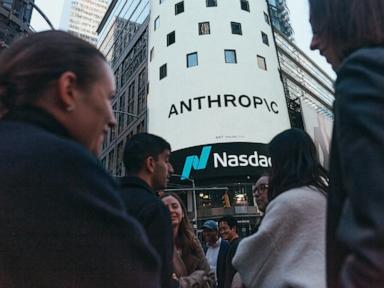
Everyone assumed Elon Musk’s rocket empire would hold the crown for the largest private-to-public debut on Earth. They were wrong. When you look closely at the biggest IPOs in history, the headline numbers rarely tell the real story of how capital actually moves, why institutional buyers pay nosebleed multiples, or what happens to retail investors left holding the bag six months later.
Anthropic overtaking SpaceX in implied public market debut scale isn't just a quirky Silicon Valley flex. It marks a fundamental shift in what Wall Street values most—recurring enterprise software margins and foundational compute monopolies over capital-intensive orbital hardware.
I’ve spent years watching institutional desks price late-stage private rounds, and the pattern is always the same. Financial media obsesses over the raw valuation figure on listing day. Meanwhile, the underwriters and sovereign wealth funds are staring at float size, lock-up expirations, and secondary market liquidity. If you're trying to make sense of where Anthropic and SpaceX sit alongside historical giants like Saudi Aramco, Alibaba, and SoftBank Corp, you need to strip away the PR spin and look at the mechanics of mega-cap listings.
Why the Race Between Anthropic and SpaceX Changed Everything
For the better part of a decade, SpaceX was the undisputed king of the private markets. Investors treated it like an untouchable aerospace utility, bidding up tender offers every six months based on Starlink subscriber growth and Starship milestones. Everybody expected a Starlink spin-off or a full SpaceX listing to shatter every record on the books.
Then generative AI ate the entire venture capital ecosystem.
Anthropic didn't just catch up to SpaceX because people like chatbots. Institutional allocators realized that frontier AI labs function like tollbooths on the global economy. Building reusable rockets takes billions in physical steel, propellant, and regulatory approvals from the FAA. Scaling frontier models requires massive data center capital expenditures, sure, but once a model family like Claude locks into Fortune 500 workflows via APIs and cloud partnerships with Amazon Web Services and Google Cloud, the gross margin profile looks nothing like heavy manufacturing.
When Anthropic pushed past SpaceX in projected IPO valuation and capital raise appetite, it proved a brutal truth about modern equity markets. Public market investors will happily pay astronomical forward revenue multiples for pure-play intelligence infrastructure, even while demanding cash-flow discipline from aerospace and telecom businesses.
The Valuation Mirage in Late-Stage Private Markets
Here is what most casual observers miss when comparing private valuations to actual IPO numbers. A private tender offer price—like the ones SpaceX routinely conducts for employees—is set on a tiny fraction of total shares. Maybe 1% or 2% of the company changes hands.
An IPO is a completely different beast. You have to clear tens of billions of dollars in fresh supply into public order books in a single morning.
When SpaceX hovered around $200 billion to $350 billion in private secondary pricing across 2024 and 2025, bankers knew floating even 10% of the company would require $20 billion to $35 billion in institutional demand. Anthropic’s rapid ascent through multi-billion-dollar strategic rounds backed by Amazon and Google created a unique dynamic. Because hyperscalers were already underwriting Anthropic’s compute bills, public market institutions viewed the company as de-risked enterprise infrastructure rather than a speculative startup.
Comparing the World’s Biggest IPOs Without the Hype
To understand how massive an Anthropic or SpaceX debut really is, you have to measure them against the true heavyweights of financial history. Not the tech darlings that got good press, but the actual listings that drained liquidity out of global equity markets.
Look at Saudi Aramco in December 2019. That remains the undisputed heavyweight champion of raw capital raised, pulling in $25.6 billion at the initial pricing and climbing to $29.4 billion after exercising the greenshoe over-allotment option. That valued the state-owned oil giant at roughly $1.7 trillion on day one. Nobody is touching Aramco’s total market cap anytime soon, simply because no private tech company produces tens of billions in free cash flow every quarter from underground reserves.
Before Aramco, Alibaba held the crown. When Jack Ma took Alibaba public on the New York Stock Exchange in September 2014, the company raised $21.8 billion initially, which expanded to $25 billion with the greenshoe option. That valued Alibaba at $168 billion at the offer price. I still remember how that single listing sucked the oxygen out of the tech sector for weeks—mutual funds literally had to sell shares of Apple, Google, and Amazon just to free up cash for their Alibaba allocations.
Right behind Alibaba sits SoftBank Corp—the Japanese telecom subsidiary, not the Vision Fund parent—which raised roughly $23.5 billion in Tokyo in December 2018. Then you have Agricultural Bank of China at $22.1 billion in 2010, and Industrial and Commercial Bank of China (ICBC) at $21.9 billion back in 2006.
Notice something about that top five list? Not a single one is a Western tech company.
Where Western Tech Giants Actually Rank
American tech founders love talking about historic listings, yet their actual IPO raises are surprisingly modest compared to Asian state-backed enterprises and telecoms.
- Visa (2008): Raised $17.9 billion (nearly $19.7 billion with over-allotments) right in the teeth of the global financial crisis.
- Meta Platforms / Facebook (2012): Raised $16 billion at a $104 billion valuation—and promptly crashed below its $38 offer price within days because of Nasdaq technical glitches and mobile monetization fears.
- Rivian (2021): Pulled in $11.9 billion at the absolute peak of zero-interest-rate euphoria, valuing an electric truck maker with almost zero revenue at over $85 billion.
- Uber (2019): Raised $8.1 billion at an $82 billion valuation, stumbling out of the gate as public investors balked at its cash burn.
When Anthropic overtook SpaceX in headline IPO projections, it wasn't just competing against Elon Musk. It was challenging the historical ceiling for how much capital Western public markets can absorb for a single technology issuer without breaking the broader market.
Why Massive IPOs Almost Always Hurt Early Retail Buyers
If you're watching Anthropic or SpaceX hoping to buy shares at the opening bell on your brokerage app, stop and look at the math. Mega-cap IPOs are designed from the ground up to transfer wealth from late-stage public buyers to early private insiders and investment banks.
It sounds cynical. It's also empirically true.
The Float Trap and Artificial Scarcity
Investment banks like Goldman Sachs, Morgan Stanley, and JPMorgan don't sell 50% of a mega-cap company on day one. They sell 5% to 10%. By keeping the public float artificially small while marketing the stock to every pension fund, hedge fund, and retail platform on the planet, underwriters guarantee a massive supply-demand imbalance.
That imbalance creates the famous "IPO pop." The financial news networks flash green arrows, commentators praise the CEO’s vision, and retail traders pile in at 11:30 AM at a 40% markup over the institutional offer price. You never had a shot at the offer price—that went to Fidelity, BlackRock, and sovereign wealth funds that generate millions in annual trading commissions for the underwriting banks.
What Happens When the Lock-Up Expires
The real reckoning arrives 180 days later. Every mega-cap IPO comes with a standard six-month lock-up agreement preventing employees, founders, and early venture capitalists from dumping their shares immediately.
Think about the human reality inside a company like Anthropic or SpaceX. Hundreds of engineers, researchers, and early executives have been sitting on paper fortunes for years, unable to pay off mortgages or diversify their net worth. The exact morning that 180-day window opens, tens of millions of restricted stock units hit the open market. Unless institutional demand is strong enough to absorb billions in insider selling, the stock price gets crushed.
Look at Rivian after its $11.9 billion debut. Look at Snowflake after Warren Buffett’s Berkshire Hathaway famously bought in at the 2020 IPO—shares spiked above $400 before bleeding out over the next two years as insider supply flooded the market and valuation multiples compressed.
The Structural Differences Between AI Labs and Aerospace Giants
Comparing Anthropic and SpaceX isn't an apples-to-apples exercise, even though both sit at the top of private market leaderboards. Their capital structures and risk profiles point in opposite directions.
Capital Intensity vs. Compute Burn
SpaceX is a physical infrastructure monopoly. Once Falcon 9 rockets achieved rapid reusability and Starlink deployed thousands of satellites into low-Earth orbit, SpaceX built a physical moat that no competitor—not Blue Origin, not OneWeb, not state-backed programs—could easily replicate without spending tens of billions of dollars over a decade. Hardware moats decay slowly.
Anthropic operates in a world where your competitive advantage can erode in six months. Every time Anthropic releases a new generation of Claude, competitors like OpenAI, Google DeepMind, and open-weight labs like Meta and Mistral are weeks away from matching or beating benchmark scores.
To stay ahead, Anthropic has to pour billions of dollars into Nvidia GPU clusters, custom silicon partnerships with AWS Trainium and Google TPUs, and multi-million-dollar compensation packages for top alignment and pre-training researchers. Public market investors love software margins, yet they hate unpredictable capital expenditure cycles. If Anthropic’s compute costs grow faster than its enterprise API revenue, Wall Street will punish the stock far more aggressively than it would a steady aerospace business.
Governance and Dual-Class Control
Both companies share one trait that drives corporate governance watchdogs crazy—founder and mission-driven control.
Elon Musk maintains ironclad voting control over SpaceX through super-voting shares, ensuring he can divert capital toward Mars colonization regardless of what quarterly institutional shareholders want. Anthropic structured itself as a Public Benefit Corporation (PBC) with a Long-Term Benefit Trust holding special governance rights over board appointments.
Public institutional investors usually hate governance structures where outside shareholders have zero say over corporate direction. They tolerated it with Mark Zuckerberg at Meta and Larry Page and Sergey Brin at Alphabet because the advertising cash flows were undeniable. If you buy shares in either Anthropic or SpaceX on the public market, you are explicitly signing up to be a passenger with zero steering wheel.
How to Approach Mega-Cap Tech IPOs Without Getting Burned
If you want exposure to frontier AI or commercial spaceflight when these giants hit the public markets, treating the opening bell like a lottery ticket is the fastest way to lose money. Use a disciplined framework instead.
- Wait for the first two quarterly earnings reports. Private companies polish their S-1 filings for months to show peak growth and hide operational warts. Once a company goes public, it faces quarterly scrutiny from brutal sell-side analysts. Let the market digest two full quarters of real public guidance before committing capital.
- Track the exact lock-up expiration date. Pull up the S-1 prospectus on the SEC EDGAR database and find the lock-up terms. Don't buy right before tens of millions of employee shares become eligible for sale. Wait for the post-lock-up dip when forced insider selling creates an actual discount.
- Compare enterprise value to gross profit, not just revenue. Top-line revenue numbers in AI and aerospace can be heavily distorted by cloud credits, strategic partnerships, or government milestone payments. Look at actual gross margin trends to see if unit economics improve as the business scales.
- Check your existing index exposure first. The moment an Anthropic or SpaceX reaches sufficient float size, S&P Dow Jones Indices and Nasdaq will add it to major benchmarks. If you already hold broad market ETFs like VOO or QQQ, you will automatically capture the upside without paying the day-one retail tax.
Skip the opening-day frenzy, read the actual S-1 risk factors instead of financial news headlines, and let institutional price discovery finish before you deploy a single dollar.