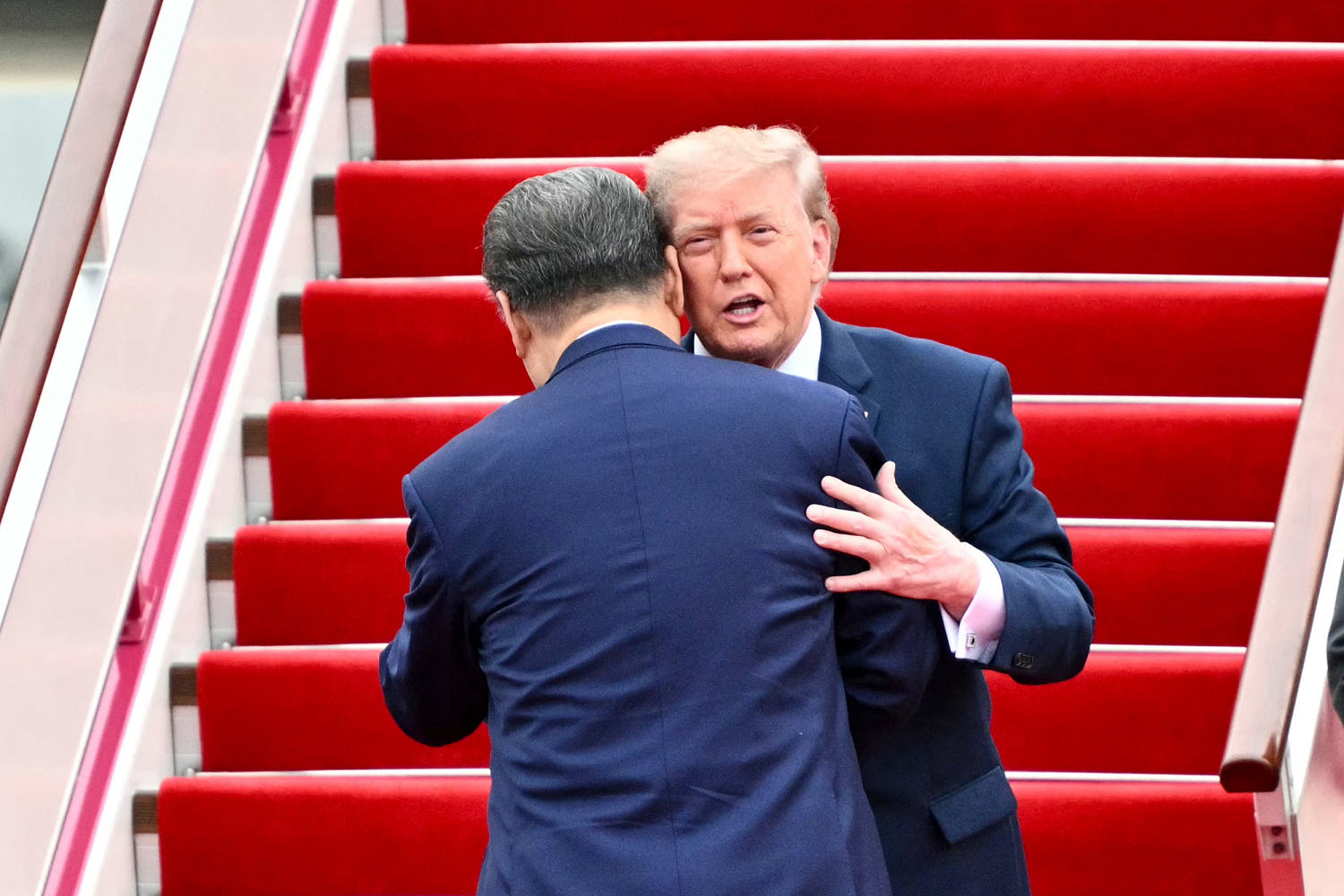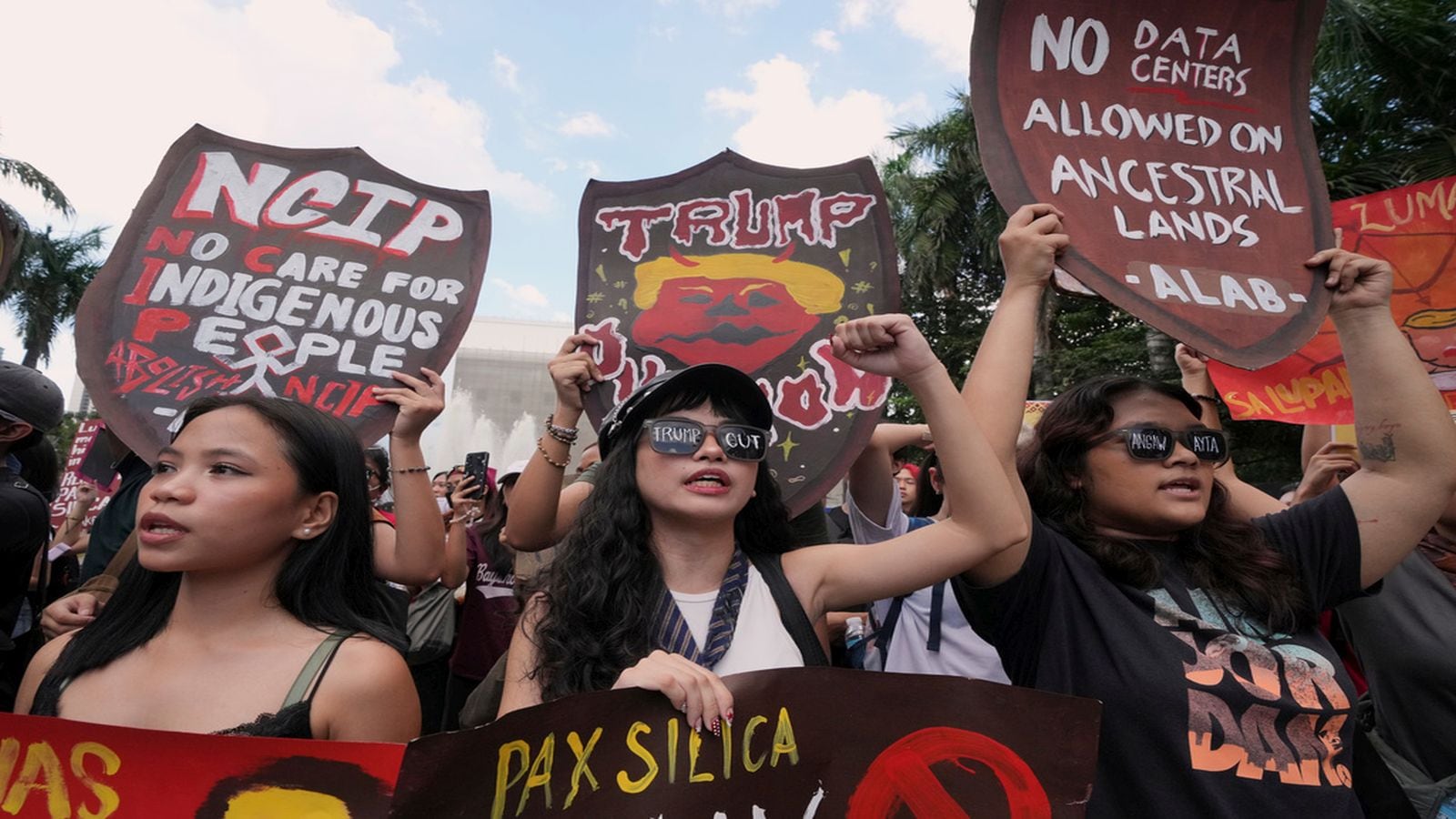
Mainstream coverage of the Manila protests reads like a predictable script from twenty years ago. Hundreds arrested. Effigies burning in Liwasang Bonifacio. Chants of "Trump Out" echoing against riot shields as Air Force One touches down for the 49th ASEAN Summit.
The lazy consensus in international press rooms frames this as standard-issue ideological theater—a routine clash between activist street coalitions and a Philippine government rolling out the red carpet for an American president.
That reading misses the actual story by a thousand miles.
If you look at the street battles in Manila and see a simple referendum on Donald Trump's personality or foreign wars, you are looking at the smoke instead of the fire. The real catalyst dragging farmers from Laguna, indigenous Ayta communities from Central Luzon, and tech-policy watchdogs into the path of police batons is not a diplomatic photo-op. It is a 4,000-acre industrial land play in Tarlac called Pax Silica.
The Lazy Consensus vs. The Supply Chain Reality
Wire reports love clean binaries. On one side, President Ferdinand Marcos Jr. welcomes a treaty ally to bolster regional security and economic ties. On the other, activist leaders like Renato Reyes denounce American interventionism, oil price spikes, and heavy-handed police sweeps.
Both sides of that media narrative treat the protests as political noise surrounding a summit. They completely miss the structural shift happening underneath the pavement.
For decades, anti-U.S. demonstrations in Manila revolved around military bases, Visiting Forces Agreements, and cold-war security treaties. Those were battles over troop deployments. The November 2026 demonstrations are a battle over compute, critical minerals, and industrial zoning.
When the Philippines signed onto the U.S.-led Pax Silica declaration in April 2026, it joined an alliance built to decouple Western semiconductor, artificial intelligence, and mineral supply chains from single-source dependencies. On paper, it sounds like an economic windfall. In practice, it triggered an immediate, unresolved fight over who owns the physical dirt—and the sovereign jurisdiction—required to power the next generation of AI hardware.
I have watched emerging-market governments sign sweeping infrastructure memorandums for fifteen years, and the pattern never changes: politicians announce astronomical job projections before anyone has signed a binding lease or cleared a single environmental hurdle.
Defining the Terms Everyone Confuses
Part of the reason coverage of the Manila unrest is so muddy is that commentators conflate three completely different things under one buzzword. Let's separate them cleanly:
- The Pax Silica Declaration: A non-binding, multilateral framework signed by more than two dozen nations to coordinate semiconductor, critical mineral, and AI infrastructure supply chains. Signing it commits a country to intent, not concrete capital deployment.
- The New Clark City Hub: A proposed 4,000-acre (roughly 1,620-hectare) industrial estate inside Tarlac along the Luzon Economic Corridor. The Bases Conversion and Development Authority (BCDA) and trade officials have floated projections of $40 billion to $70 billion in investment and over 130,000 jobs. Those are theoretical ceiling estimates, not committed cash.
- The Bilateral Operating Terms: The actual legal contract governing rent, water usage, environmental clearances, and legal jurisdiction.
Here is the detail most international outlets buried: Trump left Manila without signing a finalized Pax Silica hub deal.
The April 2026 document exchange between BCDA and Washington established a conditional land offer—including a proposed two-year rent grace period—while leaving rent from year three onward and total lease duration completely unsettled. Even more telling, BCDA chief Joshua Bingcang had to publicly state in May 2026 that Manila rejected an American request to place the zone under U.S. jurisdiction or grant diplomatic immunity to U.S. personnel.
When protesters march against Pax Silica, they aren't protesting a done deal. They are protesting an unfinalized land transfer that has already begun displacing farmers in Tarlac before a single fab or mineral processing plant has broken ground.
Dismantling the Questions Readers Actually Ask
When news of mass arrests in Manila hits global feeds, the public reflexively searches for simple answers to flawed questions. Let's dismantle the three biggest misconceptions head-on.
"Why are Filipinos protesting billions of dollars in tech jobs?"
Because projected jobs don't feed a farmer whose land is being cleared today.
In Tarlac, agricultural workers like Mander Matias have publicly resisted buyout offers because losing farmland removes an immediate, multi-generational livelihood in exchange for speculative industrial employment years down the road. Construction on the New Clark City hub isn't even scheduled to begin until 2028 at the earliest. Asking rural communities to celebrate a 2028 press release while facing eviction in 2026 isn't economics; it's PR.
Furthermore, local mineral processing—turning raw Philippine nickel and copper into battery- and chip-grade inputs—carries massive water and ecological footprints. The published 2019 environmental certificate for New Clark City covers basic land development, not individual heavy-industrial facilities. Communities downstream understand the math even if headline writers don't.
"Was the police crackdown just standard summit security?"
No. Calling indiscriminate sweeps "standard security" ignores basic legal standards documented on the ground.
Human Rights Watch and legal observers documented nearly 300 arrests across Manila and outlying caravans—including 236 participants from a Southern Tagalog caravan whose vehicle tires were punctured and whose delegations were held for days without immediate access to lawyers or formal charges. International human rights law is explicit on this point: law enforcement can arrest individuals for specific violent acts, such as throwing projectiles at officers, but indiscriminate mass detention of peaceful demonstrators violates necessity and proportionality.
When a state uses preventive mass detention against caravans miles away from a summit venue, it isn't managing traffic. It is clearing political friction ahead of high-stakes bilateral negotiations.
"Does Trump's visit mean Washington has locked down Philippine supply chains?"
Not even close.
The contrarian truth is that Manila holds far more leverage than the red-carpet optics suggest. Washington needs Southeast Asian mineral processing and geographic diversification to reduce supply chain concentration. Yet the U.S. delegation arrived in Manila with domestic tech-sector turmoil swirling back home and left without a signed operating lease for Tarlac.
The Downside of the Contrarian View
To be intellectually honest, the anti-Pax Silica coalition has its own blind spot.
Opposing every foreign industrial corridor on principle leaves the Philippines trapped at the bottom of the global value chain. For decades, the country has exported raw nickel ore and overseas workers while importing finished electronics and high-end compute. Refusing all industrial zone development guarantees permanent dependence on foreign refined goods and remittance cycles.
The real failure isn't wanting a semiconductor and mineral processing hub. The failure is attempting to build a twenty-first-century industrial ecosystem using twentieth-century land-clearance tactics and opaque executive agreements.
What Actually Needs to Happen Next
If policymakers, investors, and observers want to understand where this goes after Air Force One leaves the tarmac, stop watching the summit podiums and start watching four concrete benchmarks:
- Publish the lease terms before breaking ground. Any third-year rent structure, tax holiday, and water allocation for the 4,000-acre Tarlac parcel must be public record before land clearing accelerates.
- Enforce strict Philippine legal jurisdiction. Manila drew a hard line against extraterritorial immunity in May 2026. Holding that line in the final contract is the minimum threshold for domestic legitimacy.
- Tie incentives to local value-add, not raw extraction. If foreign firms want tariff breaks and land grace periods, contracts must mandate domestic refining, technology transfer, and verified local hiring—not just fenced-off assembly enclaves.
- Separate criminal enforcement from political assembly. Arresting peaceful caravans before they even reach Manila turns localized policy disputes into national constitutional crises.
The media will move on to the next summit stop within forty-eight hours. The farmers in Tarlac, the detainees in Manila police camps, and the unresolved contracts sitting on desks in Washington and Metro Manila will still be there.