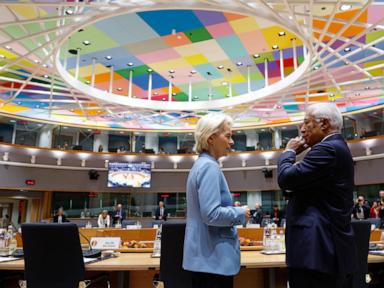
Brussels is loud right now. Headlines warn that EU leaders are pushing back hard against a sweeping multiannual budget proposal, putting a deal by 2027 in serious jeopardy.
Panic sells clicks. Calm analysis does not.
That is the lazy consensus of conventional Brussels reporting: treat every ministerial walkout, leaked non-paper, and angry national press briefing as an existential threat to the timeline. Read enough of those stories and you would think the European Union is one bad summit away from financial paralysis.
It is not.
Pushback on a major Multiannual Financial Framework (MFF) proposal is not a sign that the 2027 deadline is dying. Pushback is the opening bid. Anyone who watches EU fiscal negotiations for a living knows that real compromises rarely happen while capitals are still playing to domestic cameras. Leaders posture early to protect farm subsidies, cohesion funds, national rebates, or debt repayment rules. They threaten vetoes. They leak draft objections. Then, when the calendar actually bites, the horse-trading starts in earnest.
I have spent years advising corporate and policy teams on Brussels regulatory and fiscal dynamics, and I have watched organizations blow serious money reacting to theater as if it were legislation. Executives freeze capital plans because a headline screams "deal in doubt," only to watch a predictable compromise take shape months later with a completely different set of winners and losers.
To understand what is actually happening around the 2027 budget cycle, we have to stop asking "Will EU leaders miss the 2027 deadline?" That is the wrong question. The real question is which national priorities get squeezed when borrowing costs, defense demands, and legacy spending collide inside a tight fiscal ceiling.
The Myth of the Fragile Timeline
Standard reporting treats a multiannual budget like a fragile glass vase sitting on the edge of a table. One sharp push from a frugal member state or a net-recipient capital, and it shatters.
That misreads how EU institutional incentives work.
Under Article 312 of the Treaty on the Functioning of the European Union, the Multiannual Financial Framework sets spending ceilings across multi-year periods—typically seven years—and requires unanimity in the Council after obtaining the consent of the European Parliament. Because unanimity gives every member state leverage, no capital reveals its true bottom line in the first round. Showing your reservation price too early is amateur hour in Brussels.
When leaders push back against a major Commission proposal, they are testing coalition lines. A finance ministry objects to new own resources. Agriculture ministers warn against trimming Common Agricultural Policy payouts. Capitals facing tight domestic budgets balk at higher gross national income contributions. None of that is unusual. In fact, when member states agree immediately on a massive multi-year spending blueprint, that is usually the moment to look closer for hidden side deals.
Public pushback is cheap leverage. Real concessions cost political capital at home, so leaders hoard them until the endgame.
What Pushback Actually Signals
Dismissing pushback as mere noise would be just as sloppy as treating it as a fatal blow. Nuance matters here.
When EU leaders reject or water down a major budget draft ahead of 2027, they are usually fighting over three structural pressures:
- Old entitlements vs. new strategic priorities. Traditional pillars like agricultural support and regional cohesion have entrenched constituencies. Newer pressures—defense industrial capacity, competitiveness, energy transition, and servicing joint debt—want money from the same pool.
- Net payers vs. net recipients. Countries that contribute more to the EU budget than they directly receive in transfers watch ceiling increases with a hawkish eye, especially when their own domestic deficits are under scrutiny.
- Revenue design vs. spending caps. Proposing new "own resources" (dedicated revenue streams tied to EU policies or corporate/trade mechanisms) always triggers fierce resistance from capitals that view tax or revenue authority as a core sovereign lever.
Imagine a scenario where the European Commission tables an ambitious draft with steep increases for strategic programs and fresh own-resource mechanisms. Capitals push back immediately—not necessarily because they want zero budget, but because accepting the opening draft would surrender bargaining chips before negotiations even begin.
Political economy scholars like Andrew Moravcsik have long analyzed how liberal intergovernmental bargains work in European integration: member states define preferences domestically and bargain hard over distribution and institutional rules rather than surrendering core interests lightly. Fiscal battles fit that pattern to a tee. Every capital arrives with a domestic checklist and a list of sacred cows.
Answering the Questions Everyone Actually Searches
When a budget story heats up, people type predictable questions into search bars. Most of those questions start from a flawed premise.
Will EU leaders really miss a 2027 budget deal?
Probably not on a timeline that derails operations, even if negotiations run right up against political crunch points. Political deadlines in Brussels are elastic until they hit a legal or operational wall. Even when talks drag or face late-stage friction, institutions have contingency mechanisms—such as applying ceilings or rules from the prior framework temporarily—to keep money flowing while leaders finish arguing. Treating a tough negotiation phase as guaranteed gridlock confuses bargaining brinkmanship with institutional collapse.
Why do EU budget talks always seem so dramatic?
Because leverage in a 27-country system is public and relational. Unlike a single national parliament where a ruling majority can whip votes behind closed doors, EU negotiations involve dozens of governments answering to different domestic voters, coalitions, and media markets. Leaks are part of the negotiation table. A tough quote in a morning newspaper is often a message aimed at a coalition partner back home or a rival capital in Brussels, not a sign that talks have collapsed.
Should businesses change their European plans over the 2027 budget pushback?
Not based on headline alarmism alone. If your strategy depends on specific EU grant lines, industrial subsidies, or regulatory enforcement budgets, waiting until the final political text is locked saves you from chasing ghosts. Draft proposals change. Line items get trimmed, renamed, or moved between headings.
What should change is how you read risk. Instead of betting on whether a deal happens by 2027, track which policy buckets hold political consensus and which ones face fiscal pushback. Money follows political durability, not ambitious press releases.
The Downside of Betting Against Panic
Taking a calm, contrarian view on Brussels brinkmanship carries its own trap if you overcorrect.
The biggest risk of assuming "it always works out in the end" is complacency. Sometimes a stalemate lasts longer than expected. Sometimes a specific revenue idea dies completely instead of getting diluted. Sometimes domestic political shifts in major capitals harden positions in ways older playbooks did not anticipate.
If you treat every warning sign as fake drama, you can get blindsided when a real structural constraint bites. The smart move is not blind optimism; it is disciplined skepticism of both panic and complacency.
How to Read the Next Phase Like an Insider
If you want an edge while EU leaders trade blows over the path to 2027, stop counting angry speeches and start tracking trade-offs.
- Watch the money shifts, not the rhetoric. Look at which spending categories lose protection first when leaders demand savings. Rhetorical support for a priority means little if the proposed envelope shrinks.
- Separate ceiling fights from allocation fights. Arguing over the total size of the budget is a different game from arguing over who gets what share or how national rebates and adjustments are calculated.
- Wait for late-stage package deals. Major EU budget breakthroughs historically happen when linked issues—spending caps, rebates, revenue sources, and conditionality rules—get bundled into a single compromise package.
- Stress-test your assumptions against delays. Build plans that can absorb slower disbursements or shifted priorities without stalling your core operations.
Let the pundits hyperventilate over every leaked objection. Watch the trade-offs, ignore the theater, and position yourself for the compromise that actually gets signed.