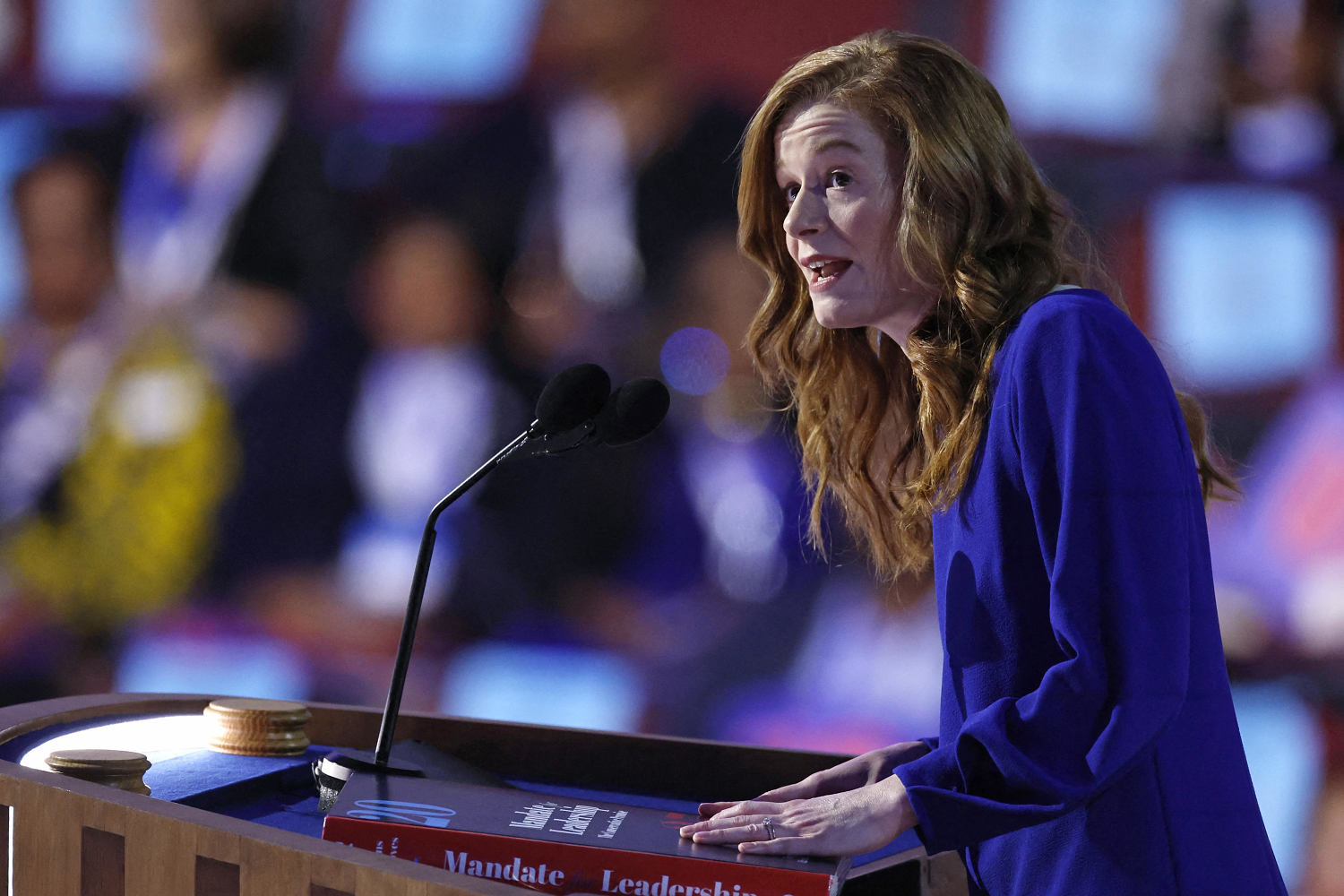
National political pundits love a viral moment. They treat a five-minute floor speech shared on social media like a foundational shift in American democracy. When Michigan State Senator Mallory McMorrow delivered her blistering, impassioned defense against right-wing attacks in 2022, the political apparatus anointed her the next big thing. Donations poured in. Cable news bookings lined up.
Then she ran for the United States Senate.
Her sudden exit from the race proves that the entire premise of modern internet-first political branding is a house of cards. The mainstream consensus blames her departure on an avalanche of outside spending and party bosses clearing the field. That narrative is lazy. McMorrow didn’t lose because she was outspent; she lost because digital celebrity is a terrible substitute for a real, ground-up political operation.
The Illusion of the Online Primary
I have seen campaigns waste millions chasing the high of internet fame. Consultants tell candidates that if they can just capture the algorithms, the voters will follow. It is a lie.
A viral video creates an audience of spectators, not a coalition of voters. When McMorrow entered the primary to replace retiring Senator Gary Peters, her campaign assumed national name recognition would automatically translate into local organizing muscle. Instead, she found herself trapped in a brutal three-way race where she lacked the structural roots of her opponents.
While her campaign staff watched view counts go up, Representative Haley Stevens was locking down establishment donors, labor unions, and local leaders. Meanwhile, Abdul El-Sayed was mobilizing a dedicated, highly organized progressive base that actually knocks on doors in Dearborn and Detroit. McMorrow tried to occupy a theoretical middle ground, relying on the vague goodwill of people who liked her tweets.
When the race tightened, that goodwill evaporated. Her support cratered into the single digits because she gave voters no compelling reason to choose her over a proven establishment operator or an energetic progressive insurgent.
The Centrist Middle Ground Is a Myth
The media often frames primary dropouts as tactical maneuvers orchestrated by party insiders. It is true that Gary Peters reportedly suggested McMorrow bow out to avoid splitting the moderate vote. But focusing on backroom pressure ignores a deeper structural reality. The center-left lane she tried to run in no longer exists in a high-stakes statewide primary.
In an election that determines control of the Senate, voters do not want a compromise candidate. They want clarity.
- The Establishment Route: Stevens offers predictable, well-funded alignment with the national party machine.
- The Progressive Route: El-Sayed offers an ideological crusade that animates the activist wing.
McMorrow attempted to bridge this gap by refusing corporate PAC money while simultaneously trying to appeal to institutional Democrats. You cannot run an anti-establishment funding model with an establishment policy platform. It is a strategic contradiction that satisfies no one. The moment she tried to play hardball by criticizing El-Sayed's campaign associations, her numbers fell further. The online base that built her platform turned on her, proving that internet loyalty is fickle and utterly unmanageable.
Money Follows Power, Not the Other Way Around
Pundits are crying foul over the millions spent by super PACs to bolster Stevens, claiming outside money rigged the race against McMorrow. This misunderstands how political capital works.
Super PACs do not invest tens of millions of dollars in a candidate out of blind affection. They do it because that candidate has demonstrated the discipline to secure institutional backing and maintain a stable base. Outside groups flooded the Michigan primary because they saw a fractured field where the establishment frontrunner was vulnerable to a progressive surge. McMorrow wasn't the victim of this spending; her inability to consolidate voters made her irrelevant to it.
Imagine a scenario where a candidate spends a year generating national headlines but fails to secure the endorsement of a single major statewide labor union. That is not a failure of campaign finance law. That is a failure of basic political retail work.
The Cost of the Empty Victory
The remaining candidates are already scavenging the carcass of the McMorrow campaign. Stevens secured an immediate endorsement from Attorney General Dana Nessel. El-Sayed is aggressively courting her anti-corporate donors.
The institutional elite believe that by forcing McMorrow out, they have successfully cleared the runway for Stevens to defeat Republican Mike Rogers in November. They are wrong. By bullying a prominent state senator out of the race to protect a moderate incumbent, the party bosses have handed a massive rhetorical weapon to the progressive left. El-Sayed can now frame the entire remaining primary as a battle between grassroots democracy and billionaire-funded super PACs.
Chasing McMorrow out of the race didn't unify the party. It exposed the deep, structural rot at the core of its strategy. If the establishment thinks a manufactured two-way primary guarantees a general election victory in a state as volatile as Michigan, they are about to get a very expensive reality check.
Stop looking at viral metrics as a leading indicator of political viability. The internet is a megaphone, not a foundation. When the cameras turn off, the candidate with the real machine always wins.