The sea does not care about manifests. It does not look for receipts, or permits, or the carefully folded papers that separate a legal citizen from a ghost. When the water rises over the gunwale of an overloaded inflatable, it takes everything with an absolute, terrifying indifference.
Winter in the English Channel is not a season; it is a weapon. The wind slices down from the North Sea, turning the gray water into jagged glass. On a dark night in November 2021, one particular rubber boat pushed off from the northern coast of France. Inside were human beings who had spent their savings, their courage, and their final shreds of hope to buy a ticket into the unknown. They carried the weight of borders crossed, of families left behind, of a future imagined just beyond the horizon. You might also find this similar story interesting: Why Finland Building a Border Fence is Total Security Theater.
They did not make it.
That disaster became a statistic in global reports, a grim milestone in the ongoing migration crisis. But statistics do not bleed. Numbers do not stand in a courtroom years later, listening through translation headphones as prosecutors try to reconstruct the anatomy of a catastrophe. As discussed in recent coverage by Al Jazeera, the implications are widespread.
Now, the legal reckoning has arrived. Two networks of smugglers stand trial, hauled before a court of justice to answer for a night that shattered dozens of lives.
To understand what is happening in that courtroom, you have to look past the legal briefs and the sterile language of indictments. You have to look at the business model of desperation.
Smuggling is not an industry born of luxury. It thrives in the dark corners where desperation meets opportunity. Imagine, purely as a hypothetical framework to grasp the mechanics, a market where the product is a seat on a sinking raft, and the consumers have nowhere else to shop. When legal pathways close, illegal ones expand to fill the vacuum. The organizers of these networks operate like cynical logisticians. They source cheap hulls from overseas. They buy substandard outboard motors that sputter and die in the chop. They pack bodies into vessels with the ruthless efficiency of warehouse managers maximizing pallet space.
They do not get into the boats.
That is the cowardly luxury of the modern smuggler. They collect the cash—hundreds, sometimes thousands of euros per person—while safe on dry land. They point toward the water and tell terrified families that salvation is just twenty miles away.
During the trial, the prosecution has worked to map these invisible chains of command. Phone intercepts crackle through the courtroom speakers. Voices discussing weather windows, boat deliveries, and cash drops fill the quiet room. These are the audio footprints of a trade built on human misery. The defendants sit behind glass partitions, some staring straight ahead, others whispering to their defense attorneys. They are cogs in a larger machine, yet they are the ones caught in the gears of accountability.
But accountability is a slippery concept when the root causes remain untouched.
Why do people step onto those rubber rafts? The answer is as old as human migration itself. War, poverty, systemic collapse, and the desperate hunger for safety drive people to risk a watery grave because the place they are fleeing is already a tomb. When your home is reduced to ash and rubble, a dangerous sea starts to look like a reasonable gamble.
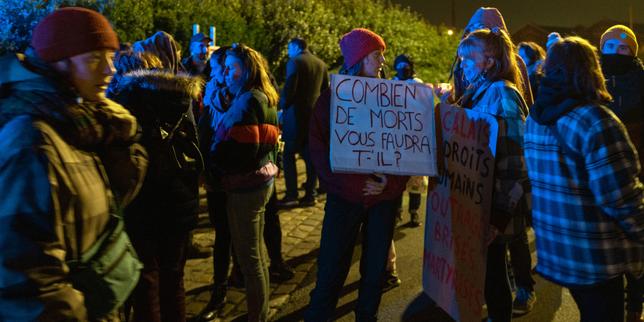
The courtroom drama focuses on the logistics of the crossing, the financial flows, the encrypted messaging apps, and the supply lines of inflatable boats. Yet, the true weight of the trial hangs over the gallery. Relatives of the victims sit in silence, holding framed photographs of sons, daughters, mothers, and fathers who vanished beneath the waves. Their grief has no statute of limitations.
Justice, in cases like this, is a blunt instrument. It cannot restore a breath to the lungs of a child. It cannot turn back the clock to that freezing night in 2021. What it can do—what it must do—is draw a hard line against impunity. It sends a signal that human lives cannot be treated as disposable inventory, bought and sold by criminal syndicates capitalizing on human tragedy.
The gavel will eventually fall. Sentences will be handed down. The lawyers will pack their briefcases and walk out into the daylight.
Yet, out on the water, the gray waves continue to roll beneath a heavy sky, indifferent to verdicts, indifferent to laws, waiting for the next desperate dawn.