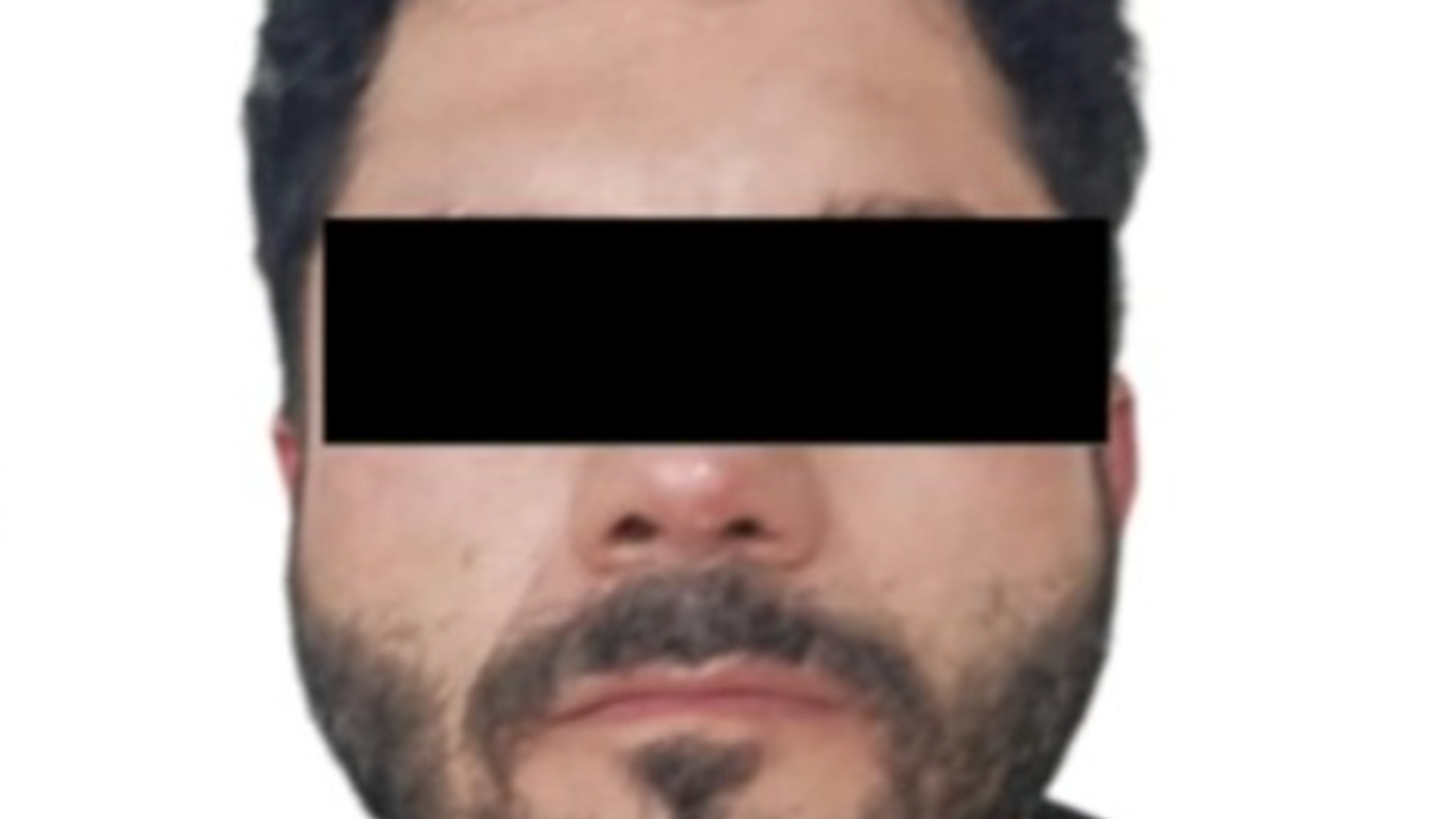
Fausto Isidro Meza Flores, known across the Mexican underworld and federal indictments as El Chapo Isidro, was captured by Mexican authorities, removing one of the last remaining old-guard leaders of the Beltrán Leyva Organization from the field and ending a multi-year hunt that placed him on the FBI's Ten Most Wanted Fugitives list. For Washington and Mexico City, the arrest of the longtime leader of the Meza Flores Transnational Criminal Organization represents a high-profile trophy in a bilateral security relationship constantly tested by fentanyl trafficking and cross-border violence. Yet on the ground in northern Sinaloa, the removal of a single figurehead rarely slows the machinery of synthetic drug production.
He was never the loudest narco in the room. While Joaquín "El Chapo" Guzmán courted journalists and chased global notoriety, Meza Flores built a durable criminal enterprise in the shadows of Guasave, surviving bloody turf wars, shifting cartel alliances, and years of sustained pressure from both Mexican marines and American intelligence agencies. Understanding how he lasted so long—and why his capture will likely trigger instability rather than peace—requires looking past the press releases and examining how modern Mexican cartels actually operate.
The Quiet Architect of Northern Sinaloa
Most casual observers confuse Fausto Isidro Meza Flores with his former ally turned bitter rival, Joaquín Guzmán Loera. The shared nickname was not a sign of kinship. In Sinaloa, "Chapo" is simply common slang for a short man. Beyond the moniker and their home state, the two men ran fundamentally different operations.
Meza Flores began his career in the 1990s under the tutelage of Amado Carrillo Fuentes, the legendary "Lord of the Skies" who pioneered bulk air transport of Colombian cocaine into Mexico. After Carrillo Fuentes died following botched plastic surgery in 1997, Meza Flores gravitated toward the Beltrán Leyva brothers, who at the time formed the enforcement and logistics arm of the broader Sinaloa Federation.
When that federation fractured violently in 2008 following the arrest of Alfredo Beltrán Leyva, Meza Flores made a calculation that defined the rest of his life. He sided with Arturo Beltrán Leyva against Guzmán and Ismael "El Mayo" Zambada. The resulting war turned Sinaloa into a slaughterhouse. Arturo Beltrán Leyva was killed by Mexican marines in Cuernavaca in December 2009, and most of his brothers were eventually captured or killed. By all conventional logic, Meza Flores should have been wiped out next.
Instead, he dug into his home turf in the municipality of Guasave and the surrounding agricultural valleys of northern Sinaloa. He transformed his faction into an autonomous syndicate, relying on tight familial networks rather than sprawling, vulnerable hierarchies. While larger cartels burned through money fighting for prestige plazas, the Meza Flores organization focused on quiet efficiency, moving heroin, methamphetamine, cocaine, and later fentanyl north through established smuggling corridors into Arizona and California.
How a Regional Boss Outlasted Super-Cartels
Longevity in the Mexican drug trade is rarely an accident. It is almost always the result of three overlapping factors: geographic insulation, local political accommodation, and operational discipline. Meza Flores mastered all three.
Guasave is not Culiacán. Located roughly two hours northwest of the state capital along the Pacific coastal plain, it is an agricultural heartland crisscrossed by irrigation canals, rural dirt roads, and mountain foothills leading into the Sierra Madre Occidental. For decades, Meza Flores maintained deep roots in these communities. In rural Sinaloa, where state presence is often sporadic or compromised, a local boss who keeps petty street crime low and injects cash into the local economy buys a layer of human intelligence that no satellite can penetrate.
Whenever Mexican Navy special forces—the SEMAR units trusted most by U.S. intelligence—launched raids into northern Sinaloa, lookout networks known as halcones usually spotted the convoys miles away. Meza Flores avoided the flashy armored caravans and gold-plated weapons favored by younger narcos, particularly the faction led by Guzmán's sons, known as Los Chapitos. He moved quietly, changed safehouses constantly, and kept his inner circle restricted to blood relatives and lifelong associates.
The Shift from Plant-Based Drugs to Synthetics
His survival also depended on adapting to the economics of the illicit market. In the early 2010s, the Meza Flores organization relied heavily on marijuana, opium poppy cultivation in the mountains, and transshipping South American cocaine. As American states legalized cannabis and synthetic opioids began replacing traditional heroin, clinging to legacy supply chains became a death sentence for smaller groups.
According to U.S. Department of Justice indictments and Treasury Department sanctions, Meza Flores pivoted aggressively into methamphetamine and fentanyl. Synthetic drugs fundamentally changed the logistics of trafficking. A cartel no longer needed thousands of acres of vulnerable poppy fields in the mountains that could be spotted and burned by military helicopters. Instead, precursor chemicals shipped from Asia into Pacific ports like Mazatlán and Topolobampo could be cooked in small, mobile clandestine laboratories hidden inside ordinary warehouses or rural ranches.
A single backpack of fentanyl carries the street value and potency of dozens of kilograms of heroin. That compression of volume allowed a mid-sized, geographically contained organization like Meza Flores's to generate massive revenues without needing to conquer territory across half of Mexico.
Why Washington Prioritized the Hunt
For years, U.S. law enforcement viewed Meza Flores as a critical node in the northern Pacific smuggling corridor. The District of Columbia federal court indicted him on drug trafficking and firearms charges, and the State Department eventually attached a $5 million reward to information leading to his arrest. Placing him on the FBI's Ten Most Wanted list elevated his profile from a regional strongman to a primary bilateral target.
The timing of his capture carries unmistakable geopolitical weight. Drug policy in Washington has hardened considerably around the fentanyl crisis, with American lawmakers routinely threatening unilateral military action, asset freezes, and aggressive trade penalties if Mexico fails to dismantle trafficking networks. When Mexican security forces deliver a figure on the FBI's top-ten list, it serves as tangible proof of cooperation.
Yet seasoned intelligence analysts know that high-profile arrests often reflect shifting local alliances as much as pure investigative breakthroughs. In Sinaloa, criminal intelligence frequently leaks when a rival faction decides a competitor has become more useful as a bargaining chip for the government than as an adversary on the street.
Consider the broader civil war tearing through Sinaloa following the dramatic 2024 detention of Ismael "El Mayo" Zambada in the United States. That event shattered the fragile equilibrium of the Sinaloa Cartel, pitting the faction loyal to Zambada's son, La Mayiza, against Los Chapitos. Every independent operator in the state—including Meza Flores—was suddenly forced to navigate a brutal, existential conflict where neutrality was nearly impossible.
The Structural Flaw of the Kingpin Strategy
Decades of covering organized crime across Latin America reveal a stubborn truth that policymakers rarely admit in public: arresting the boss almost never stops the business.
Since the launch of Mexico's militarized crackdown in 2006, security forces have killed or captured dozens of legendary cartel leaders—Arturo Beltrán Leyva, Ignacio "Nacho" Coronel, Heriberto Lazcano, Miguel Ángel Treviño Morales, Joaquín Guzmán, and Ovidio Guzmán, among many others. Every single arrest was hailed as a historic blow to organized crime. Every single arrest was followed by either the fragmentation of the group into hyper-violent splinter cells or the absorption of its routes by an even stronger rival.
The drug trade functions like an illicit supply chain governed by basic market demand. As long as millions of consumers in North America buy synthetic opioids and stimulants, and as long as precursor chemicals and high-powered firearms flow freely across borders, removing a chief executive simply creates a vacancy.
To understand why, consider a hypothetical example of a regional logistics company moving perishable goods from a port to a distribution hub. If federal authorities arrest the company's founder, the trucks do not vanish. The drivers, warehouse managers, accountants, and corrupt customs officials who actually move the freight are still on the payroll. Either the founder's deputy steps into the office the next morning, or a competing logistics firm buys up the routes and hires the drivers.
Criminal syndicates operate on the exact same principle, with one crucial difference. In the legal economy, corporate succession is settled in boardrooms and courts. In the underworld, succession is settled with belt-fed machine guns on rural highways.
What Happens Next in Northern Sinaloa
The immediate risk following the capture of El Chapo Isidro is not a sudden halt to fentanyl shipments into Arizona. It is a violent power vacuum in Guasave and the surrounding municipalities.
The Meza Flores organization was built around family loyalty, which makes it harder for outsiders to infiltrate, but it also makes leadership succession delicate. If a trusted lieutenant or relative—such as figures previously sanctioned by the U.S. Treasury's Office of Foreign Assets Control—can immediately consolidate control over the group's financial accounts and armed wings, operations may continue with minimal disruption.
If that internal transition falters, however, northern Sinaloa becomes prime real estate for larger predators. Both Los Chapitos and La Mayiza have spent months bleeding cash and fighters in their war for control of Culiacán and the state's coastal highways. Absorbing Meza Flores's smuggling corridors, chemical supply contacts, and local protection networks would give either faction a decisive strategic advantage.
The residents of Guasave, Los Mochis, and the surrounding agricultural towns know this cycle intimately. Whenever federal forces celebrate the capture of a local boss, ordinary citizens brace for armored pickups rolling through town at night, highway blockades, and sudden spikes in homicides as rival gunmen test the borders of the newly weakened territory.
The Hard Reality of Extradition and Prosecution
In the short term, Mexican authorities face a critical test regarding custody and legal processing. High-value targets in Mexico routinely deploy teams of elite defense attorneys to file amparo injunctions—constitutional appeals that can freeze extradition proceedings to the United States for years.
During those years inside maximum-security facilities like the Altiplano prison, cartel bosses have historically found ways to communicate with their organizations through visitors, lawyers, or compromised guards. Extradition to a U.S. federal courtroom remains the only mechanism that truly severs a cartel leader's daily operational command, which is precisely why Washington pushes aggressively for rapid transfers under bilateral treaties.
Even if Meza Flores is swiftly placed on a U.S. Marshals flight to face federal charges in Washington, D.C., his departure marks the end of an era rather than the end of an industry. He belonged to a generation of traffickers who grew up in the mountains of Sinaloa, learned the trade under the old federations, and survived through patience and stealth. The younger generation replacing them operates with decentralized cells, encrypted messaging apps, cryptocurrency laundering, and synthetic chemistry that requires a fraction of the manpower and infrastructure of the old cartels.
For thirty years, Fausto Isidro Meza Flores proved that a disciplined operator could outlast presidents, military campaigns, and rival empires by staying out of the spotlight. His capture finally closes one of the longest-running manhunts in North America, leaving behind an intact trafficking network and a region waiting to see who has the firepower to claim it.