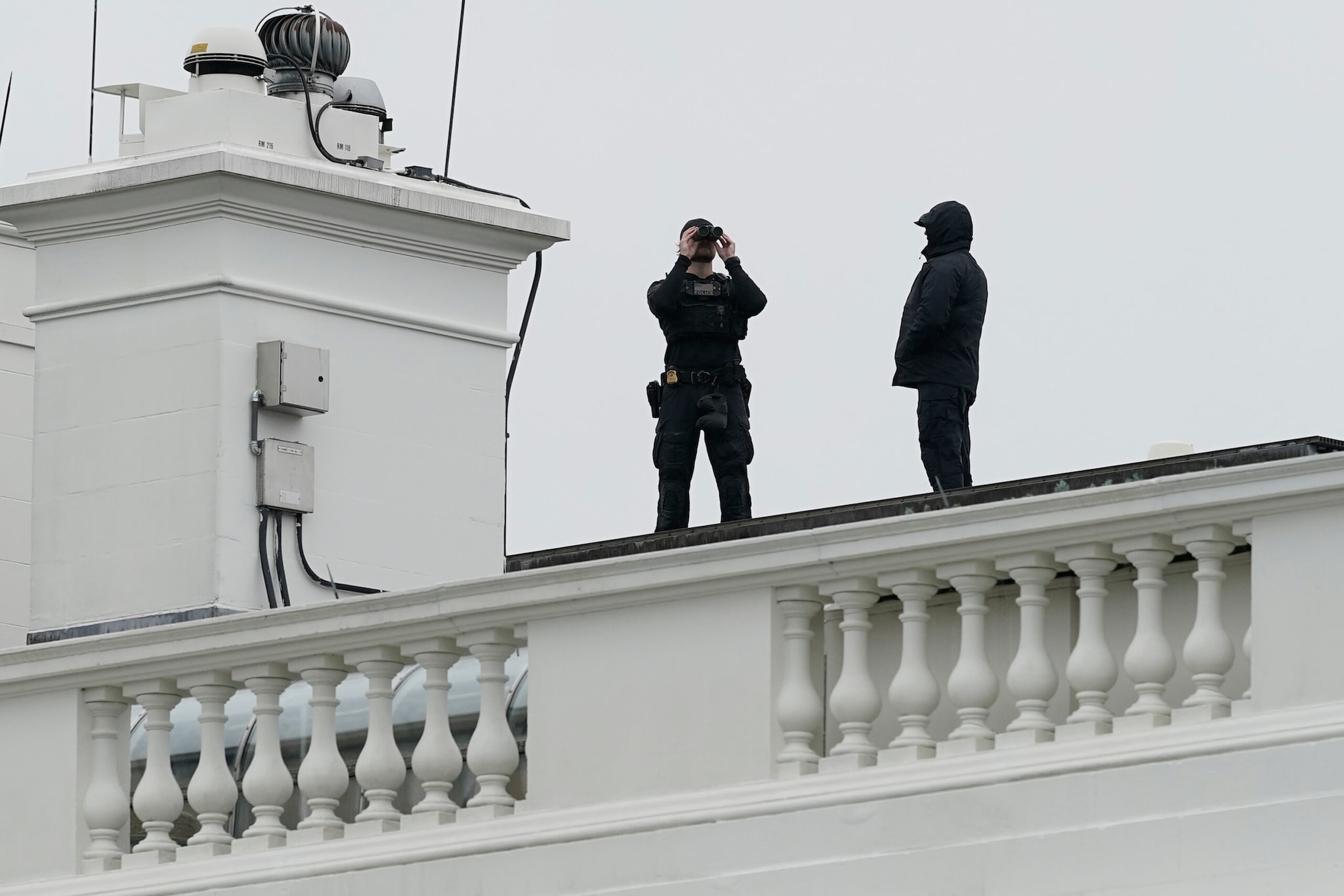
A security breach at a outer White House checkpoint ended in gunfire when U.S. Secret Service agents shot and killed an armed individual. The incident occurred at a perimeter security point accessible to the public, forcing an immediate lockdown of the executive mansion. While official statements frame the response as a textbook execution of protective protocols, the event exposes systemic vulnerabilities in how Washington secures its most high-profile civilian perimeters.
Anatomy of a Perimeter Breach
Law enforcement protocols dictate a multi-layered defense system around the White House complex. The outermost layer relies heavily on visible deterrents, physical barriers, and Uniformed Division officers stationed at vehicle and pedestrian checkpoints.
When an individual approaches these checkpoints with a weapon, the margin for error disappears.
Uniformed Division officers are trained to recognize behavioral anomalies long before a weapon is drawn. In this instance, the suspect managed to close the distance to the checkpoint line before the threat was neutralized. This suggests either a failure in early detection or a deliberate tactic by the individual to exploit the heavy pedestrian traffic typical of the area.
The physical layout of these checkpoints presents a permanent tactical challenge. They must remain accessible enough to vet legitimate visitors, staffers, and diplomatic couriers, yet fortified enough to stop a kinetic attack.
The Pressure on the Uniformed Division
The burden of these front-line encounters falls squarely on the Secret Service Uniformed Division. For years, internal reports and congressional oversight committees have flagged severe staffing shortages, mandatory overtime, and low morale within this specific arm of the agency.
Officers frequently work grueling shifts guarding gates, monitoring fences, and standing watch in guard booths.
When personnel are overworked, situational awareness degrades. It is a mathematical certainty. While the agency routinely praises the quick reflexes of its agents during active shooter scenarios, the deeper investigative question is why these individuals are consistently able to get within striking distance of the complex.
Consider the historical precedent. Over the past two decades, the White House perimeter has seen individuals jump fences, drive vehicles into security barriers, and fly small drones onto the lawn. Each incident prompts a review, a temporary increase in physical security, and a promise of reform. Yet the fundamental vulnerability remains the human element at the outer gates.
The Evolution of Perimeter Defense
Physical security in downtown Washington has evolved from open accessibility to a fortress-like posture. The transformation accelerated after the 1995 Oklahoma City bombing, which led to the permanent closure of Pennsylvania Avenue to vehicular traffic.
White House Security Layering
+-------------------------------------------------------+
| Public Buffer Zone (Lafayette Square / Ellipse)       |
|   +-----------------------------------------------+   |
|   | Outer Perimeter Checkpoints (Personnel/Gates) |   |
|   |   +---------------------------------------+   |   |
|   |   | Inner Hardened Fence (Iron/Sensors)   |   |   |
|   |   |   +-------------------------------+   |   |   |
|   |   |   | Executive Mansion Core        |   |   |   |
|   |   |   +-------------------------------+   |   |   |
|   |   +---------------------------------------+   |   |
|   +-----------------------------------------------+   |
+-------------------------------------------------------+
As the diagram illustrates, the outer perimeter checkpoints serve as the critical transition zone between public space and the highly restricted inner sanctum. This zone is where the highest concentration of volatile interactions occurs.
The current fence, upgraded recently to a height of roughly 13 feet with anti-climbing technology, handles the threat of intruders trying to scale the perimeter. It does nothing to mitigate the risk faced by officers standing outside that fence line at pedestrian checkpoints. Those officers remain exposed, serving as human shields for the infrastructure behind them.
Tactical Dilemmas in High-Density Urban Zones
Securing an executive mansion in the middle of a dense, vibrant capital city introduces constraints that military bases do not face. The Secret Service cannot establish a half-mile clear-zone around the White House.
They must operate in an environment flooded with tourists, protesters, journalists, and local commuters.
- Distraction factors: High ambient noise, flashing lights, and large crowds make auditory and visual threat detection difficult.
- Crossfire risks: Discharging a firearm in a crowded urban square carries immense risk to bystanders, complicating an officer's decision to shoot.
- Proximity: The distance from the public sidewalk to the actual checkpoint gate is often less than ten feet, giving officers mere seconds to react to an drawn weapon.
These variables mean that an threat can materialize instantly. Relying on an officer's quick draw to resolve a security crisis is a failure of systemic prevention.
The Limits of Technology
In the aftermath of perimeter incidents, there is a tendency to call for technological solutions. Facial recognition cameras, automated threat detection algorithms, and non-lethal acoustic devices are frequently floated as panaceas.
Technology fails to solve the fundamental issue of intent. A camera can identify a known individual on a watchlist, but it cannot predict when an unlisted person will walk up to a gate and produce a hidden firearm.
The reliance on technology can also create a false sense of security among command staff. Software alerts require human verification, and in a scenario that unfolds in under five seconds, the latency between an automated alert and an officer's physical response is too wide to bridge.
The hard truth of executive protection is that physical presence matters most. The quality of that presence depends entirely on recruitment, retention, and rigorous, continuous tactical training.
Operational Transparency and the Echo Chamber
Whenever a fatal shooting occurs at the gates of the White House, the Secret Service command structure follows a predictable public relations script. A brief statement is released via social media, a standard press briefing confirms the neutralization of the threat, and the incident is quickly compartmentalized as an isolated event.
This lack of transparency prevents meaningful public accountability. By labeling every breach or attempted attack as an anomaly handled perfectly by staff, the agency avoids confronting the structural flaws in its deployment strategy.
The official narrative rarely addresses the underlying motivations of those who target the perimeter. Many of these individuals suffer from severe mental health crises, viewing the White House not as a political target, but as a symbolic focal point for their delusions.
Law enforcement agencies must integrate psychological threat assessment capabilities directly into the frontline checkpoint deployments, rather than relying solely on traditional tactical responses.
Moving Beyond Reactive Security
Fixing the vulnerabilities at the outer gates requires a shift from reactive containment to proactive interception. This means expanding the intelligence gathering footprint in the immediate vicinity of Lafayette Square and the Ellipse.
It means deploying plainclothes behavioral detection teams to scan crowds and identify individuals showing signs of agitation or carrying concealed items before they reach the checkpoint line.
The current strategy relies on the assumption that the uniform itself acts as a deterrent. For an individual intent on suicide by cop or launching a political attack, the uniform is not a deterrent; it is a target.
The Secret Service must redesign these outer checkpoints to provide physical cover for the officers on duty. Forcing personnel to stand in the open without ballistic shielding while interacting with unvetted members of the public is an operational choice that guarantees casualties when a high-velocity threat appears.
The incident at the checkpoint was not a success story just because the suspect was stopped before entering the grounds. It was a stark warning that the current method of frontline defense places personnel in an unsustainable tactical position, relying on split-second shooting accuracy to compensate for systemic architectural and operational flaws.