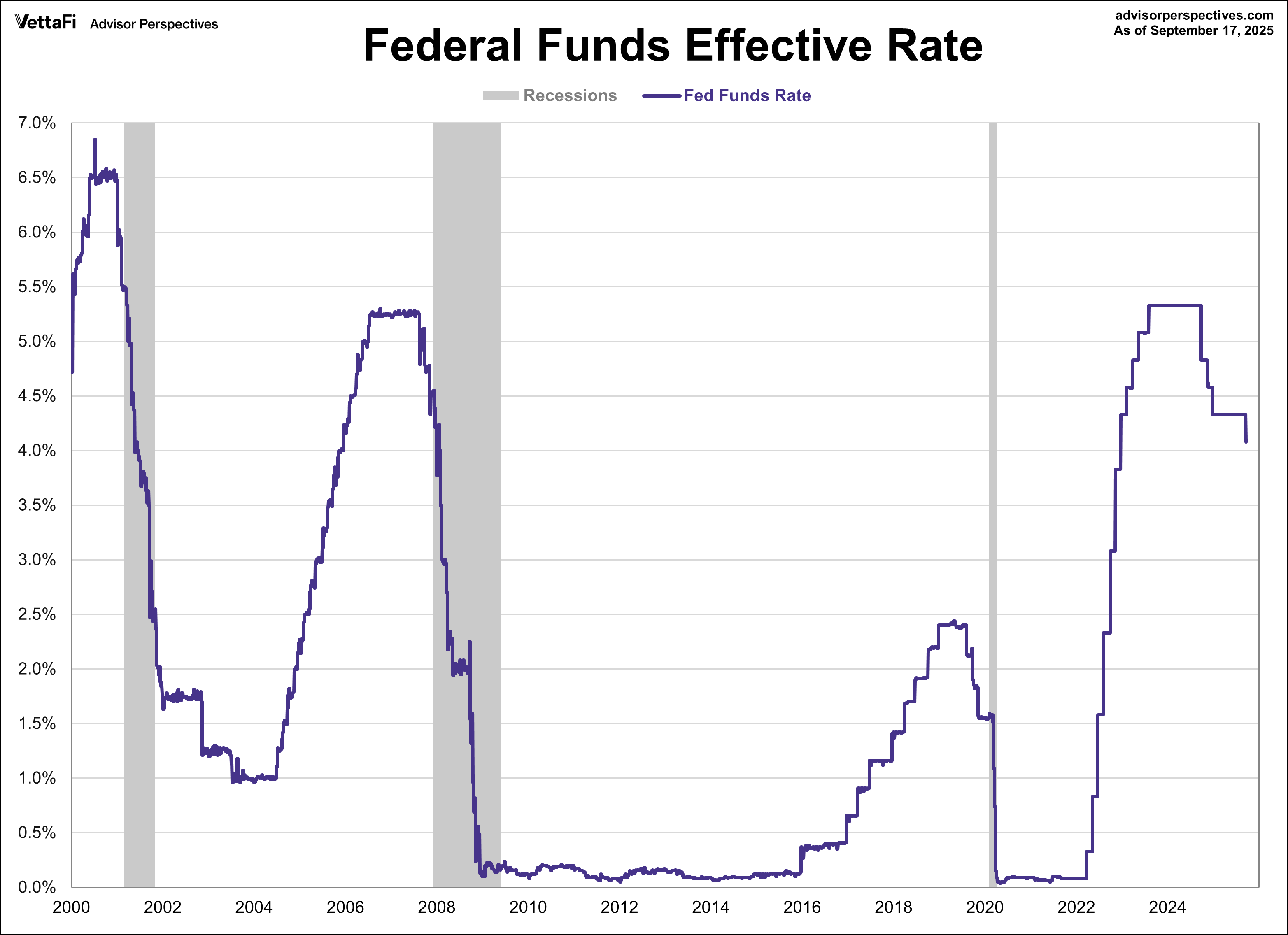
Market behavior surrounding Federal Reserve announcements frequently diverges from standard economic intuition. When central banks adjust interest rates or signal policy shifts, asset prices rarely react in a linear or predictable fashion. The mechanism driving this divergence lies in the architecture of market expectations, liquidity distribution, and structural positioning among institutional participants.
Understanding why markets behave strangely during monetary policy cycles requires deconstructing the transmission mechanism into three core components: informational asymmetry, liquidity constraints, and positioning saturation.
The Mechanics Of Expectation Pricing
Markets do not trade on the absolute value of a Federal Reserve decision; they trade on the delta between the actual decision and the pre-existing consensus. Asset prices continuously discount anticipated outcomes through forward contracts, options pricing, and algorithmic positioning.
When the Federal Reserve executes a policy change, the immediate price action reflects whether the outcome landed inside or outside the expected distribution. If the decision aligns precisely with consensus, markets frequently experience a counter-intuitive reaction. Assets that should theoretically rise on a rate cut may decline, driven by institutional profit-taking or the activation of sell-the-news algorithms.
This dynamic is governed by a simple feedback loop:
- Consensus Formation: Market participants build models based on macroeconomic indicators, central bank speeches, and historical precedent.
- Positioning Saturation: Capital concentrates in specific assets designed to benefit from the anticipated policy outcome.
- The Event Horizon: The Federal Reserve releases its statement.
- Liquidation of Consensus: Because capital is heavily concentrated in one direction, the actual realization of the event triggers a cascade of position unwinding, regardless of the policy's fundamental soundness.
Liquidity Channels And Collateral Constraints
Beyond sentiment and expectations, monetary policy alterations instantly modify the plumbing of the financial system. The primary transmission channel is not consumer borrowing rates, but rather the wholesale funding market, repurchase agreements, and institutional collateral availability.
When the Federal Reserve alters the federal funds rate or adjusts balance sheet parameters, the cost of overnight financing shifts immediately. Prime brokers, hedge funds, and primary dealers recalibrate their leverage ratios in response. A higher cost of capital forces leveraged market participants to de-risk. This de-risking process manifests as cross-asset selling, where liquid assets are liquidated first to meet margin requirements, occasionally causing unrelated asset classes to decouple from their fundamental valuations.
The velocity of this liquidity adjustment creates temporary market distortions. Institutional portfolios constrained by risk-management algorithms cannot wait for macroeconomic fundamentals to normalize; they must adjust collateral positions instantly. Consequently, price movements immediately following a central bank decision are frequently artifacts of structural plumbing rather than long-term economic assessment.
Asymmetric Information And Forward Guidance
The Federal Reserve communicates policy intent through statement alterations, press conferences, and economic projections. Because human language introduces ambiguity, market participants parse these communications for subtle shifts in syntax and emphasis.
This creates an environment of asymmetric interpretation. High-frequency trading firms and algorithmic models ingest the text of a statement milliseconds after release, scanning for specific keyword frequencies that signal hawkish or dovish shifts. Human analysts then spend hours debating the semantic nuances of the Federal Reserve Chair's phrasing during the subsequent press conference.
This split-second processing disparity generates short-term volatility spikes. The initial algorithmic reaction often overshoots the true economic implication of the policy, forcing a subsequent mean-reversion phase once human capital assesses the complete context.
Strategic Allocation Under Policy Uncertainty
Navigating environments defined by monetary policy inflection points requires shifting away from predictive forecasting and toward risk-boundary management. Because the exact trajectory of market reactions cannot be modeled deterministically, portfolio construction must account for structural regime changes rather than single-event outcomes.
Risk parameters should be calibrated around liquidity thresholds and positioning concentration rather than directional price targets. When market consensus achieves extreme saturation in any single direction, the probability of a counter-trend shock increases exponentially, irrespective of macroeconomic fundamentals. Capital allocation strategies must therefore prioritize structural optionality, maintaining sufficient liquidity buffers to absorb systemic volatility generated by structural market plumbing adjustments.