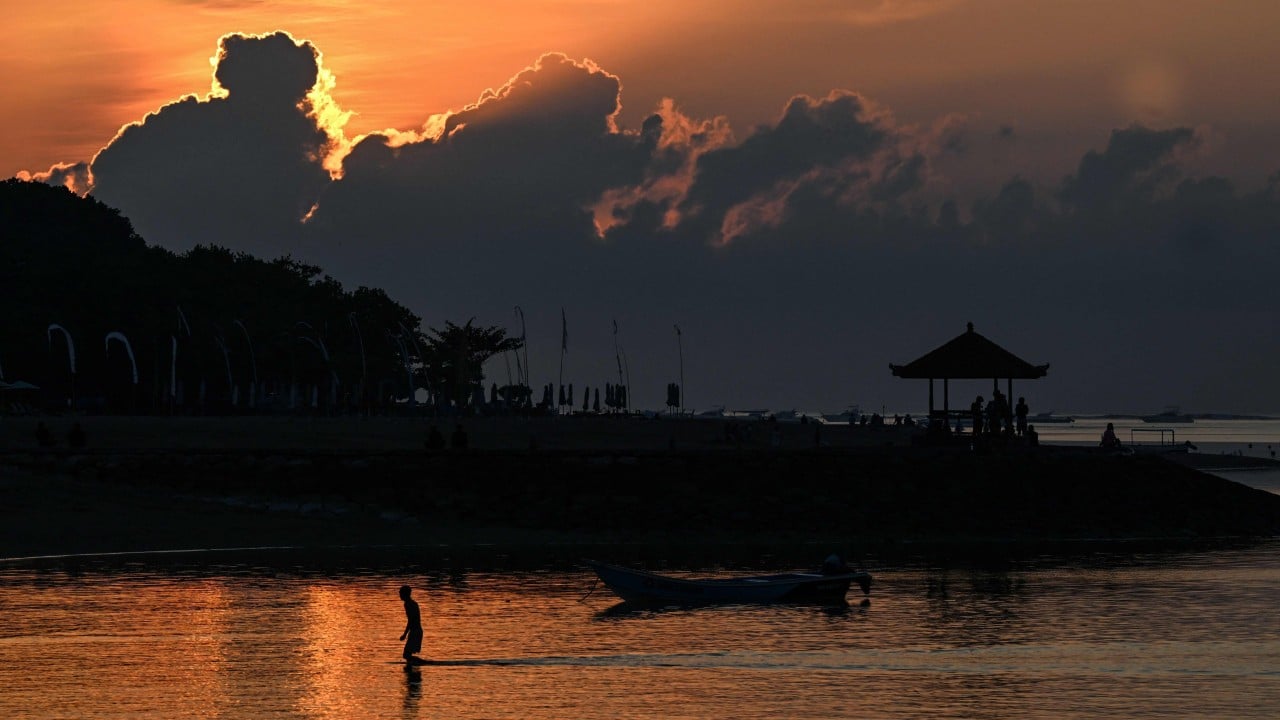
The sun in Bali does not just shine; it heavy-presses itself against the skin, thick with the scent of saltwater, roasting pork, and burning incense. Millions of people fly to Denpasar every year to escape their lives, to dissolve their pasts in the warm Indian Ocean, or to pretend, if only for a fortnight, that they are someone else entirely.
But there is a sharp, jagged edge to paradise that the travel brochures never show. It is found in the claustrophobic maze of the island’s concrete boarding houses, far away from the infinity pools of Ubud. It is found in the quiet desperation of those who stay too long. In other news, read about: The Spatial Dynamics of Alberta Politics: Deconstructing Nenshi Shift to Calgary.
MZ was one of those who stayed.
He arrived from Singapore in 2025, carrying a tourist visa and the quiet ambition of a man looking to lose himself. Weeks bled into months. The visa expired. The legal boundaries of his stay dissolved, but he remained in the shadows of Denpasar, living a transient life on borrowed time. In a world of digital nomadism and endless holidays, overstaying is a quiet, administrative sin. It is easy to ignore until the walls start closing in. NPR has provided coverage on this important topic in extensive detail.
In that crowded, humid city, he met a twenty-six-year-old woman named AS. She had come to Bali from Tegal, a flat, coastal city in Central Java known for its steel industries and modest tea plantations. Like so many others, she had traveled across the archipelago to find a living, a future, or perhaps just a bit of the island's legendary light.
They began dating. For a year, their lives intertwined in the fragile way that relationships do when they are built on shifting sands.
The Quiet Decay of a Dream
Living in a foreign country without papers changes a person. The world becomes small. You avoid the police. You avoid official channels. Every knock on the door carries a faint, icy thread of panic. You are trapped in a paradise of your own making, unable to leave, unable to fully exist.
We can only infer the pressure cooker that their relationship became. Inside their small rental room in Denpasar, the tropical heat was no longer a luxury; it was a damp weight. Local police would later refer to the motive simply as "relationship problems" born of "heartbreak". Such clinical words do little to describe the slow, agonizing erosion of two people who once believed they could find sanctuary in each other.
Resentment is a quiet poison. It does not announce itself. It builds in the unspoken arguments, the sideways glances, the claustrophobia of a shared, cheap room where the fan only pushes hot air around in circles.
On a Tuesday in July, that resentment boiled over.
Fifteen minutes.
Think about how long fifteen minutes is when you are waiting for a train, or boiling water, or holding your breath. It is an eternity. According to the investigation by the Denpasar police, that is how long MZ held his hands around AS’s neck. It was not a sudden, tragic spasm of anger that subsided in a second. It was a sustained, agonizing exertion of physical will.
In those fifteen minutes, the illusion of the island vanished entirely. There was only the sound of gasping breath, the creak of the floorboards, and the terrible, irreversible transition from a living, breathing woman with a family in Java to a body lying still on a mattress.
The Doll and the Shadow
What happens in the mind of a person who has just crossed a line from which there is no return?
Panic does strange things to human psychology. MZ did not call for help. Instead, he attempted to rewrite the reality of his room. He took a giant doll—the kind of oversized, stuffed toy you might win at a carnival or buy as a cheap romantic gesture—and placed it carefully over AS’s body.
It was a childlike gesture of denial. If he could not see her, perhaps she was not there. Perhaps the nightmare would dissolve back into the humid Bali air.
He stayed in the unit with her. The tropical heat, unforgiving and swift, began to do its work.
A few miles away, a young woman named DP was working at a local billiards hall. She had recently started dating MZ. He was charming, perhaps a little mysterious, the classic expat who seemed to have no anchor. When DP visited his rental room, she noticed a strange, heavy odor hanging in the air.
When she asked him about it, the charm vanished. He snapped. His anger was sudden, sharp, and defensive. DP backed away, sensing the jagged edges beneath his calm exterior, unaware of what lay just feet away under a giant plush toy.
The Brother's Knock
In Java, AS's family was growing anxious. Her phone went dead. The messages remained unread, lacking the reassuring double-blue checkmarks of modern life.
Her younger brother, driven by that quiet, intuitive dread that families share, decided to go to the boarding house.
He arrived at the concrete complex, navigating the narrow corridors. He reached the door. The smell was there, thick and unmistakable, cut only by the cheap scent of local air fresheners.
He knocked. MZ opened the door.
The brother asked where his sister was. MZ did not answer. He did not offer an excuse, a lie, or a greeting. Instead, he pushed past the younger man, ran to his motorcycle, started the engine, and sped away into the chaotic Denpasar traffic.
Left alone in the sudden silence of the corridor, the brother stepped into the room. He walked toward the bed. He moved the giant doll.
The horror of that discovery is something that cannot be fully articulated. It is the moment a family’s life splits into a "before" and an "after."
The End of the Road
MZ’s flight was desperate and short. He headed southeast toward Sanur, a quiet, older coastal town known for its calm waters, paved beach boardwalks, and slow-paced tourists. It is a place where retirees walk along the sand at sunrise. It is not a place where you can lose yourself for long.
Within three hours of the brother's discovery, a joint team of Balinese police tracked MZ down and arrested him.
He was brought back to Denpasar in handcuffs, wearing the bright orange detainee vest that Indonesian police use to parade suspects before the media. His face, once that of an ordinary tourist enjoying an extended tropical escape, was blank.
The tragedy of AS is not just a statistic of domestic violence, nor is it merely a sensational story to be skimmed over morning coffee. It is a cautionary tale about the dark corners of the places we go to escape ourselves.
We seek out islands like Bali because we want to believe that a change of geography can cure a sickness of the soul. We believe that under a tropical sun, our anger, our insecurities, and our desperation will melt away. But geography is indifferent. It does not wash away who we are. It only provides a different backdrop for our tragedies.
The rental room in Denpasar remains, quiet and empty, as the heavy Bali sun continues to rise and fall over the island, completely indifferent to the lives that were broken beneath its light.