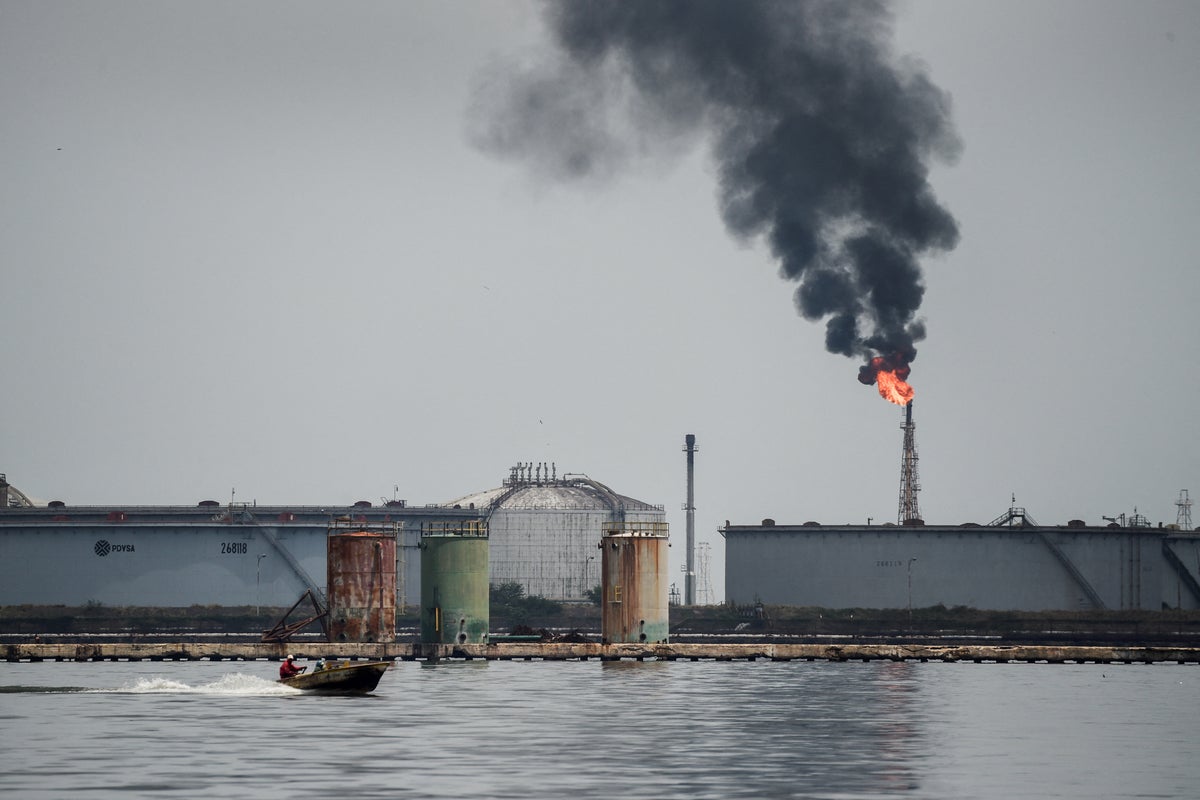
The air in Maracaibo tastes like sulfur and sweet crude. If you stand long enough on the shores of the lake, listening to the low, mechanical groans of the pumpjacks—those metal birds dipping their iron beaks endlessly into the earth—you can hear the heartbeat of a nation that used to feed the world.
Right now, that heartbeat is erratic. Expanding on this topic, you can find more in: The Exile Frequency.
For years, the machinery has rusted under a tropical sun. Pipelines leak sticky black veins across emerald fields. Refineries stand silent, their towering catalytic crackers monuments to an era of abundance that dissolved into long lines at gas stations and empty plates. This is not just a story about numbers on a spreadsheet or geopolitical chess pieces moved by unseen hands in Washington and Caracas. This is about Mateo, a fifty-year-old control room operator who remembers when the gauges stayed safely in the green, and who now watches flickering red lights with a knot of dread tightening in his throat every single morning.
Mateo represents millions. He represents the human cost of a staggering reality: the United States is standing on the precipice of a massive diplomatic and economic agreement to effectively take control of Venezuela’s oil apparatus. Observers at NPR have also weighed in on this trend.
Think about that for a second. Control.
It sounds heavy because it is. To understand how we arrived at this improbable intersection, we have to look past the cold wires of international diplomacy and remember what liquid gold actually means to human beings.
Oil is not merely a commodity. It is blood. It powers hospitals, heats homes, fuels ambulances, and keeps the lights on in maternity wards. When the taps were turned off through a combination of mismanagement, corruption, and crushing sanctions, the blood stopped flowing. The humanitarian crisis that followed did not stay contained within borders; it spilled over into neighboring countries, creating a mass exodus of desperate families walking hundreds of miles through mountain passes just to find a meal.
Now, whispers from behind closed doors in Washington and the Miraflores Palace suggest a monumental shift. The architecture of a sweeping deal is taking shape. Through a complex matrix of debt restructuring, foreign operational oversight, and strategic licensing, international energy giants are positioning themselves to step back into the basin.
Let us be entirely clear about the mechanics here, using a grounded analogy: Imagine a massive, state-of-the-art cargo ship that has run hard aground on a reef because the captain locked the crew in the brig and threw away the compass. The ship is slowly breaking apart, its cargo spoiling. The owners of the ship—representing foreign creditors and nations holding billions in unpaid debt—realize that the only way to ever see a penny of their money, and the only way to stop the ship from sinking entirely, is to board the vessel, kick open the brig doors, take the wheel from the incompetent captain, and manually patch the hull.
That is what taking control looks like. It is not an old-school colonial flag planting. It is an emergency salvage operation wrapped in corporate restructuring.
And it is messy.
There are those who will argue that this is pure exploitation. They will point to the ghosts of past interventions and warn of foreign powers carving up sovereign wealth. Their anger is justified. History gives every right to look at foreign energy conglomerates with suspicion. When massive multinationals move into a fragile region, they rarely bring utopia; they bring contracts, compliance officers, and cash.
Yet, walk through the shantytowns surrounding Caracas, and you will hear a different chorus. You will hear mothers asking a simple, agonizing question: Can my children eat political pride?
When survival hangs by a thread, abstract debates over sovereignty take a backseat to the basic human need for electricity, medicine, and jobs. If an agreement with Western capitals and oil majors means the difference between total societal collapse and the slow, painful resurrection of basic infrastructure, people will take the deal. They have to.
The architecture of this impending agreement relies on a delicate dance of compliance and concession. Washington holds the ultimate financial leverage through the Office of Foreign Assets Control. Every barrel of heavy crude that moves from Lake Maracaibo to an American gulf coast refinery requires a nod, a license, a carved-out exemption. For years, those valves were slammed shut to force political change. The strategy caused immense economic pain, but it did not dislodge the regime. Instead, it accelerated the decay of the very physical assets that give the country its value.
Pragmatism finally won out over stubbornness. Global energy markets need heavy sour crude. Refineries along the Gulf of Mexico were specifically engineered to digest Venezuelan oil; running them on lighter domestic grades is like feeding a diesel engine high-octane racing fuel. It works, but it is inefficient, expensive, and unsustainable in the long run.
So, necessity forced a reckoning.
If this deal crosses the finish line, the transformation on the ground will not happen overnight. You cannot simply flip a switch and revive a patient who has been in a coma for a decade. The wells require massive capital injection. Millions of dollars must be spent just to clear out corrosion, repair safety valves, and secure the perimeter fields.
Consider what happens next: Engineers will arrive with laptops and hard hats. Checklists will replace ideological slogans. Slowly, cautiously, the pressure gauges will begin to tick upward. The heavy crude will start moving through the lines again, filling the massive supertankers waiting silently offshore.
For Mateo, that means he might finally get his full paycheck, denominated in a stable currency instead of a hyperinflated local scrip that loses its value before he can walk home from the market. It means his grandchildren might have a functioning clinic down the street.
Is it fair? No. Life rarely is.
Is it necessary? For the millions trapped in the machinery of economic collapse, it is the only lifeline left on the horizon.
The rust on the towers will not vanish tomorrow. The political scars will remain for generations, etched deep into the collective memory of a people who watched their immense wealth turn into smoke and ash. But beneath those rusting towers, deep in the dark, pressurized heart of the earth, the pressure is building. A new era is being forced into existence, hammered out in boardrooms and backchannels, driven not by ideals, but by the relentless, unyielding demand for energy.
The tap is about to turn. And the world is watching to see if anything still flows.