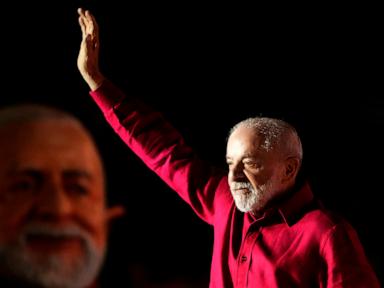
Electoral competition in developing democracies frequently reduces public policy to a binary contest between immediate fiscal distribution and structural restraint. When incumbent administrations face tight runoffs, the deployment of state resources accelerates through precise, targeted mechanisms. President Luiz Inácio Lula da Silva’s executive decree executing a fifteen percent upward adjustment in the Bolsa Família welfare program exemplifies the direct intersection of fiscal policy and electoral survival. Rather than representing an isolated administrative adjustment, this intervention highlights a predictable institutional response to tight polling margins and shifting voter coalitions.
To understand the mechanics of this policy deployment, one must analyze the baseline parameters of Brazil's primary cash-transfer architecture. The decree raised the minimum monthly family benefit to six hundred ninety-one reais, introducing financial adjustments designed to offset cumulative inflation markers recorded since March 2023. Government projections estimate the direct fiscal cost at five point eight billion reais for the remainder of the calendar year, expanding to roughly twenty-two billion reais in the subsequent fiscal period. Nearly fifty million individuals across twenty million low-income households depend on these disbursements.
The strategic timing of the announcement—executed mere weeks before the presidential runoff against challenger Flávio Bolsonaro—triggers immediate debate regarding administrative intent versus inflation indexing. Opposition factions characterize the maneuver as a classic populist redistribution tool designed to consolidate voter loyalty among marginalized demographics. Conversely, administration officials maintain that the adjustment represents a necessary macroeconomic correction to protect purchasing power eroded by consumer price shifts. Evaluating this dynamic requires dissecting the fiscal trade-offs and political utility inherent in state-backed income transfers.
The mechanics of electoral welfare expansion rely on speed and visibility. Cash transfers possess superior transmission velocity compared to infrastructure investments or long-term tax reforms. When liquidity enters household bank accounts immediately preceding a ballot, the psychological and economic impact on recipient behavior is immediate. Low-income demographics exhibit higher marginal propensities to consume, meaning every transferred real circulates rapidly through local retail economies, reinforcing short-term economic stability while simultaneously heightening incumbent favorability.
Data from recent electoral cycles demonstrate that beneficiaries of major welfare programs display disproportionate loyalty to incumbents who expand or protect these allocations. Polling metrics indicate that a clear majority of Bolsa Família recipients lean toward the current administration during polarized runoffs. This creates a structural advantage that challenging candidates must offset through alternative policy narratives.
The conservative opposition under Flávio Bolsonaro faces a complex strategic dilemma. Proposing outright fiscal austerity or the rollback of popular welfare programs guarantees electoral alienation among low-income classes. As a result, the opposition strategy pivots away from contesting welfare existence toward redefining the primary locus of citizen protection. While the incumbent defines state protection through financial security and income support, the challenger frames state protection through law enforcement, institutional order, and punitive anti-crime measures. This ideological divergence splits the electorate into competing security priorities: financial survival versus physical safety.
Beyond direct cash transfers, the pre-election policy package deployed supplementary economic interventions designed to capture fragmented voting blocs. These included temporary tax exemptions on gasoline and diesel imports, subsidized fuel pricing mechanisms, proposals for zero-fare public transportation on weekends, and federally backed debt refinancing programs for low-income consumers with default records. Each of these interventions addresses specific points of consumer friction. High fuel costs directly impact transport logistics and inflation perception among urban workers, making fuel tax relief a high-visibility intervention despite its immediate drain on federal tax revenues.
Simultaneously, the administration endorsed legislative measures to reduce the standard workweek from forty-four to forty hours over six days down to five, without permitting nominal wage reductions. While popular among unionized and formal-sector employees, this regulatory adjustment introduced acute structural friction for small and medium-sized enterprises. Business owners and economic analysts argue that mandating reduced working hours without matching gains in labor productivity increases unit labor costs, compresses profit margins for small enterprises, and incentivizes informal employment structures.
The aggregation of these simultaneous interventions creates a significant fiscal exposure for the federal budget. Critics argue that deploying billions of reais in targeted welfare boosts, fuel subsidies, and debt relief programs compromises long-term fiscal targets and fuels inflationary pressures. In an economy sensitive to currency volatility and interest rate adjustments, aggressive fiscal expansion risks forcing the central bank to maintain higher benchmark interest rates to counter potential consumer demand shocks.
The structural tension between fiscal responsibility and political survival remains a defining characteristic of modern Brazilian macroeconomic management. Incumbent administrations possess access to the state apparatus, enabling them to alter transfer schedules, tax burdens, and credit access during critical political windows. However, the long-term sustainability of these measures depends on underlying economic growth rates and tax revenue elasticity. If public debt ratios deteriorate past critical thresholds, the subsequent administration—regardless of ideological alignment—faces severe budgetary constraints that limit discretionary spending.
The outcome of this electoral contest demonstrates that welfare politics in Brazil has evolved past basic debates over whether the state should support the poor. Both major political factions accept the institutional permanence of cash-transfer programs. The core disagreement centers on fiscal administration, budgetary discipline, and the trade-off between immediate social relief and long-term monetary stability.
Strategic forecasting indicates that future administrations will continue to treat flagship welfare disbursements as inelastic political necessities. Any attempt to contract these programs carries prohibitive political costs. Consequently, fiscal adjustment must occur through revenue enhancement or spending containment in non-welfare sectors, areas that offer limited political flexibility.
The intersection of macroeconomic policy and electoral strategy in Brazil underscores the limits of orthodox fiscal restraint in highly polarized democracies. When political survival depends on maintaining the purchasing power of low-income majorities, fiscal policy functions as an instrument of political continuity. Analysts evaluating emerging market economies must measure policy announcements not merely through standard balance-sheet metrics, but through the operational velocity of state distribution channels and their capacity to shape voter alignment under conditions of acute economic stratification.


