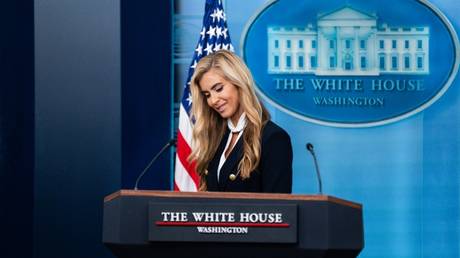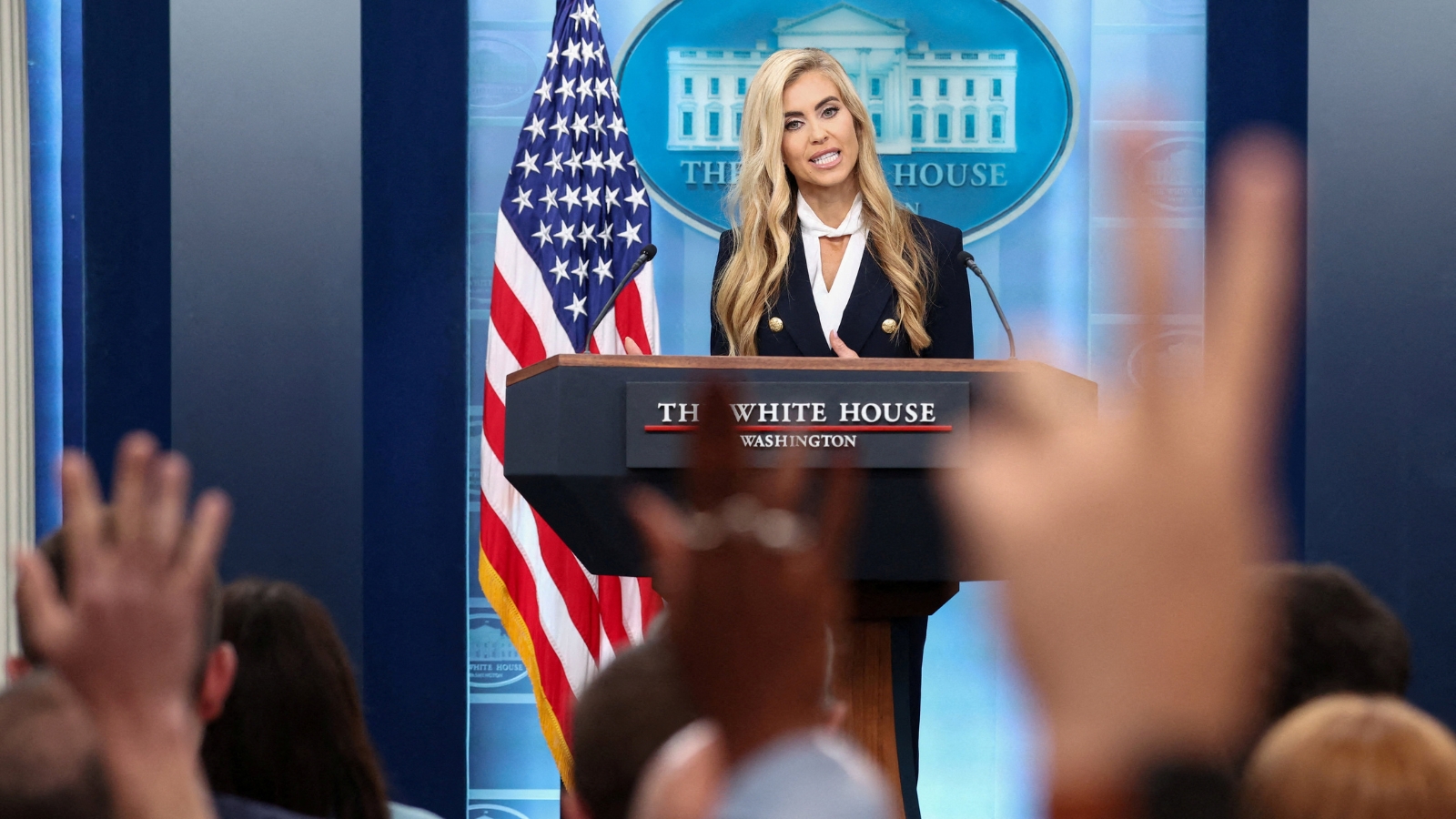
Five.
That is how many days Katie Zacharia held the title of White House press secretary before Donald Trump fired her, turning a job meant to project calm authority into a blink-and-you-missed-it exit. On paper, it reads like a punchline or a footnote in a fast-moving political week: five days at the podium, five days of briefing binders, five days of learning where the light switches sit and how fast the floor drops out from under you. Don't forget to check out our recent article on this related article.
Yet a five-day tenure in the West Wing is rarely just about one person's résumé. It is a stress test of modern public power. When a press secretary lasts less than a week, something essential has misfired—either the expectations placed on the role, the chemistry between the principal and the messenger, or the sheer velocity of a media environment that chews through narratives before lunch.
I have spent years watching high-stakes rooms from the edges—press corridors, war rooms, late-night editing desks where a single misplaced verb can trigger three hours of damage control. You learn the smell of hot coffee in stale carpet. You learn the sound of thirty phones buzzing at once on a wooden table when a rumor hits before the official line is even printed. When you are inside that machinery, you realize how fragile human credibility actually is. One shaky sentence on live television does not stay in the room; it travels into living rooms, group chats, markets, and quiet kitchens where people are just trying to figure out whether the ground beneath them is steady. If you want more about the background of this, The Guardian provides an informative breakdown.
To understand what a five-day firing really means, let us construct a hypothetical scenario—explicitly a composite illustration rather than a report of private conversations—of how a newcomer experiences that compression of time. Picture a fictional press aide named Hannah sitting in a windowless office on day two, staring at a stack of talking points that were already outdated forty minutes ago. Her phone vibrates nonstop. Every alert asks her to defend a decision she did not make, explain a tone she did not set, and sound effortlessly certain while the ground shifts under her shoes. By day four, the job stops feeling like communication and starts feeling like holding a wet rope in a gale. By day five, the door closes, and the official explanation arrives in a few crisp lines while the human reality stays behind closed doors.
We should also be honest about what we do not know. When a press secretary is dismissed after five days, the public rarely gets the full ledger of grievances, missteps, or behind-the-scenes friction. Speculation rushes into that vacuum like air into a popped balloon. Admitting uncertainty is not a weakness; it is the only honest starting point when a high-pressure role ends almost before it begins.
The Myth of the Instant Megaphone
Most people outside politics think of the White House press secretary as a megaphone. The job looks simple from a couch: stand behind a seal, take sharp questions from reporters, repeat the boss's message, and walk out.
That view is a metaphor—and like most tidy metaphors, it hides the mechanics underneath. A press secretary is not a speaker wired straight into a battery. The role sits at a fault line between two demanding worlds: a leader who wants absolute loyalty and unvarnished momentum, and a press corps whose entire job is to test every claim against facts, records, and contradictions.
When those two forces collide, the press secretary absorbs the kinetic energy. If the principal changes course mid-afternoon, the messenger has to explain the turn without sounding confused or disloyal. If a reporter asks a question that corners a sensitive detail, a vague answer looks evasive, while a blunt answer can anger the person who signs your badge. Five days is barely enough time to learn the names of the beat reporters, let alone master that tightrope.
Consider what happens next: a short tenure turns a communications post into a mirror held up to the administration itself. People ask less about what Katie Zacharia said and more about what kind of environment produces a five-day exit. Stability breeds trust, even among critics who disagree with every policy. Churn breeds noise.
Speed Without Anchor
Modern news does not walk; it sprints. A clip recorded in a hallway is edited, captioned, and argued over across dozens of platforms before the person speaking has even finished their sentence.
In an environment that rewards volume and instant reaction, patience becomes scarce. Think of a boat crossing a choppy bay without a rudder—every wave pushes it sideways, and the crew spends all their energy correcting course instead of reading the horizon. That is what happens when messaging outruns preparation.
For an ordinary citizen watching from afar, rapid turnover at the podium can feel strangely disorienting. Even if you are not glued to cable news, you feel the ripple effects when public institutions look chaotic or unpredictable. Trust is built slowly through repetition and reliability, like bricks laid one course at a time. It can be cracked in seconds when the people speaking for the government appear interchangeable or expendable.
And yet, there is another side to this pressure cooker that deserves plain-spoken candor. Governing is messy. Leaders change their minds when new information arrives or when political calculations shift. Sometimes a short tenure happens because a mismatch is spotted early—better to part ways on day five than drag friction into month six. Knowing the difference between decisive course correction and sheer instability is hard in real time, even for seasoned observers.
What Five Days Reveals About Power
History shows that White House press rooms have always carried drama, from tense briefings during wartime to sharp clashes over credibility and spin. Some press secretaries become household names because they stand at the center of historic storms for years. Others vanish so fast their tenure feels like a flashbulb going off in a dark room.
A five-day dismissal strips away the pageantry of Washington and leaves the raw nerve exposed. Politics is deeply personal, even when it wraps itself in policy talk and institutional jargon. Behind every headline about a firing is a human being packing up a desk, fielding calls from friends who do not know what to say, and watching their name trend for reasons they never planned.
At the same time, the public is left with a sharper question about accountability. When leadership changes the messenger after five days, who owns the message? If the voice at the podium keeps changing, listeners naturally start looking past the podium to see who is really pulling the strings.
It is easy to treat Washington churn as theater—just another plot twist in a never-ending season. Some days, watching the revolving door spin feels exhausting, confusing, and slightly surreal. Why does a job that looks so scripted unravel so fast? Because scripts break the moment real pressure hits unprepared ground.
After the Podium Goes Quiet
Long after the initial wave of coverage fades, a five-day firing lingers as a quiet warning sign about how power operates under stress. It reminds us that titles can be handed out and taken back faster than most people can finish their morning coffee, and that visibility is not the same thing as security.
The cameras keep rolling, the briefing room lights stay bright, and another voice eventually steps up to the microphone.
A single chair sits empty in the back of a crowded room while the noise outside never stops.