Snow does not care about borders. It falls with the same heavy, indifferent silence over the shattered iron ribs of apartment blocks in the east and the grand, gilded spires of the capital in the west. For years, the winter has been an active participant in this war, a harsh collaborator that freezes mud into tank-friendly concrete and turns breath into visible ghosts in the trench lines.
Yet, inside a discreetly secured vehicle cutting through the slush of Moscow streets, the climate is controlled, clinical, and heavy with a different kind of frost.
Steve Witkoff and Jared Kushner are riding through that snow.
To look at them from the outside, they are just men in coats. But in the fragile geography of modern diplomacy, they carry the weight of a potential pivot point. They are delegates of an administration preparing to re-enter a high-stakes arena, carrying messages that could either crack open a door to negotiations or slam it shut with the finality of a prison gate.
We forget, sitting thousands of miles away in rooms smelling of coffee and security, what a peace talk actually smells like. It does not smell like parchment and ink. It smells like stale air, adrenaline, and the quiet desperation of men who know that every hour they spend arguing over a map line costs another hundred lives.
Consider what happens next.
Moscow has not changed its exterior. The grand avenues remain wide, lined with towering monoliths of stone that have seen empires rise, fracture, and dissolve into memory. But beneath the surface, the anxiety of endurance is palpable. Sanctions bite like winter frost. The economy is a machine forced to run on high-octane militarism, burning through its future to finance its present. The Kremlin needs a way out that does not look like defeat, just as Kyiv needs a guarantee that does not look like an invitation for a second invasion.
This is where the American envoys step in.
They are operating in a space between official policy and backchannel pragmatism. Witkoff, known for navigating high-stakes real estate deals where the egos are as vast as the fortunes, and Kushner, whose fingerprints linger on previous Middle Eastern diplomatic maneuvers, represent a specific brand of transactional statecraft. They do not speak the lofty, academic language of international relations. They speak the language of leverage, concessions, and bottom lines.
And right now, the bottom line is catastrophic.
Talk.
It is a simple word. Four letters. But when hurled across a front line stretching hundreds of miles through minefields and shell-pocked earth, it sounds like an impossibility. How do you talk to someone who has flattened your hometown? How do you compromise with an adversary who views your very existence as an operational error?
Ask a mother in a cellar in Odesa waiting out a drone swarm. Ask a conscript huddled in a muddy dugout near Pokrovsk, listening to the dull, rhythmic thud of artillery shaking the dirt loose from the roof timbers. For them, peace talks are not a headline on a financial terminal. They are the difference between waking up tomorrow or becoming a statistical footnote in a morning briefing.
When the news broke that Kushner and Witkoff had arrived in Moscow, the immediate reaction in most newsrooms was a flurry of speculative punditry. Cable news anchors smoothed their ties and argued over percentages of territory, as if a sovereign nation's soil were chips on a poker table. They talked about buffer zones, demilitarized corridors, and frozen conflicts as if these were abstract architectural designs.
They missed the human pulse entirely.
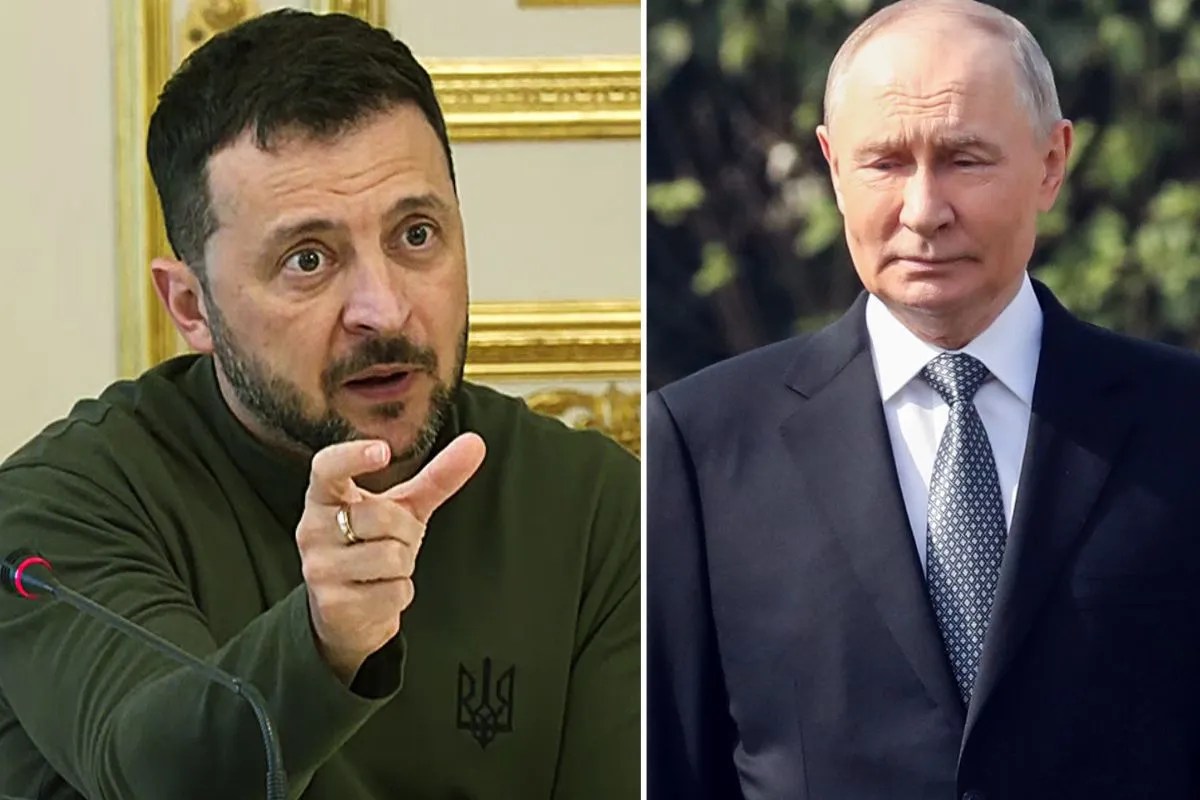
Diplomacy at this level is an exercise in psychological excavation. You have to dig down past the posturing, past the televised threats, past the historical grievances that stretch back centuries, until you find the bare nerve of self-preservation. Every leader at that table is calculating their survival. Putin calculates his legacy and internal security; Zelenskyy calculates the physical survival of his state and the dignity of a battered populace.
When outsiders arrive with proposals, they are walking through a minefield of pride and pain. Every concession suggested is viewed through a lens of profound suspicion. Give an inch, and you lose the state. Hold the line, and you lose a generation.
This is why the presence of unexpected intermediaries matters. They bring a disruption to the stalemate. They are not career diplomats tied to decades of institutional dogma that failed to prevent the war in the first place. They are outsiders, for better or worse, willing to bypass traditional protocol to find where the architecture of a deal might actually anchor.
Imagine standing in a room where maps are spread across mahogany tables, annotated with red and blue lines that represent human lives converted into cartography. One stroke of a pen moves a border fifty miles east. To a strategist, it is a logistical adjustment. To the family whose farmhouse now sits on the wrong side of that line, it is exile. It is the permanent loss of the orchard planted by a grandfather, the desecration of a local church, the erasure of a home.
The negotiators know this. Or at least, they are forced to confront the wreckage of it when the doors close and the cameras stop rolling.
There is an eerie quiet that settles over war zones when rumors of talks begin to circulate. It is not a peaceful quiet. It is a tense, breathless holding of pattern. Artillery pieces do not fall silent; if anything, both sides often ramp up the shelling just before a diplomatic push, desperate to improve their bargaining posture by seizing one more ruined village, one more smoking tree line. Every meter gained is traded for a seat at the table with slightly more leverage.
That is the grotesque calculus of war. You kill more so you have to kill less tomorrow.
As the Moscow meetings unfold behind soundproofed glass and heavily guarded perimeters, the rest of the world waits with a strange mix of cynicism and prayer. We have been here before. Promises of breakthroughs have evaporated into morning mist. Ceasefires have shattered within hours of their signing, broken by a single mortar shell fired by a rogue unit or an ambitious commander.
Yet, ignoring the possibility of peace is a luxury only the untouched can afford.
The people living under the flight path of missiles do not have the luxury of cynicism. They need someone, anyone, to find a crack in the wall of stubbornness. Whether it is a pair of American envoys flying into the Russian capital, or secret channels humming between intelligence agencies in neutral European capitals, the machinery of dialogue is grinding into motion, slow and agonizingly fragile.
The snow continues to fall outside the Kremlin walls. The guards stand motionless, statues carved out of the cold. Inside, the arguments roar in whispers. Maps are scrutinized. Offers are made, rejected, reshaped, and reconsidered.
A war does not end with a sudden explosion of harmony. It ends in a dim room, smelling of bad coffee and stale air, where exhausted men finally realize that the cost of continuing has outstripped the value of winning.
Until that realization solidifies into ink on paper, the trench lines hold. The artillery loads its shells. And the human heart keeps counting the seconds between the whistle of incoming fire and the impact, praying that the footsteps in Moscow lead somewhere away from the edge.